Garment Dyed vs Pigment Dyed: What Should Streetwear Brands Specify and Approve Before Bulk Production?
Buyer’s Guides
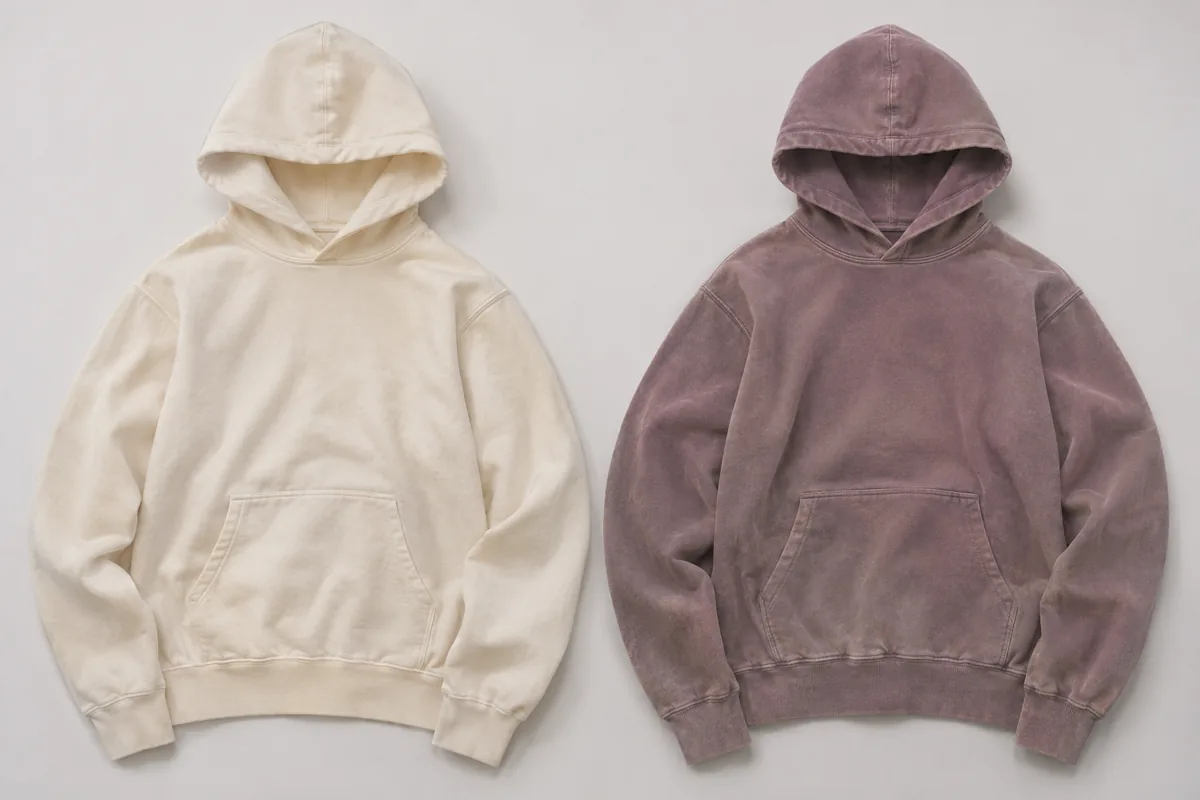
A faded garment image can communicate a color direction without revealing how or when color was applied. A clear brief separates the desired appearance from the actual production route.
Direct Answer
Garment dyeing describes when a sewn garment is colored; pigment describes a colorant system. They are not mutually exclusive: a pigment process can be applied at the garment stage. Ask the supplier to identify both the application stage and the coloration system, then approve a finished sample and suitable colorfastness evidence.
Key takeaways for streetwear buyers
- Garment dyeing identifies when coloration occurs; pigment identifies a colorant system.
- The two terms can overlap: an appropriate pigment system may be used on a sewn garment.
- Approve shade boundaries, components and the actual sequence on a finished sample.
- Agree test methods and acceptance criteria; a test method alone is not a product pass claim.
Why are garment dyeing and pigment coloration different questions?
Garment dyeing identifies the stage of manufacture: a sewn garment is colored after assembly. Pigment identifies a type of colorant, typically held on the textile with a binder. Pigment application can take different forms, and certain pigment systems can be used for garment coloration. Therefore the phrase garment dyed versus pigment dyed combines two different classification axes.
When requesting a quote, ask what is being colored, whether coloring occurs before or after sewing, which colorant system is proposed, and which other washes or finishes follow. Do not assume a product is garment dyed simply because the edge looks faded, or assume pigment from a photograph.
Record two separate fields in the brief: the application stage, such as fiber, yarn, fabric or sewn garment, and the colorant system. Also identify later washing or abrasion; neither the stage nor the colorant name establishes finished appearance or performance.
What should the supplier explain about the proposed route?
Request a plain-language process sequence covering fabric preparation, sewing, coloration, any wash or abrasion, drying and final inspection. Identify which operations are performed on the whole garment and which materials are affected. Confirm the shell, rib, thread, labels, zippers and artwork are compatible with the intended route.
CottonWorks explains that pigments require a binder; the practical hand and fastness of a result depend on the selected system and process. Do not specify a chemical recipe from a product photograph. Ask the responsible supplier to explain the process and test a representative finished garment.
How should a visual range be approved?
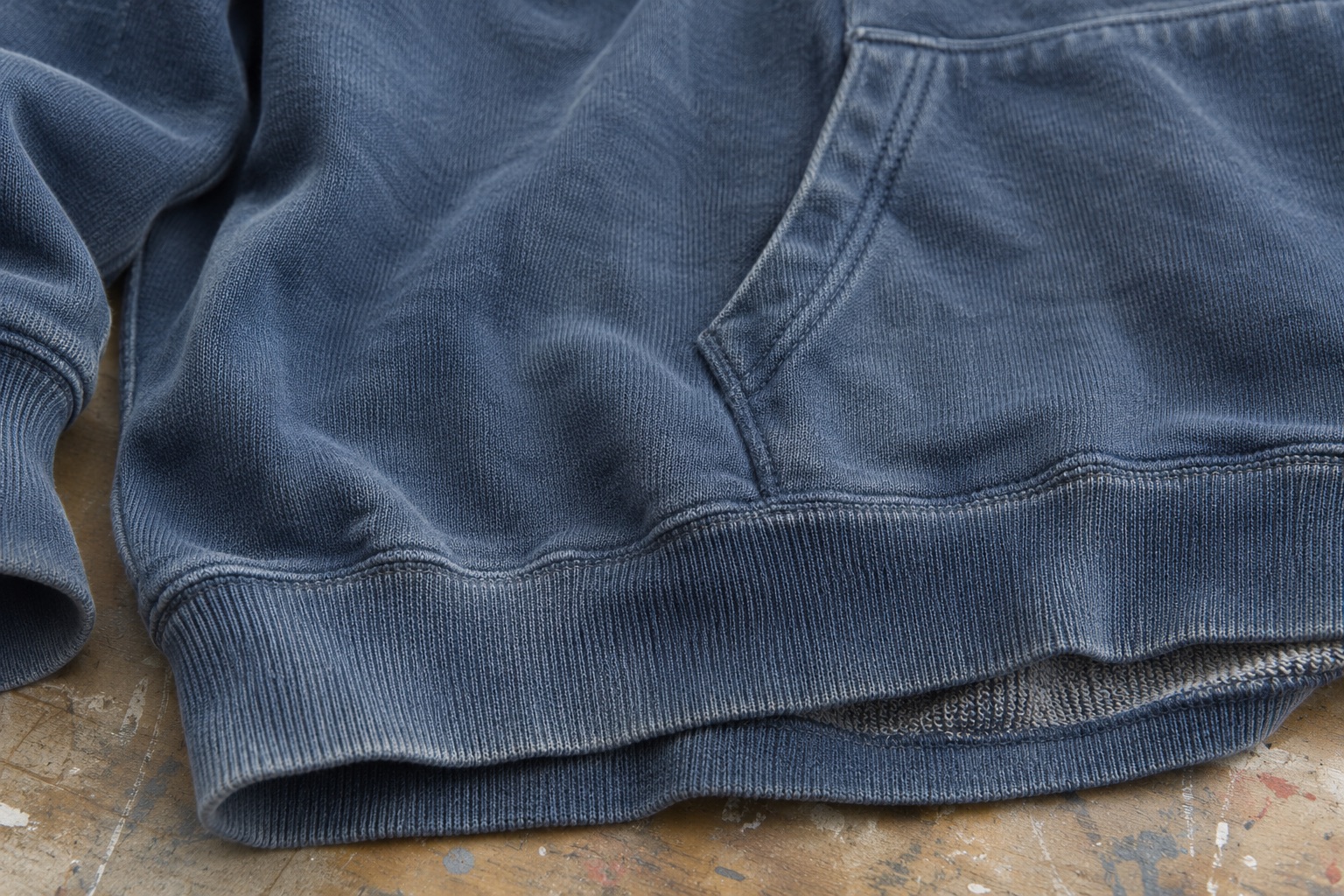
Supply a physical reference when possible, supported by photographs marking the collar, seams, pockets and body. Agree lighting and comparison conditions. Ask for an approved standard and, where variation is expected, acceptable light and dark boundaries that show the intended distribution rather than just a single digital color.
Evaluate the body and components together: seams, rib, pocket edges, label area and decoration may respond differently. Describe which variation is intentional and which effects, such as stains or unapproved streaks, require review. Record the approved range with the sample revision and production order.
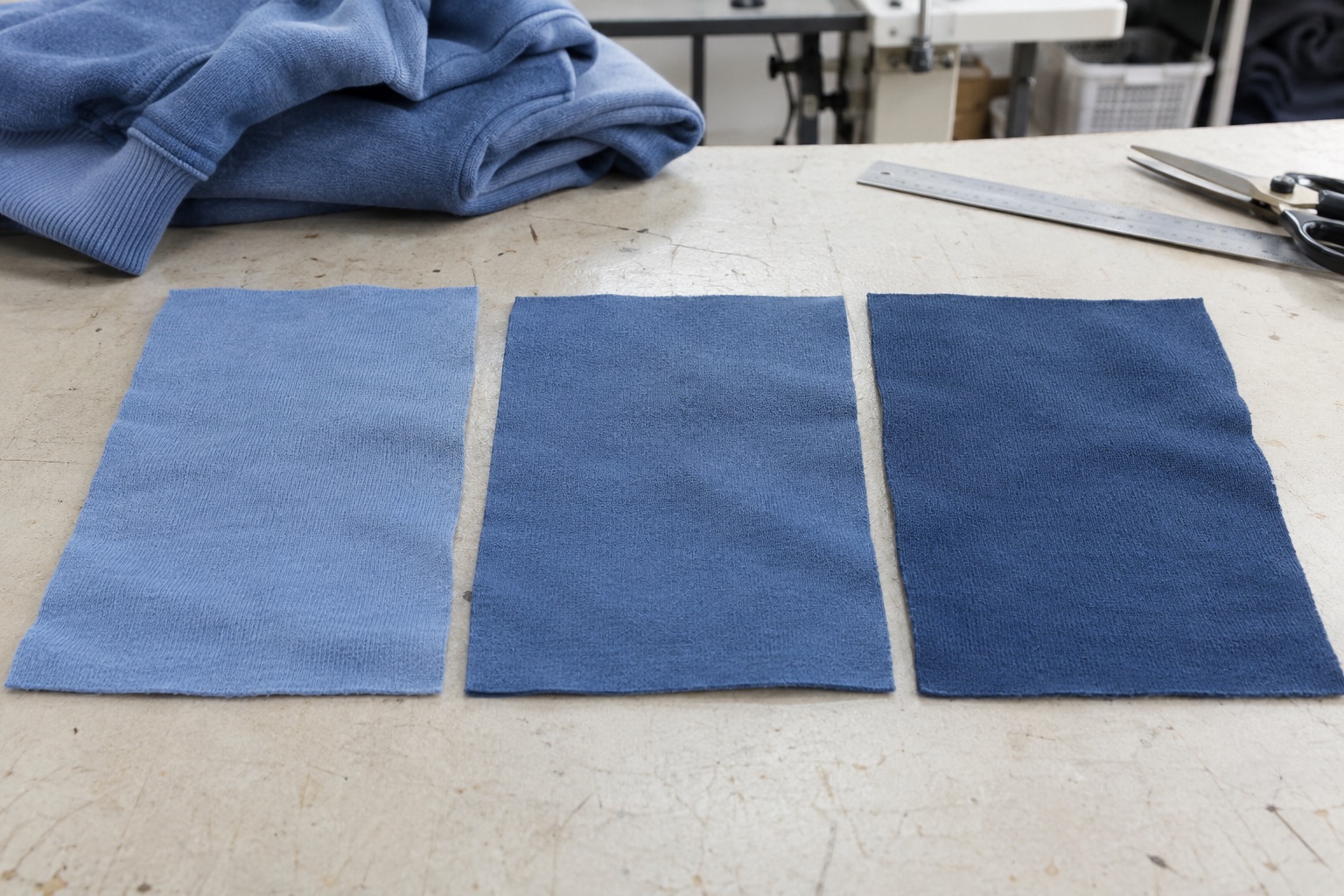
Retain a physical target and agreed lighter and darker boundaries, and mark prohibited outcomes separately from intentional variation. Record the comparison lighting, identify who can decide an exception and link the approval to the relevant sample and order.
Which tests and sample checks matter?
Select the tests according to the garment, market and intended use. AATCC TM8 evaluates color transfer by rubbing using dry and wet test cloths; agree the relevant method, conditions and acceptance criteria with the laboratory and buyer. Do not present a method name as proof that this product has passed it.
Assess color after the agreed laundering procedure and measure dimensional change using an appropriate method. Check seam appearance, print, hand, odor and component condition as part of sample review. Include test results, sample details and the final process route in the approval record so that results are not assigned to a different fabric or treatment.
What should be locked before bulk production and reorders?
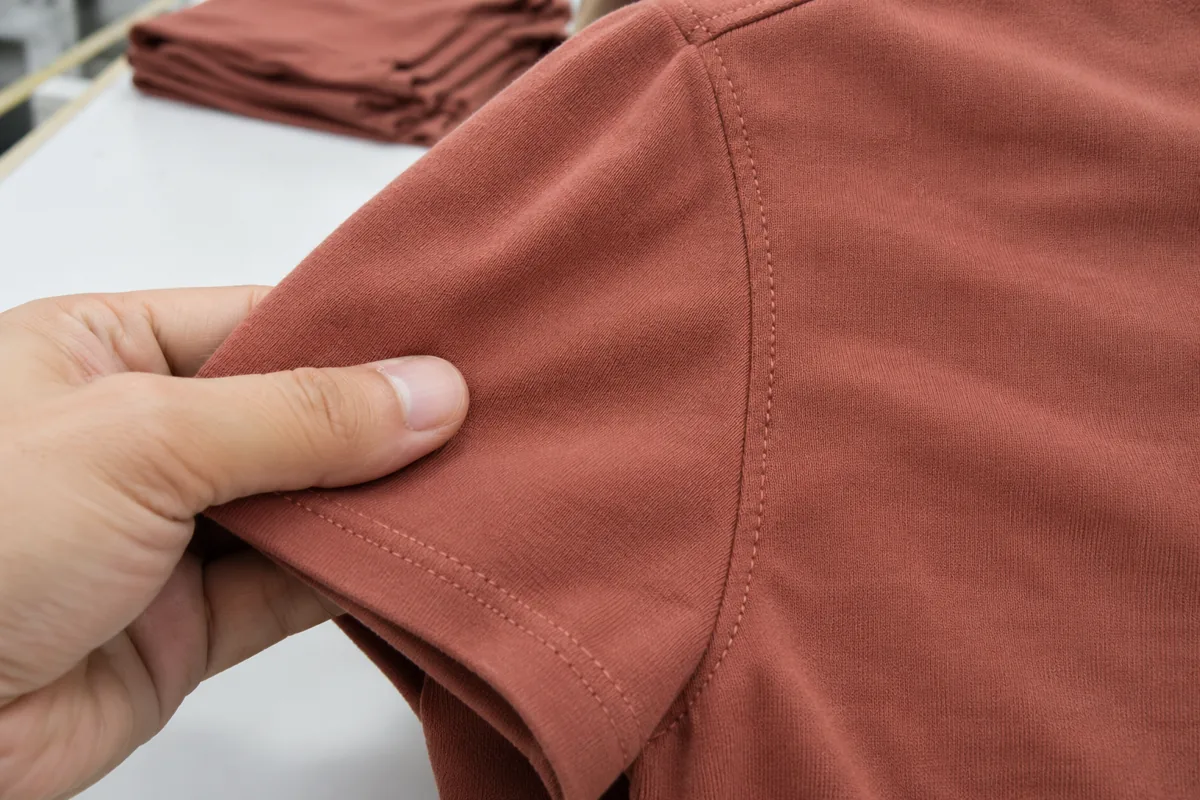
Retain the approved finished garment, shade range, fabric and rib references, size chart and artwork revision. Document the proposed coloration system and stage, subsequent wash, test methods, acceptance limits and any agreed tolerances. Ask how rejected or out-of-range units will be handled before production starts.
For a repeat order, check whether fabric, dye or pigment system, binder, process facility or finishing route has changed. Evaluate a new sample whenever a change may affect the approved appearance or performance. A picture of a vintage effect is a useful design reference, not a complete production specification.
What does pigment fixation mean for the finished hand?
Pigments are colorants that generally require a binder to attach them to textile material. The formulation and application route affect the result, and a tradeoff between hand and fastness can arise. Do not infer the exact chemistry or performance from a product name; ask the supplier to explain the proposed system and produce a representative sample.
Compare the actual sample before and after the agreed care process. Note whether hand, shade, surface appearance or decoration changes matter for the collection. If a particular performance requirement applies, define test conditions and acceptance criteria with the buyer and qualified laboratory rather than promising a result based on pigment terminology.
How should a team compare garment-stage and fabric-stage proposals?
Ask for each route to be described in sequence and applied to the same intended garment design where a controlled comparison is practical. Review which components are present during coloration, which are added later, and how each route affects seams, rib, labels, trims and decoration. The comparison should identify both the stage and colorant system of each sample.
Measure and inspect the completed garments against the same approved criteria. A different result may be caused by material, process, construction or later finishing, so record all relevant differences. Choose the route that meets the actual brief and available evidence; a visually appealing edge alone does not identify the process that produced it.
Which components need to be included in a process trial?
List the shell, rib, sewing thread, pocket material, labels, closures and decorative elements used on the finished style. Ask whether each item will be included before coloration or added afterward. Components may respond differently, and a garment containing only the body fabric cannot demonstrate the final relationship of all parts.
Review the complete garment for intended color relationships, closure operation, label legibility and artwork placement. If the proposed order changes a component or the process sequence, assess its effect on the whole garment and decide whether another trial is needed. Keep the approved components and order of operations in the revisioned specification.
How should rub and laundering checks be specified?
AATCC TM8 is a method for measuring color transfer by rubbing using dry or wet test cloths. It is a test method, not a pass certificate or a universal product limit. Agree the applicable version, sample conditioning, test locations and acceptance criteria with the laboratory and relevant buyer before a result is interpreted.
Agree separately on a relevant laundering procedure and dimensional-change evaluation for the intended market and care instructions. Check color, hand, construction and measurements on the actual sample after the agreed treatment. Retain the report with the specific material, process and sample identifier so that it is not mistaken for evidence about another route.
What should a quotation reveal before a color route is selected?
Provide the target visual standard, garment components, artwork, quantities by color and intended use. Ask each supplier to name the proposed coloration stage and system, subsequent processing, trial scope and any material or scheduling assumptions. Separate the cost of development and testing from the production proposal when they are not already included.
Compare offers against the same product revision. A lower price based on another substrate, a different process sequence or an untested decoration is a different proposal. Resolve those differences through samples and documented review before selecting a route; negotiate commercial terms without silently changing the approved design.
How should exceptions and repeat orders be controlled?
Before the production release, identify the approved garment, shade boundaries, measurements, component list, coloration sequence, artwork and test decisions. Agree who can accept an exception and how an affected lot is identified. If a correction is proposed, check whether it changes measurements, hand or decoration as well as the visible color.
For a repeat, ask whether the material, colorant system, binder, processing location or later finish has changed. Compare a representative garment with retained references under the agreed conditions. Renew the sample and tests as appropriate to the change; retaining a color name alone does not verify that the original route remains in use.
Why can a photograph not verify the coloration route?
A photograph can show a design direction such as lighter seams or uneven shading, but it cannot reliably identify whether color was applied before or after sewing or whether a dye or pigment system was used. Similar visual effects can result from different material and finishing choices. Use the image to describe what the buyer wants to review, not as a process certificate.
Ask for a written sequence identifying substrate, stage, colorant system and later processing. Compare that explanation with a representative finished sample and any relevant test evidence. If the supplier proposes a different route, review it as a new proposal rather than assuming the same appearance proves equivalence.
How should rib, thread and labels be considered together?
Identify each component and its proposed composition or construction, and ask whether it is present during the garment-stage process. Rib, thread and label materials can respond differently from the body. The desired outcome may include deliberate contrast, but it should be reviewed on the actual assembly rather than assumed from a body-fabric trial.
Check the approved sample at the neckline, cuffs, waistband, pocket and labels. Record which differences are intended and which require correction. If a component is replaced or added after processing, examine the new assembly and update the approved component reference before bulk production.
What should happen when a bulk shade falls outside the accepted range?
Agree the escalation procedure before bulk processing. The supplier should identify affected garments or lots and compare them under the same viewing conditions with the retained target and boundary references. Record the location and nature of the difference instead of expanding an exception from one photograph to all goods.
If a correction is proposed, assess its potential effect on the garment as a whole, including measurements, surface, print and trim. Obtain the buyer's decision and verify the result against agreed criteria before treating the affected units as accepted. Keep the exception tied to the specific lot and decision date.
How should a brand evaluate a proposed pigment-process change?
Ask which part of the system or sequence changed, why it changed and which sample represents the proposal. A new binder, colorant, substrate or application route can affect hand, shade or color transfer. A familiar color name is not enough to establish that the new result matches the approved garment.
Compare the finished sample with the retained physical standard and review the agreed rubbing, laundering and dimensional checks where relevant. A laboratory report is meaningful only for the material and conditions it identifies. Record whether the change is approved, rejected or requires another development round before it is used for bulk.
Compare the processing stage and the colorant system
| Question | Garment dyeing: stage | Pigment coloration: system |
|---|---|---|
| What the term identifies | Coloration after a garment has been sewn. | A colorant system that uses pigment; application and binder depend on the process. |
| Can they occur together? | Yes, garment-stage coloration can use a suitable pigment system. | Yes, certain pigment systems can be applied to sewn garments. |
| What the buyer should ask | Which operations occur after sewing, including coloration and subsequent washing? | Which pigment system and application route are proposed, and how is it fixed? |
| What to approve | A finished sample, shade range and post-process measurements. | The finished appearance, hand and agreed colorfastness evidence for the actual process. |
For the brief, specify two separate fields: the stage at which color is applied and the proposed coloration system. If a supplier proposes garment-stage pigment coloration, record both rather than forcing a choice between them. Approve the finished shade range and agree the relevant test conditions and acceptance criteria before bulk production.
Frequently asked questions
Can a garment be both garment dyed and pigment colored?
Yes. Garment dyeing refers to the stage, and pigment refers to the colorant system. Confirm the specific process with the supplier.
Does a faded seam prove pigment was used?
No. Several production or finishing choices can create a faded appearance; ask for the actual process description.
Does AATCC TM8 mean a garment has passed a standard?
No. It identifies a rubbing colorfastness test method. Results, test conditions and agreed acceptance criteria must be reviewed for the actual sample.
Sources and next steps
CottonWorks: Dyeing Basics
CottonWorks: Dyeing Booklet
AATCC TM8: Colorfastness to Crocking
AATCC TM150: Dimensional Change
For a project-specific discussion, send the desired garment, fabric references, measurements, intended finish and quantities. Confirm materials, testing and commercial terms in the quotation.
Explore custom hoodie manufacturing · Review the HD-001 hoodie reference
Related articles
 French Terry vs Fleece: How Should Streetwear Brands Choose Hoodie Fabric and Approve the Finished Sample?
 Cotton vs Polyester Hoodie: How Can Streetwear Brands Compare Fiber Content, Fabric and Sample Performance?
 Vintage Hoodie Manufacturers: What Should a Streetwear Factory Approve Before Bulk Production?
 Fabric GSM for Structured Luxury Streetwear: How Should Brands Verify the Finished Garment?