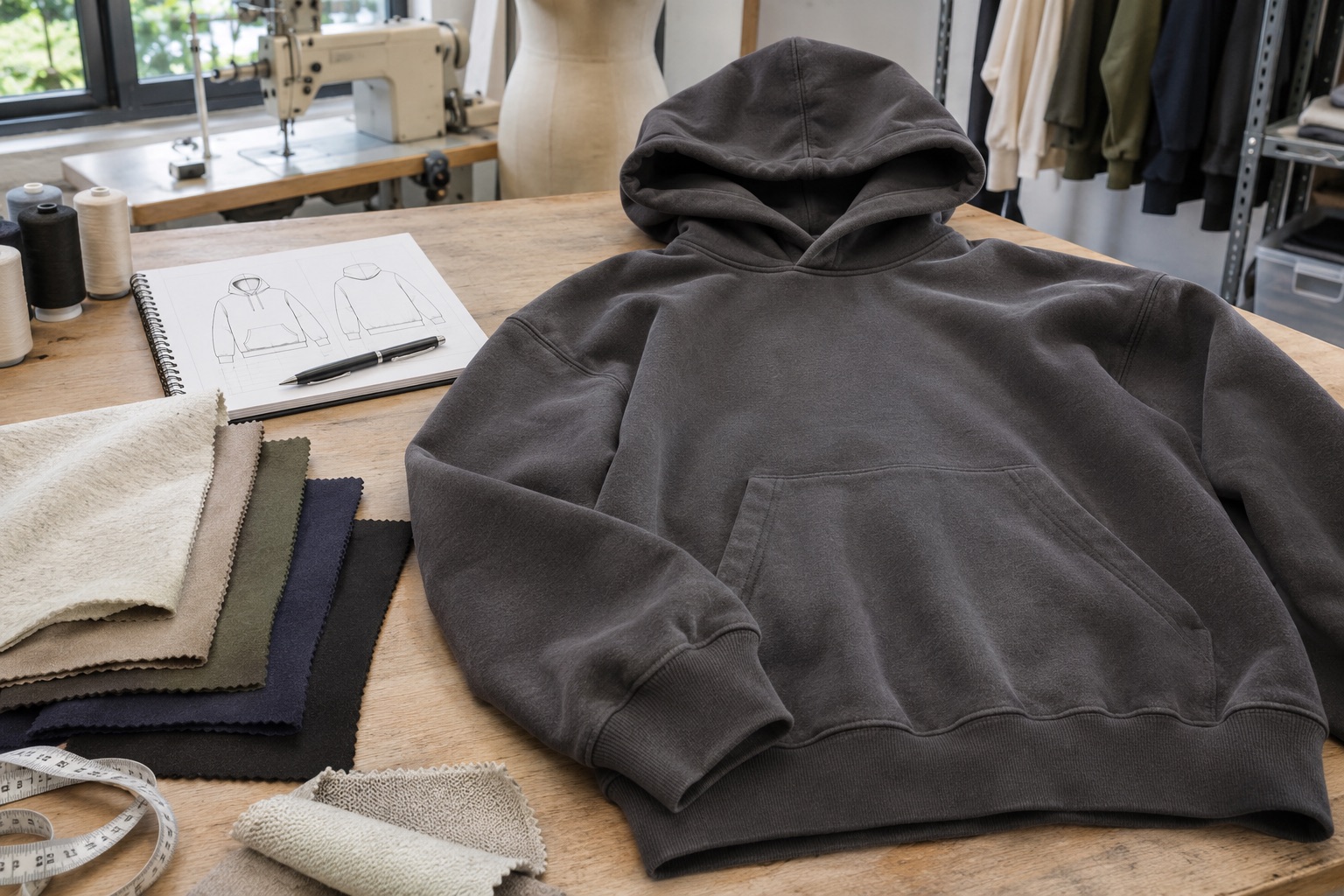
Fabric Pilling Test for Streetwear Hoodies and T-Shirts: How Can Buyers Compare Fleece Samples and Approve Surface Quality?
Buyer’s Guides ·
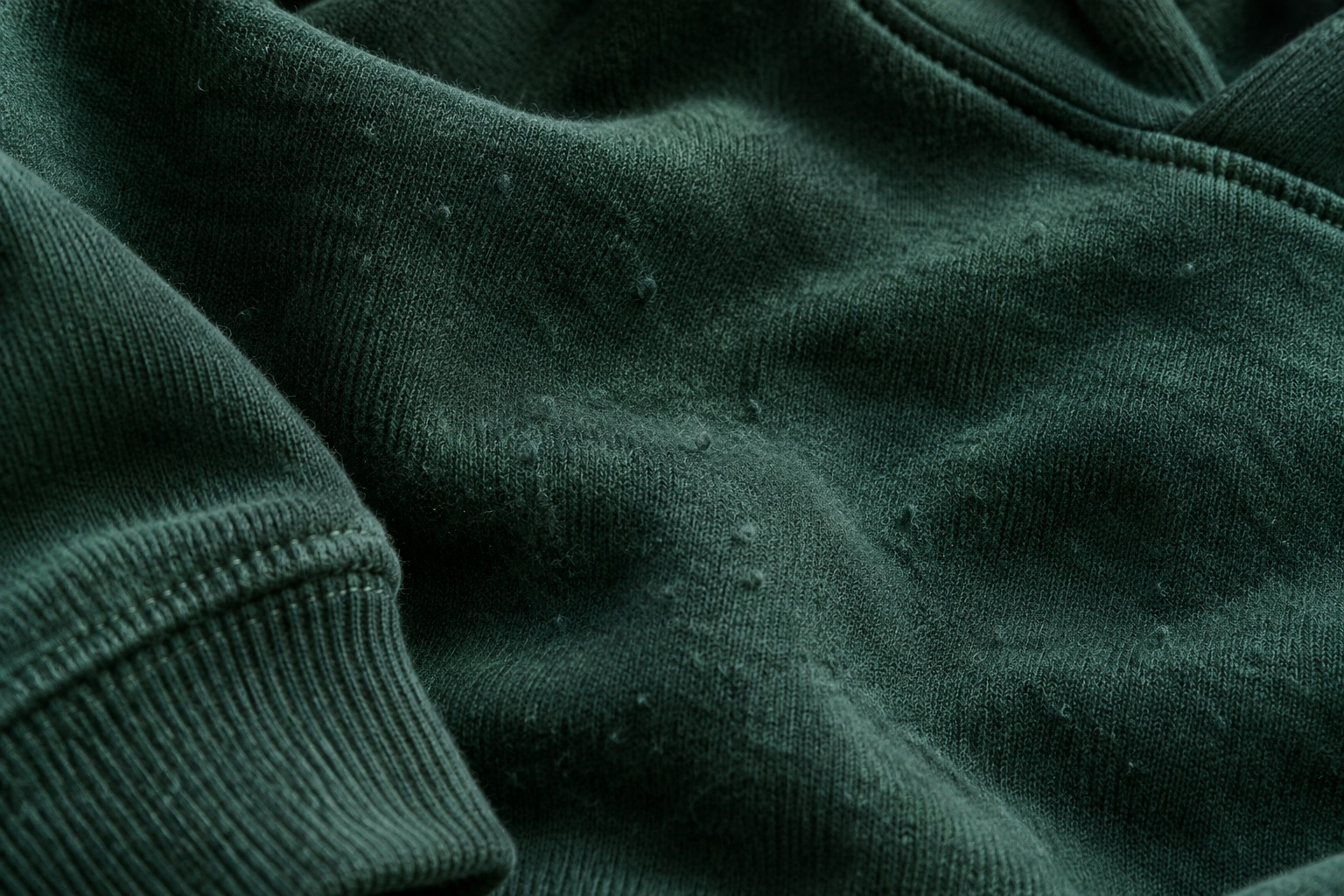
A soft fleece can look excellent when a swatch arrives yet change where a bag strap or sleeve rubs against it. Brands need a clear way to discuss surface expectations, select relevant evidence and decide what to approve before a repeat order.
Direct Answer
Use a fabric pilling test suited to the material and end use, then compare identified specimens under agreed conditions and an agreed assessment system. Pilling, fuzzing and abrasion are related but distinct surface changes. A photograph or fiber name alone cannot establish a rating or guarantee how every finished garment will wear.
Key takeaways for streetwear buyers
- Separate loose surface fibers, pills and actual fabric wear when describing a concern.
- Select a method and specimen with a qualified testing provider before setting criteria.
- Record the method, conditions, rating system and material identity with the result.
- Review actual finished garments and reassess significant fabric or finishing changes.
What is pilling and how is it different from abrasion?
Pilling describes small entangled fiber balls on a textile surface. Fuzzing is a raised or hairy appearance; abrasion is material wear caused by rubbing. A fabric may show more than one kind of change. Describe the location and appearance instead of calling every surface change a pilling failure.
Fiber, yarn, knit construction and finishing can influence surface behavior, but no single composition reliably predicts the result for every fabric. Brushing may deliberately raise fibers, so the buyer should distinguish the intended original surface from unwanted change after use or care.
Where should a garment be inspected?
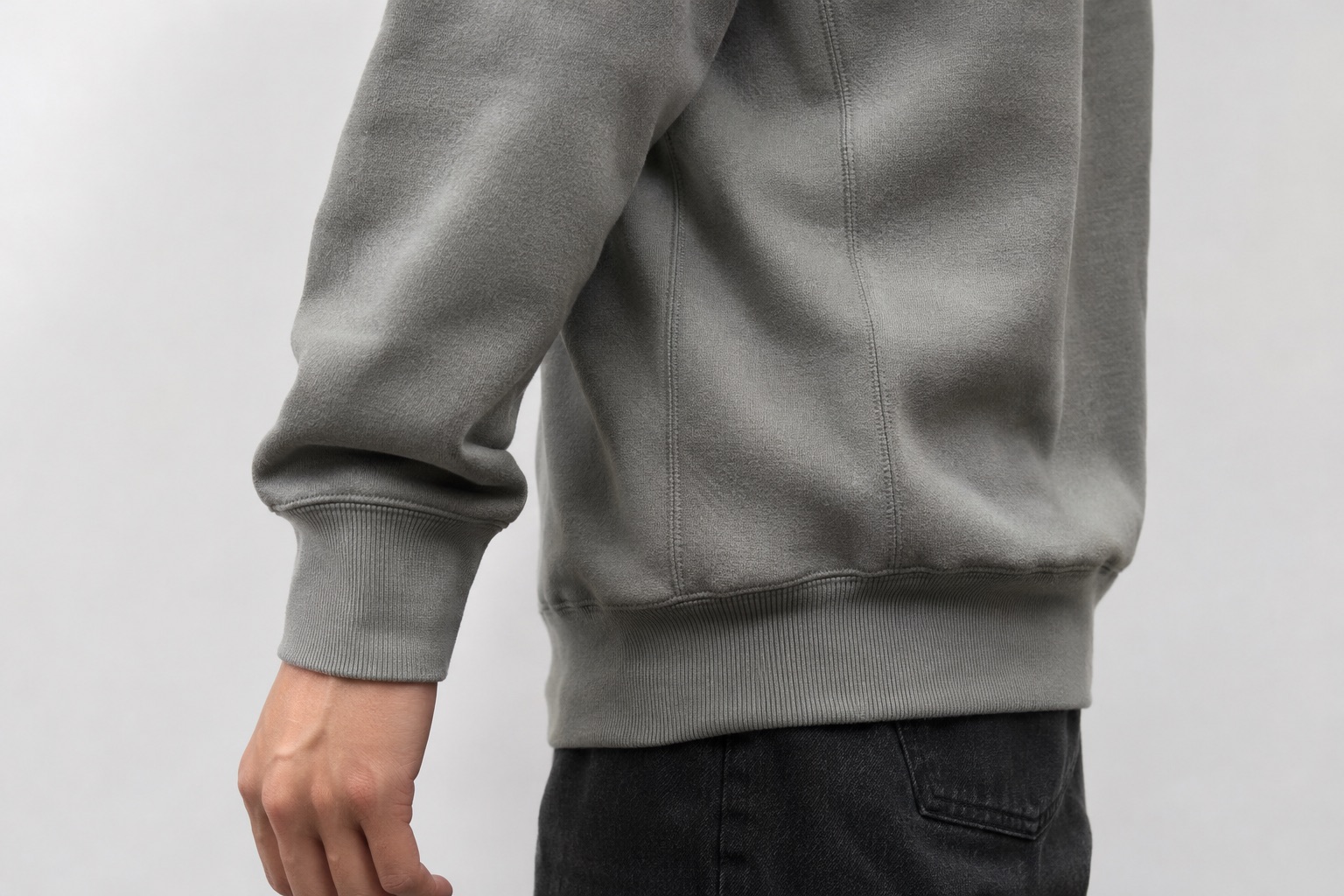
Inspect areas likely to contact another surface during the intended use, such as the sides of a body, the underside of sleeves or a shoulder where a bag may rub. Review the initial garment and any changes after the agreed care and wear assessment. Use consistent lighting and keep the sample identity visible in the record.
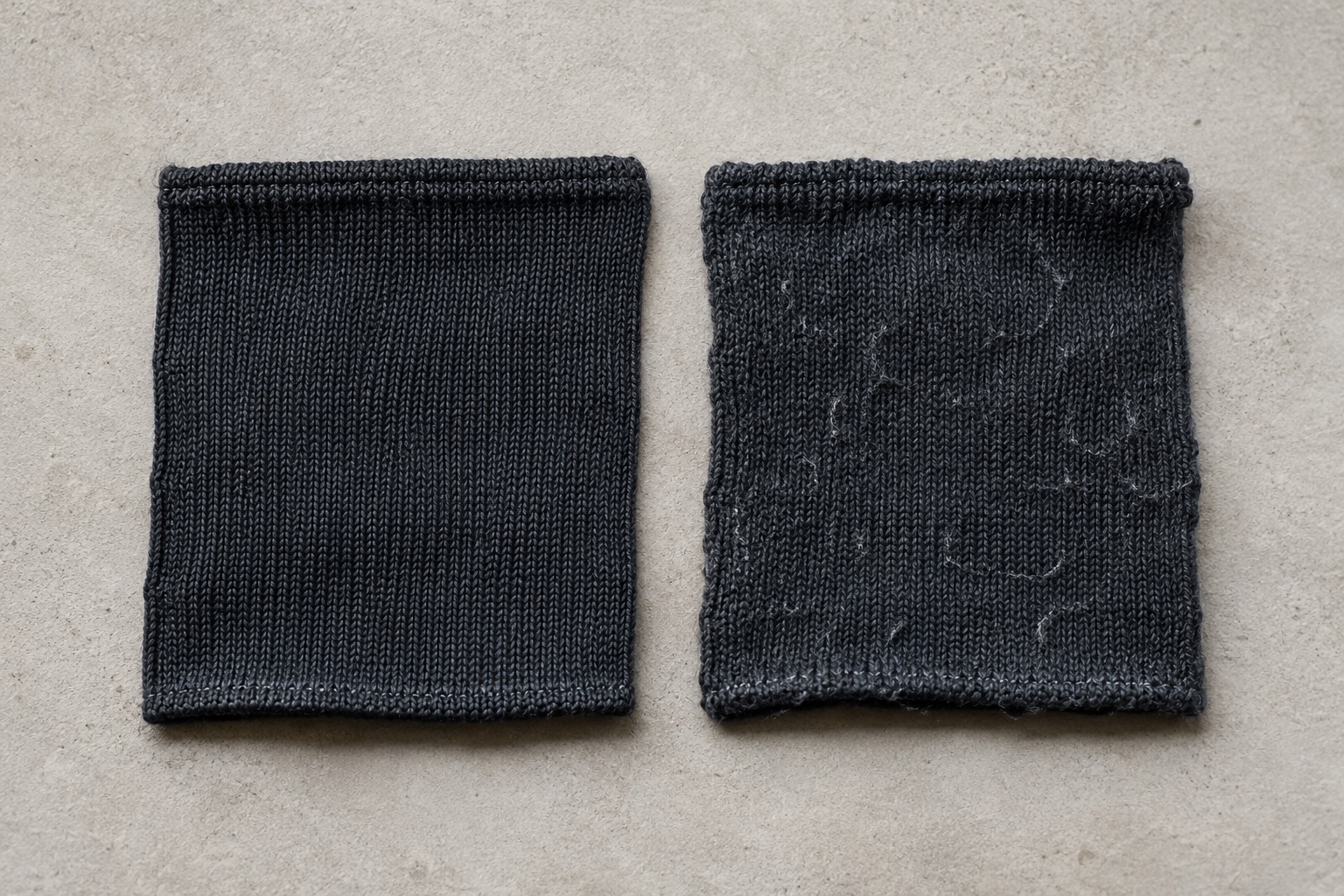
A localized observation can help the team describe a problem, but a staged image cannot prove test performance. Record whether the observation concerns the face fabric, brushed reverse, rib or another component. Different components may need separate review.
How should a test method be selected?
Discuss the material, surface construction, expected use and the decision the result must support with a qualified laboratory. Different pilling methods apply different mechanical actions and assessment procedures. A result under one method should not be treated as directly interchangeable with another without an appropriate basis.
ASTM D3512 describes a random tumble procedure and notes limitations in interlaboratory precision for acceptance testing. Read the full applicable standard and consult the laboratory about suitability, sampling and interpretation rather than assuming that one procedure covers every surface.
What information belongs on the test request?
Identify the exact fabric reference, source or lot, face to be evaluated, garment use and finishing. Agree specimen preparation, the selected method and any deviations, number of observations, assessment conditions, rating system and reporting requirements with the laboratory.
Specify the project’s acceptance criterion before viewing results, and identify who may approve an exception. If the buyer relies on a supplier report, confirm that its specimen and conditions represent the actual material being purchased. A report on a different fabric or earlier revision is not automatically transferable.
Report checklist for a purchasing decision
Check that the report identifies the specimen and its relationship to the actual order: fabric name or code, source/lot, composition and construction where known, finishing and surface tested. Confirm the laboratory, report date and reference, method and edition, preparation/conditioning, test settings and duration, assessment scale, individual or reported results, deviations and uncertainty or limitations when supplied.
Link the report to the applicable garment component and sample revision. Record the acceptance requirement and who agreed it; ask for missing information before accepting the report as evidence. The checklist is a purchasing aid, not a substitute for the standard or a claim that every method requires the same fields.
How should ratings and variation be interpreted?
Read the report with the method and assessment conditions beside the rating. The number or category only has meaning within the stated procedure and scale. Ask how the specimens were selected, whether multiple results are reported and whether deviations or limitations affect the intended comparison.
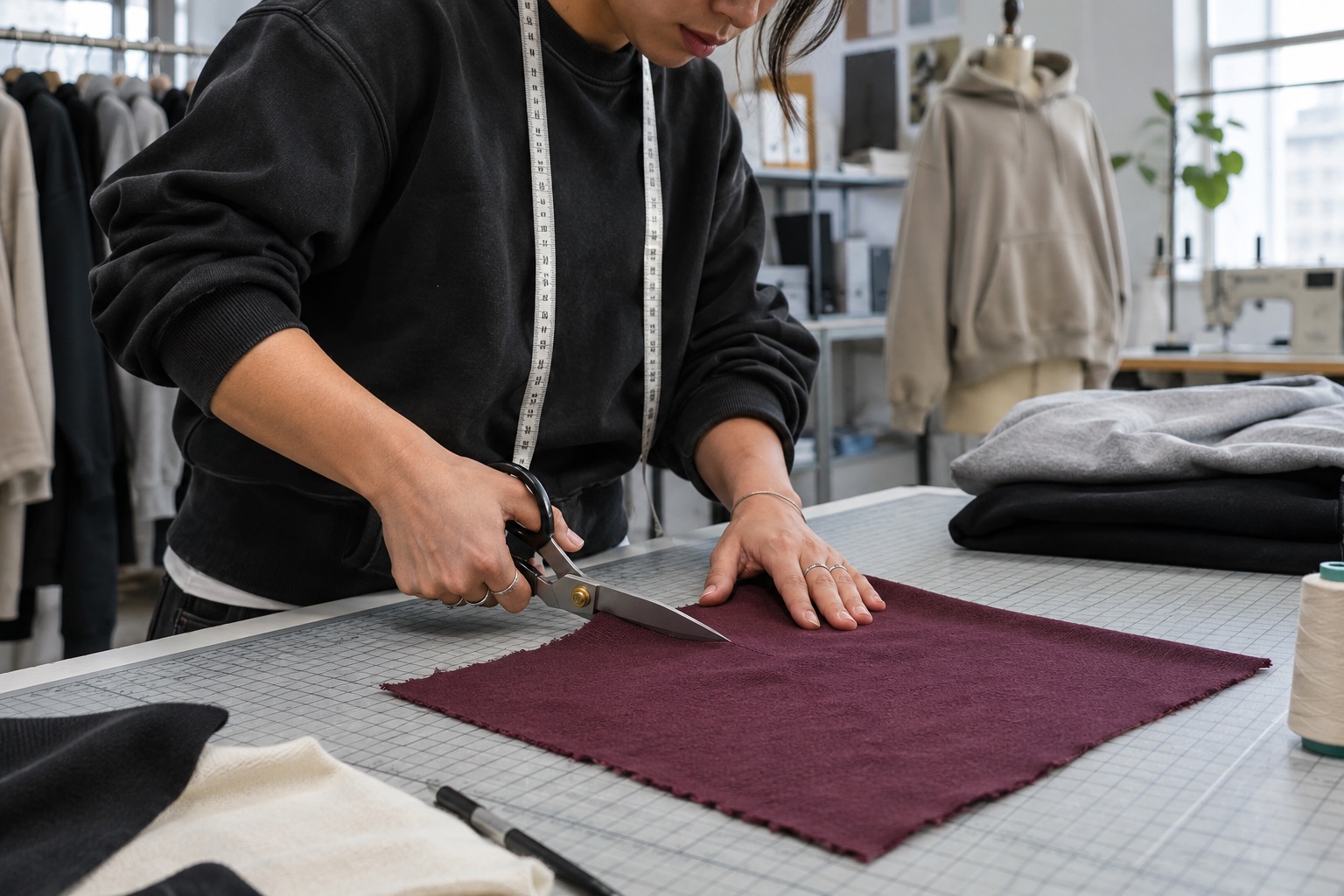
An image of a swatch is useful for discussion but is not a calibrated visual standard. Avoid inventing a grade or interpreting a slight surface difference as a guaranteed result. If results are close to a limit, discuss an appropriate next step and any uncertainty with the laboratory and supplier.
What can be concluded in four common situations?
With matching material identity, method, edition, preparation, conditions and scale, results can support a comparison within the method’s scope; check whether the specimens represent the intended lot and use. If methods, conditions or rating scales differ, do not rank candidates from the numbers alone: request a comparable evaluation or a documented technical interpretation.
If the report lacks specimen or lot identity, treat it as background information until the supplier and laboratory can link it to the proposed material. If a result is at or near the agreed limit, verify the report and criterion, discuss variation and any reported uncertainty with the laboratory, and agree whether additional specimens, repeat testing or a documented exception is appropriate. Do not quietly round a marginal result into a pass.
| Evidence situation | What it can support | What is still needed |
|---|---|---|
| Same identified material, method and conditions | Comparison within that method and reported limitations | Confirm lot representation and project limit |
| Different methods or assessment scales | Each report describes its own procedure | A comparable test or qualified interpretation |
| Specimen or lot identity missing | Background, not proof for the order | Traceable identity and relevant report |
| Result close to agreed limit | A decision requiring review, not automatic clearance | Laboratory discussion and agreed next action |
How can a brand compare two fabric candidates fairly?
Choose candidates that represent the proposed order and identify meaningful differences in composition, construction and finish. Request equivalent test conditions where the method supports them. Review face and reverse, hand and appearance alongside the report and a finished garment sample.
A candidate can perform differently depending on the process or component tested. Keep the physical swatches and reports linked by unique reference. If a candidate changes between sampling and bulk, determine whether the earlier comparison still applies.
Illustrative sourcing choice: surface, hand and report together
Imagine two fleece candidates for a hoodie carried under a backpack. Candidate A has the softer raised hand the design team prefers, but its existing report cannot be tied to the proposed lot. Candidate B feels firmer and has a traceable report under the agreed method, but its appearance after the agreed care is not yet reviewed. Neither candidate should be declared the winner from those partial facts.
Ask for a traceable sample and relevant test for A; make and care-review a representative garment in B. Compare the surface and hand with the intended use, then review each valid report against the same pre-agreed criterion. If both meet the criteria, the buyer can choose the preferred hand and acceptable commercial terms. If neither provides sufficient evidence, keep development open rather than claiming a grade or a service life from the swatches. This is an invented scenario, not a result from a real test.
What should happen after an unsatisfactory result?
Check that the specimen, method and acceptance criterion match the agreed project. Request the full report and describe the specific concern. Ask whether a material, yarn or finishing adjustment is proposed and how that change might affect appearance, hand, dimensions and price.
Make a revised sample and agree which checks must be repeated. Compare it with the retained reference under the same relevant conditions. A production decision should be documented by the responsible buyer and supplier; do not claim that an untested correction has solved the problem.
What should be retained for production and reorders?
Keep the approved fabric swatch, garment sample, fabric identification, relevant test report, agreed surface expectations and exception decisions together. Specify the notification and approval process for changes to material source, yarn, finish or component.
For a repeat, review the new material against the retained standard and decide whether fresh testing is appropriate. Independent testing, supplier records and garment inspection answer different questions and work best when linked to the same version of the order.
What must be reconsidered when the material changes?
A report is evidence for its identified specimen and stated conditions, not automatically for a replacement. If the yarn, mill, knit construction, surface finish, composition or lot changes, check whether the old report identifies and represents the new material. If it does not, the old result cannot alone establish the replacement’s performance; request a representative report or test under the agreed method.
An approved garment appearance or hand may also no longer represent the substitute, even if the supplier uses the same commercial fabric name. Retain the old swatch and report for comparison, document the exact change, and review a new swatch and finished garment. Confirm which report, sample and approval revision are valid for the order before release.
Comparison for buyers
| Observation | What it means | Buyer’s next step |
|---|---|---|
| Fuzzing | Raised fibers on the surface | Compare with the intended original finish |
| Pilling | Entangled fiber balls | Agree a suitable method and evaluation |
| Abrasion | Wear from surface contact | Discuss an appropriate separate wear assessment |
| Mixed change | More than one visible effect | Identify the component and record each effect separately |
Frequently asked questions
Does a fabric pilling test guarantee a garment will never pill?
No. A controlled test evaluates a specimen under specified conditions; actual use and care vary.
Can two different methods be compared by rating alone?
Do not assume the ratings are interchangeable. Review the methods, scales and specimen conditions with the laboratory.
Does a soft brushed surface mean the fabric has failed?
No. A raised surface may be intentional. Compare the actual fabric with the approved appearance and relevant agreed criteria.
Sources and next steps
ASTM D3512/D3512M: Random Tumble Pilling Test
CottonWorks: Garment Durability
AATCC: Testing Standards
Project brief: what to send
To discuss the decision covered in this guide, prepare the following project-specific information:
- Garment/component and intended use, including likely friction points and desired surface and hand.
- Fabric reference, proposed source/lot, composition and construction if known, and finishing or brushing details.
- Existing reports with laboratory, specimen identity, method and edition, preparation, conditions, scale, results and any limitations.
- Physical reference or clear observation photos, agreed acceptance criteria, target quantities, change history and the decisions requiring review.
Confirm testing responsibility and commercial terms in the quotation.