Developing heavyweight washed T-shirt for your collection
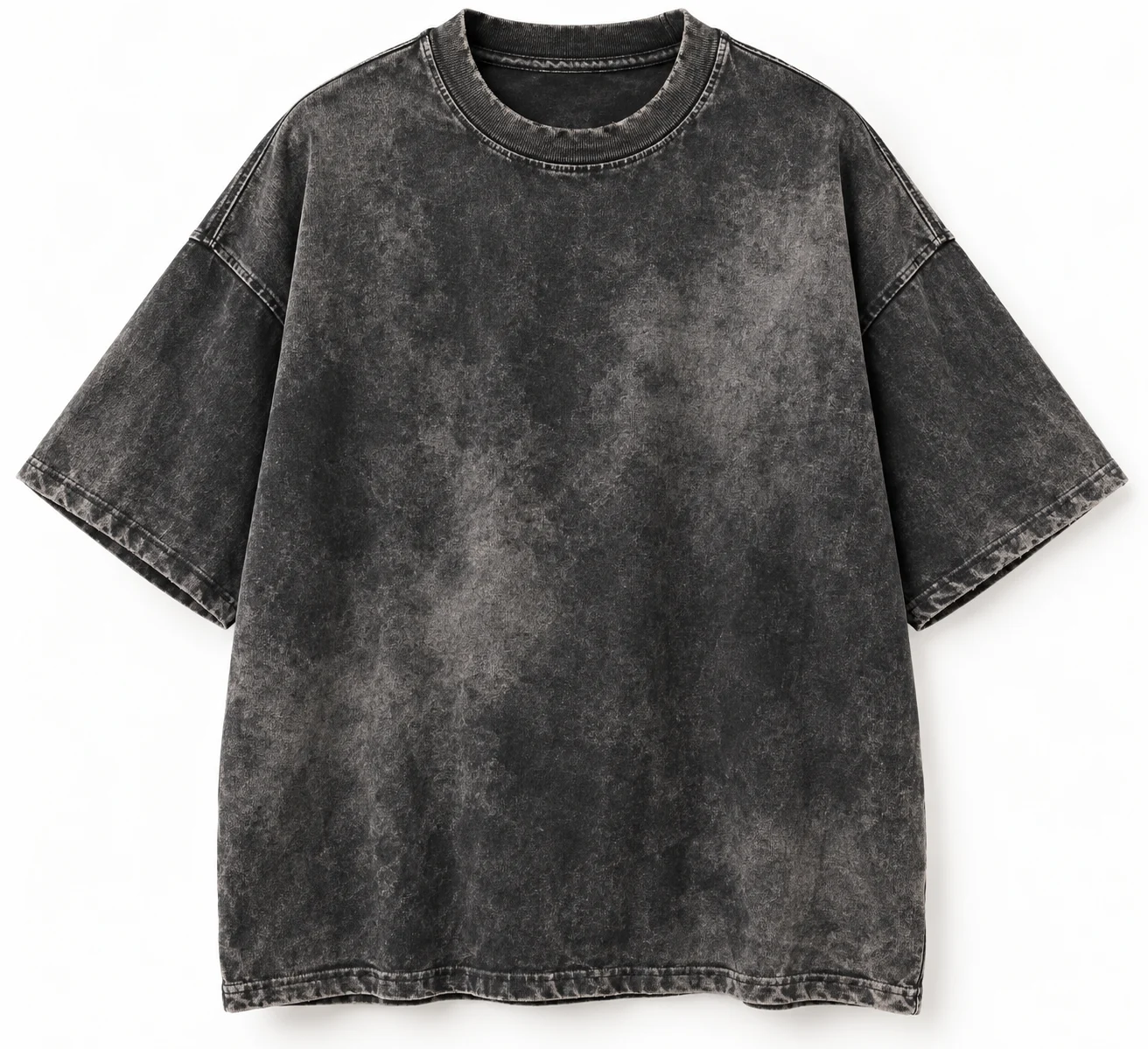
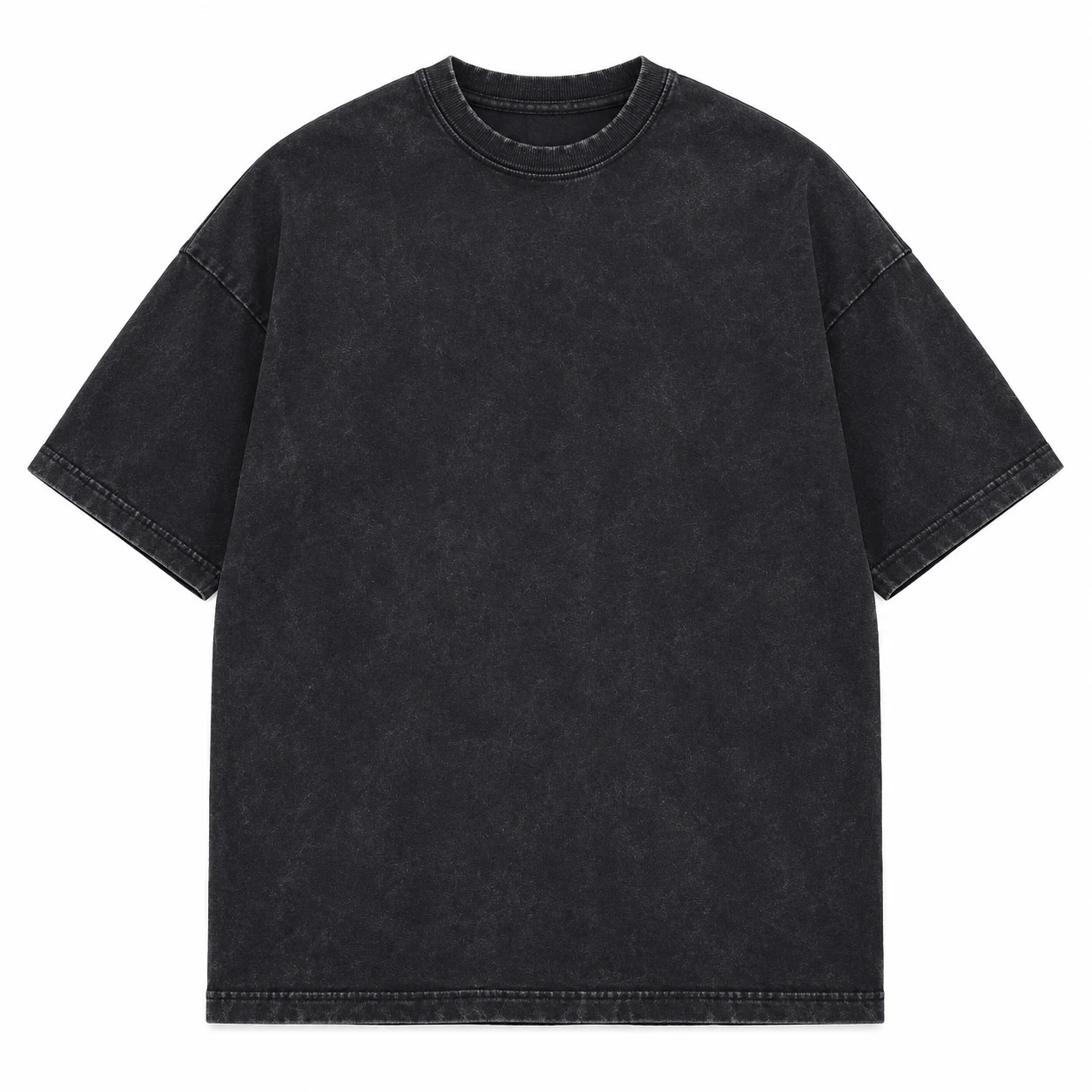
X-51 is a heavyweight washed t shirt reference for brands developing a plain, oversized streetwear silhouette. Its visible front combines a dropped shoulder, short sleeves, a crew neckline and a broad body in a mottled dark shade. The simple outline makes the relationship between the collar, shoulder, sleeve and lower edge especially important: there is no large graphic to distract from a collar that sits unevenly or a sleeve that falls at an unexpected length.
The source catalog lists 300 GSM and 26s for the reference. These figures are useful starting points for a material discussion, but they do not establish the fiber composition, exact fabric construction or finishing recipe. Ask for the actual material specification and a physical submission before putting those claims in a production pack. A visual snowflake direction can vary by material and treatment, so an image alone is not a sufficient shade standard.
For a first sample, provide the intended wearer, base-size measurements, preferred body length and sleeve position, and a physical color reference if available. Review the collar opening, shoulder drop and body length together on the wearer. If the project adds a print, label or packaging, include the relevant artwork and placement and trial the method on the proposed finished surface. Agree the acceptable color range, measured fit and material version with the supplier. Quantity minimums, sampling costs and schedule require a quotation for the actual program.
Which details shape the heavyweight washed T-shirt?
Measure neck opening and rib height, then check recovery after fitting.
Set shoulder point and sleeve length together to control the oversized fall.
Compare the sleeve openings and the finished length on both sides.
Approve an achievable shade range and finished material before an order.
How should crew neck opening and rib be reviewed?
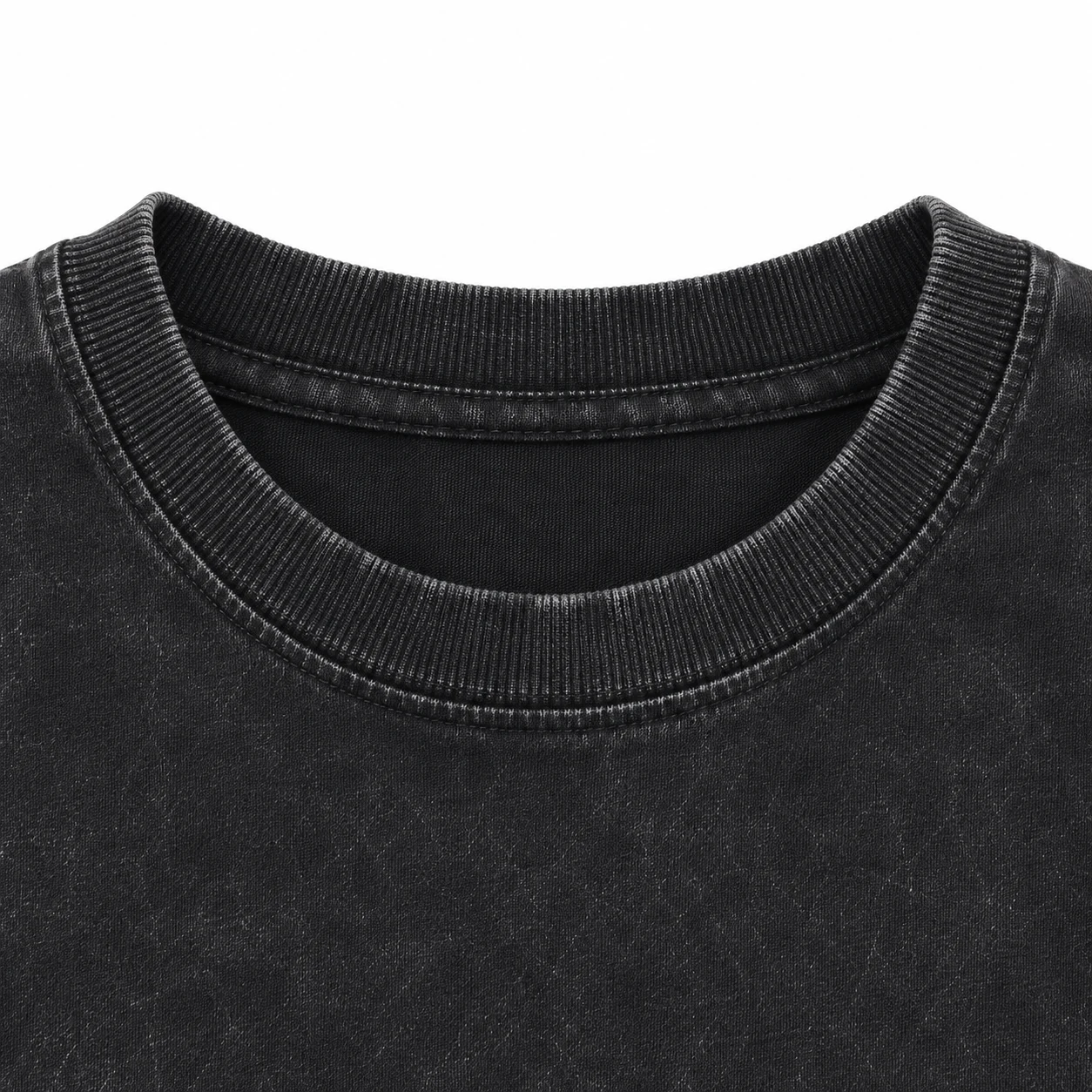
The crew opening frames a plain, dark front, so a small change in rib height or neck circumference is visible. Specify the opening using the same measurement points across the size chart, and identify whether the desired dimension is measured relaxed or extended. The visual reference shows a narrow dark neck edge; it does not prove the rib composition, stitch type or recovery percentage.
Ask for a physical neck trim with the proposed body cloth. Compare shade and surface under agreed lighting, then inspect the trim again on a garment after the proposed finish. A trim that matches before treatment can respond differently to the body. Record the trim supplier and sample version alongside the body fabric so the approved combination can be traced.
On the fitting sample, put the tee on and take it off repeatedly. Check whether the opening passes comfortably over the head, returns evenly, and lies flat at the front and back. Compare both shoulder junctions for ripples or inconsistent tension. A sample that looks symmetrical on a table may still stand away from the neck on a wearer.
For grading, review the neck opening with shoulder width and intended size range. An oversized chest does not automatically require an equally oversized collar. Mark label or print placement on an inside drawing and check comfort at the neck. Confirm the seam and label attachment with the supplier rather than inferring them from a generated detail image.
If the brand requests a different rib height, body fabric or finishing route, identify it as a new sample decision. Record the relaxed measurement, shade reference and acceptable visual range with the accepted garment. Ask how the supplier will check recovery and whether the revised combination needs a further fitting sample before order approval.
How should dropped shoulder and sleeve be reviewed?
X-51 is presented as an oversized tee with a shoulder seam extending beyond the natural shoulder. The shoulder point, sleeve length and chest width work together: increasing width without revisiting the sleeve measurement can place the hem farther down the arm than the buyer expects. The catalog's 300 GSM and 26s are reference values, not proof of the finished material or drape.
Draw the shoulder line and define where sleeve length begins. Supply chest, shoulder, upper-arm and sleeve-opening measurements for the base size. For grading, identify which points change and by how much; a single chest-width target cannot describe the full oversized shape. Compare the proposed chart with the intended wearer and the trousers or layer used for fitting.
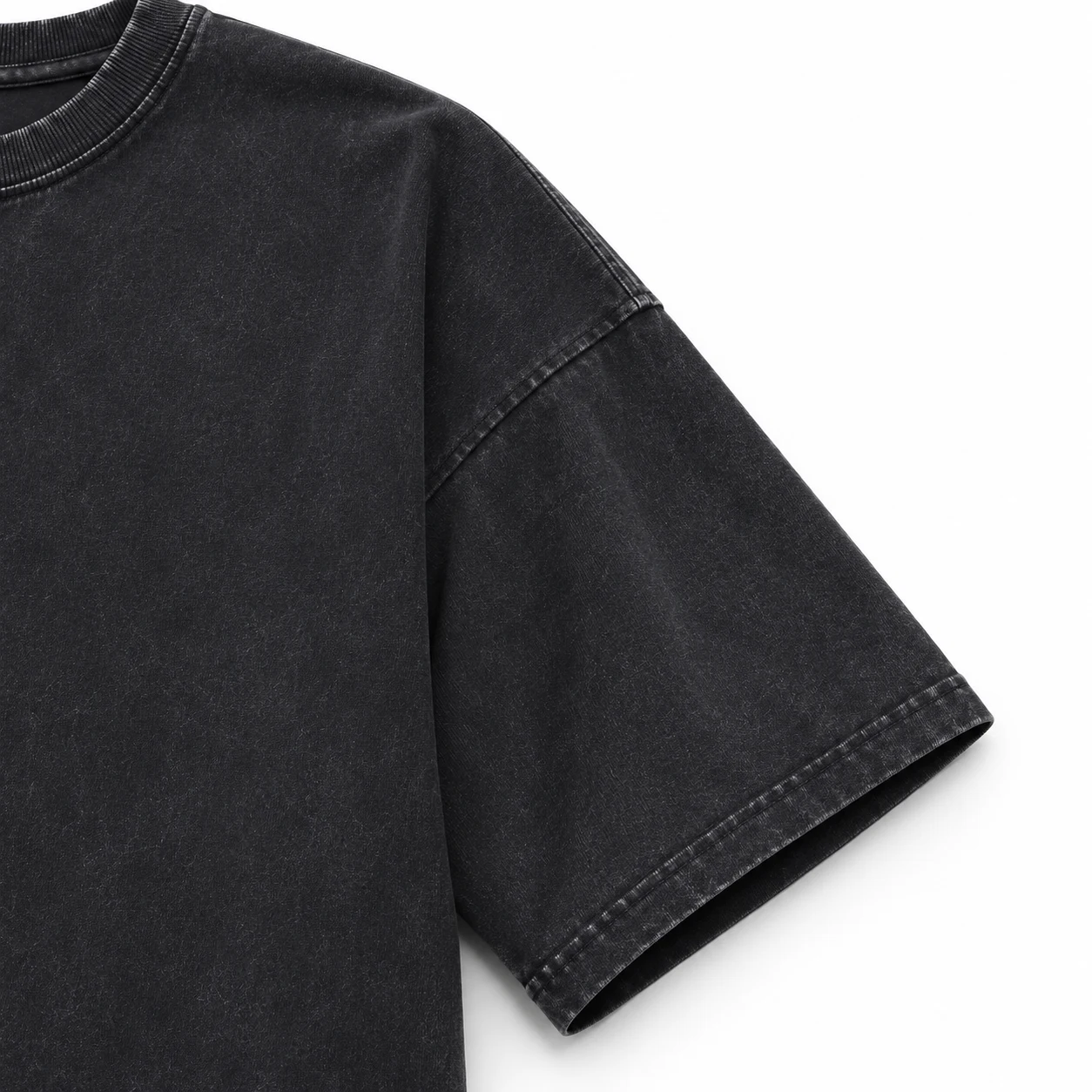
Request a sample in the selected cloth. Fabric weight and construction influence how the extended shoulder falls, but a GSM number alone cannot establish hand or stiffness. On the wearer, observe the front and side with arms relaxed, then reach forward and raise the arms. Note whether the body lifts excessively, whether the underarm pulls, or whether one sleeve twists differently.
Lay the sample flat to compare the left and right shoulder points and sleeve hems. Mark any imbalance against the same measurement method rather than judging from a perspective photograph. The source does not establish the interior seam method; ask for a physical inside view and the supplier's proposed construction before writing it into the final pack.
A wider sleeve opening or a shifted shoulder affects the visual balance of a plain tee and may change consumption and grading. Consolidate requested changes on a versioned drawing. Retain the fitting notes with the cloth reference and request a revised sample when a pattern or material change affects the approved fall.
How should sleeve edge and opening be reviewed?
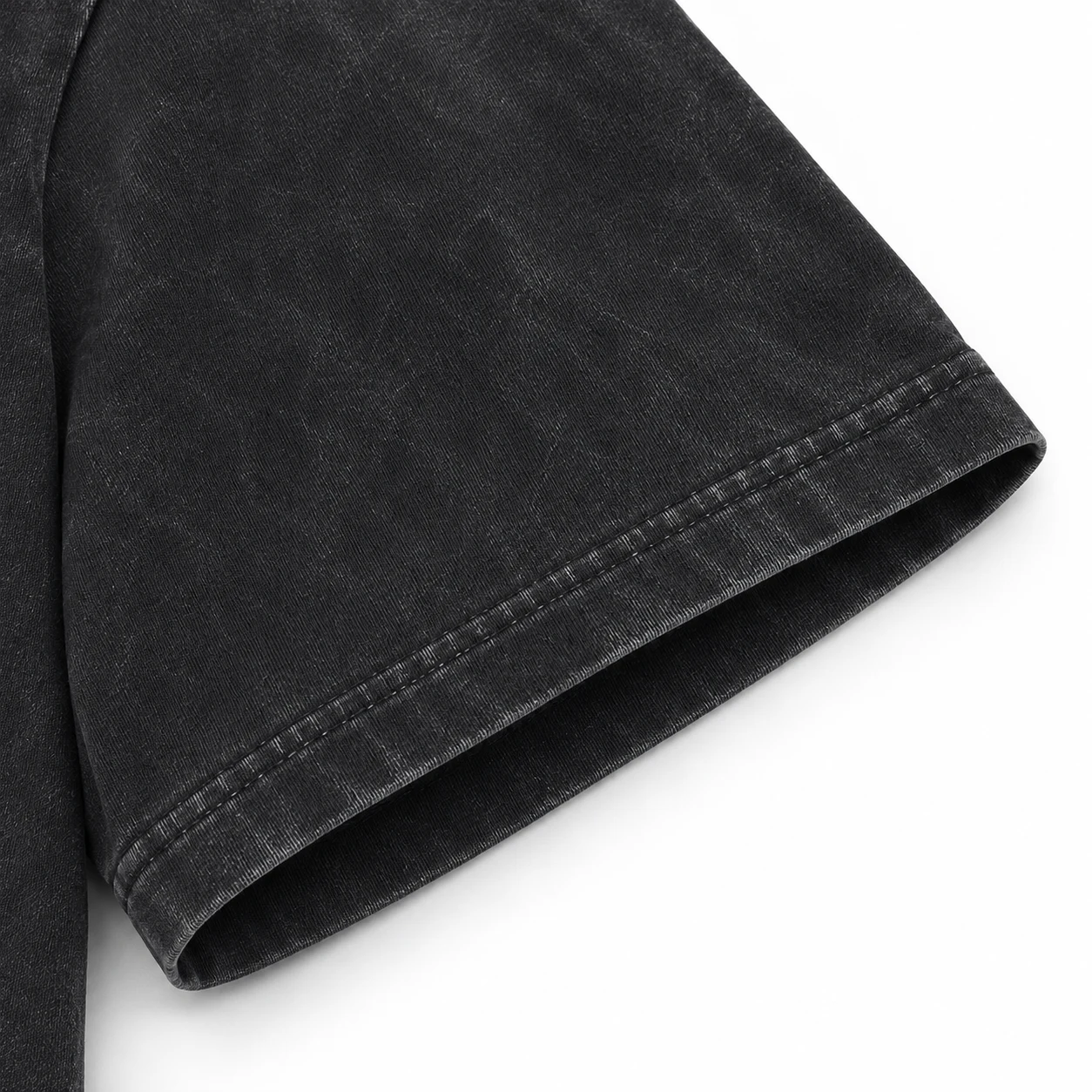
The reference shows a finished short-sleeve edge. Set the sleeve opening and the finished sleeve length independently: the first controls room around the arm, while the second affects the proportion of the oversized shoulder. Specify whether the desired hem is to sit above or closer to the elbow on the wearer used for fitting.
Provide a flat drawing with the measuring points and intended edge appearance. The visible source suggests a stitched hem but does not establish the original stitch class, thread or internal allowance. Ask the supplier to show a representative edge in the chosen material, including the inside, before making a production specification from a rendering.
Compare both openings and the distance from the shoulder point to each finished edge. Check the hem laid flat for uneven folding, waviness or visible tension. During fitting, move the arms forward and outward and observe whether the sleeve turns or binds. A broad body can still have an uncomfortable opening if the sleeve dimensions are not specified.
If a proposed finish is used, inspect the whole garment after that process. Compare sleeve-edge appearance with the body and examine whether the edge twists or the two lengths diverge. Use the same measurement method before and after the agreed care trial; record observations as sample results, not as a promised performance claim.
Artwork near the edge needs its own placement measurement and trial. Avoid placing an added mark solely by eye on a scaled mockup, because changes in sleeve size or hem depth can move it. Approve the finished opening, edge appearance and any decoration together, and identify which changes require another sample.
How should lower hem and washed appearance be reviewed?
The tee's plain lower edge and mottled charcoal appearance make length and color distribution important. The catalog calls the visual direction snowflake and shows several colors; it does not provide a verified processing recipe or confirm current availability of every color. Treat the image as a visual reference and ask for the actual supplier's process proposal and material submission.
Measure front and back body length from agreed points and record the finished hem width. Compare the tee with the intended trouser rise: a longer body can cover the waistband, while a shorter body leaves more of a wide-leg pant visible. Fit the chosen size before changing length, since shoulder drop can alter the perceived proportion.
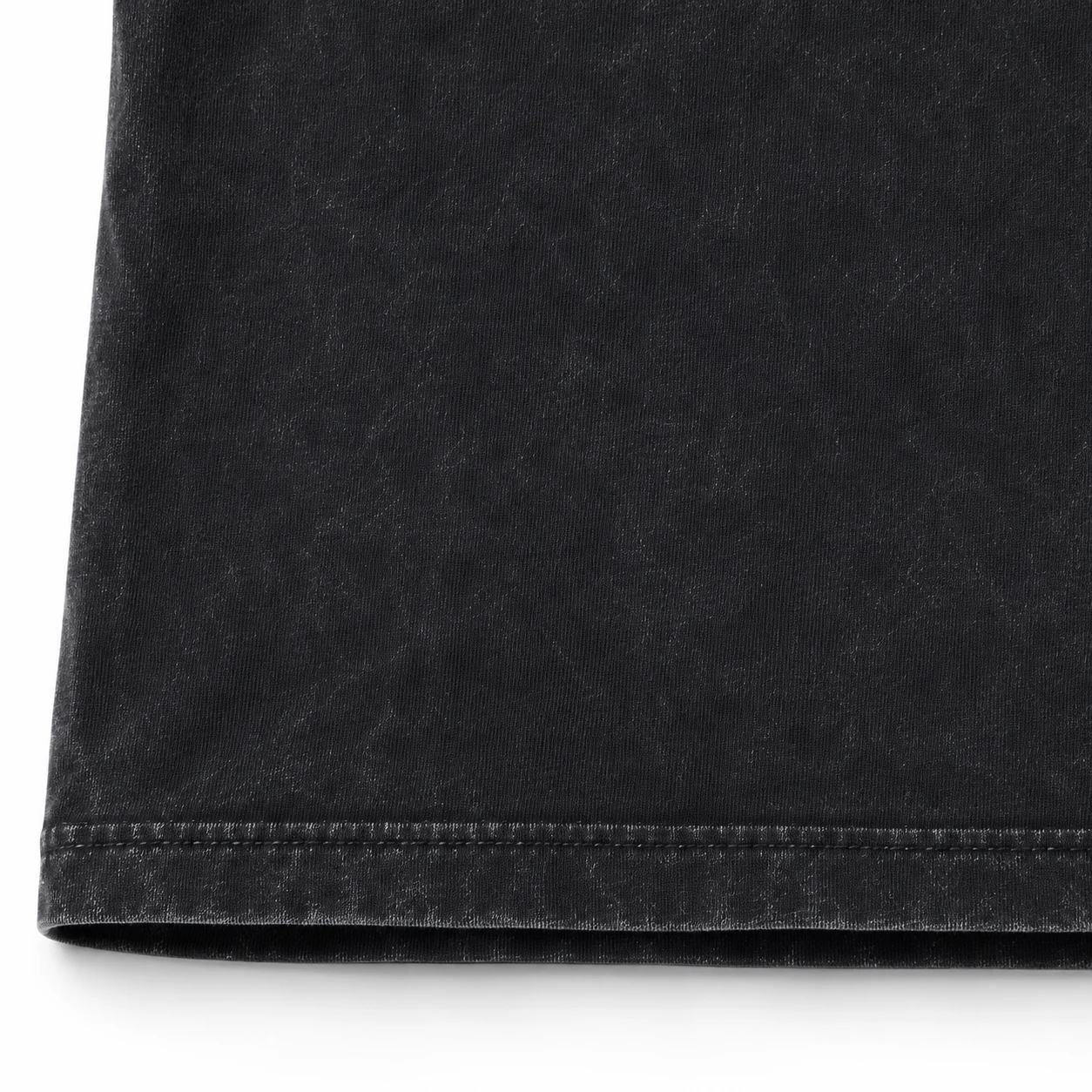
Establish a shade and distribution range on physical submissions rather than accepting one screen image as an exact target. Compare center front, side seams and lower edge under consistent lighting. Keep the untreated material reference and finished trial identified by version; a change in material or process can change both appearance and dimensions.
Lay the garment flat to check the lower edge for twisting, uneven depth or side-to-side length differences. Then observe it on a wearer after ordinary movement. If the hem lifts or waves, determine whether the issue arises from the pattern, assembly tension, material behavior or a finishing trial before requesting a correction.
Approve the physical color range and measurement record together. If graphics or labels are added, assess their placement and appearance on the actual proposed surface. Retain the approved garment, color reference and written tolerance with the order pack, and obtain a project-specific quotation for material, quantity and timing.
What belongs in a X-51 sampling package?
Start the technical pack with X-51 and the source image, clearly labeled as the visual starting point. Add a separate front and back drawing with the intended base size, measurement locations and the desired position of the shoulder point. The supplied front does not confirm the back construction, so identify the proposed reverse separately and ask the supplier to verify it. Record whether the body is intended to fall straight and where the sleeve should sit relative to the elbow.
The catalog’s 300 GSM and 26s are useful leads for the material discussion, not a complete fabric specification. Request the actual fiber content, construction, target weight and a physical cloth submission. Ask the supplier to identify the body and neck rib separately. If the desired surface is washed-looking charcoal, submit a physical color reference and compare the proposed untreated cloth and finished trial. Describe an acceptable range of light and dark distribution rather than relying on a screen photograph as a single exact shade.
On the base-size fitting sample, measure chest, body length, shoulder width, sleeve length and sleeve opening from written points. Check the neck opening when pulling the tee on and off, then observe the shoulder and sleeve during a forward reach. Lay the garment flat to compare the sleeve hems and lower edge on both sides. Capture the observations in a dated fitting sheet linked to the material and pattern version.
If the front remains plain, state this in the pack. If a brand mark is planned, provide the editable file, actual dimensions and placement from a stable seam or neckline. Request a trial on the selected finished surface; a digital mockup cannot establish the final appearance or hand. Supply label artwork and packaging requirements as separate files and confirm any care information with the selected materials.
Consolidate requested design changes separately from departures from the approved sample. For example, a request for a wider sleeve is a pattern revision, while mismatched sleeve lengths need investigation against the agreed tolerance. Recheck the finished garment after the agreed care trial and retain the accepted sample, shade range, measurement chart and artwork proof together. Material availability, minimum quantity, cost and timing require a written project-specific quotation.
Which specifications belong in the brief?
The front catalog reference labels the style 300 GSM and 26s and shows a charcoal short-sleeved oversized tee. Fiber, construction, back and the actual treatment are not established.
| Component | Reference and development decision |
|---|---|
| Style | X-51 |
| Visible design | Oversized body · dropped shoulders · short sleeves |
| Material and weight | 300 GSM and 26s listed in the source catalog; confirm the actual material; Fiber composition and construction to confirm |
| Color and finish | Charcoal visual reference; exact treatment to confirm. |
| Fit review | neck opening and trim submission; shoulder and sleeve measurement points; both sleeve hems after the proposed treatment; front length and the approved charcoal range |
| Branding | Artwork, labels and packaging are development options; confirm with a physical trial. |
| Minimum and schedule | To be quoted for chosen materials, quantities, colors and destination. |
Customization and information to confirm
| Item | Options or reference | What to confirm |
|---|---|---|
| Body material | 300 GSM and 26s listed in the source catalog; confirm the actual material | Fiber composition and construction to confirm |
| Fit and grading | Oversized body · dropped shoulders · short sleeves | Provide agreed measurement points and a graded size chart. |
| First review | neck opening and trim submission | Confirm on the physical fitting sample. |
| Second review | shoulder and sleeve measurement points | Record the target and permitted variation. |
| Third review | both sleeve hems after the proposed treatment | Review on the intended materials and pattern. |
| Fourth review | front length and the approved charcoal range | Compare before and after the agreed trial. |
| Artwork and labels | Brand files and packaging are optional development inputs. | Supply actual dimensions, placements and artwork. |
| Quantities and delivery | Color and size quantities, destination and target date. | Obtain written minimums, scope, freight and schedule. |
Where should a tee graphic and label sit?
The plain front makes the position of a small mark visible. Supply an editable file and measure its finished width and placement from the collar or center front. Check the placement on the actual base size after the shoulder and body length are agreed; a wider shoulder can change its apparent position.
For a neck label, review the attachment and comfort against the relaxed opening and selected rib. If a print is requested, trial it on the finished charcoal surface and confirm its appearance and hand with the supplier.
How should the tee sample be reviewed?
Record the collar opening, shoulder points, both sleeve openings and front and back body length on a single fitting sheet. Photograph the garment laid flat as well as on the intended wearer. Identify the base size, pattern revision and actual cloth reference for every measurement.
A sleeve that is longer than the approved tolerance is a sample discrepancy; a request to move the sleeve closer to the elbow is a design revision. Give each its own disposition, and recheck both sides after a correction. Retain the accepted sample and its measurement record together.
How should the charcoal surface be approved?
The catalog calls the visual direction snowflake, but a picture cannot establish the original recipe. Ask the supplier to identify the untreated cloth, proposed treatment and finished trial by version. Compare the center body, seams, sleeve edges and lower hem with a physical shade range under agreed lighting.
Measure the same tee before and after the agreed care procedure. Record the observed body length, sleeve length and relaxed neck opening, together with any change in the visible mottling. If either fit or color falls outside the agreed range, revise the proposal and review a new trial.
What can alter a plain tee’s proportion?
An oversized body can look too long because of the pattern, a low shoulder, or the way a selected cloth hangs. Measure from the agreed neck and shoulder points before changing the pattern. Review the garment with the intended trousers rather than using a single photograph to set the hem position.
An uneven neckline may arise from the trim, assembly tension or the finish. Compare the original rib submission and the finished sample, then identify the corrective action. Record whether the material or collar pattern changed and check a revised sample before approval.
What evidence is available for X-51?
The front catalog reference labels the style 300 GSM and 26s and shows a charcoal short-sleeved oversized tee. Fiber, construction, back and the actual treatment are not established. The product and model visuals on this page are AI-generated illustrations, not photographs of a production sample. Obtain a physical material, measured garment and written quotation before a sourcing decision.
How can the tee balance a wide trouser?
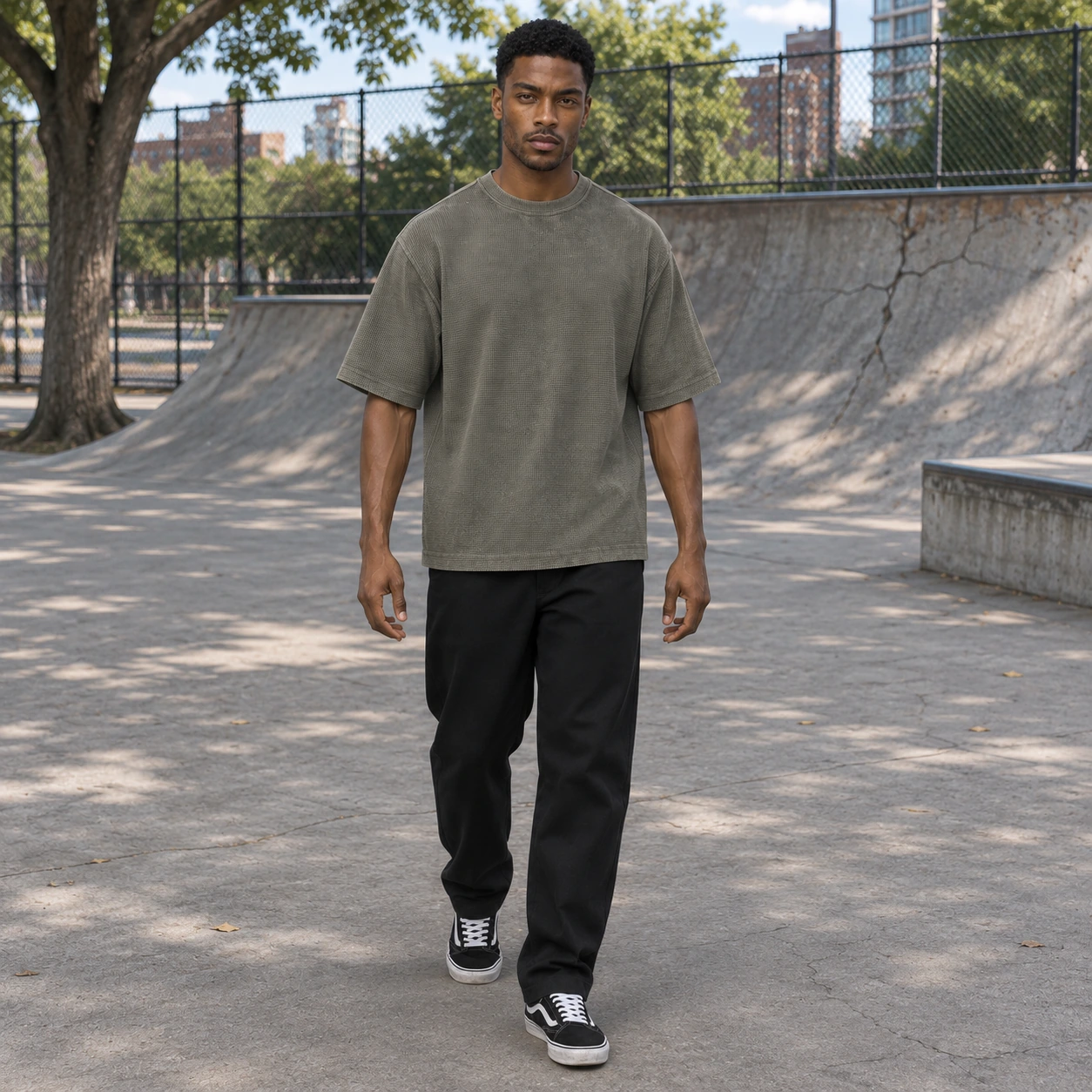
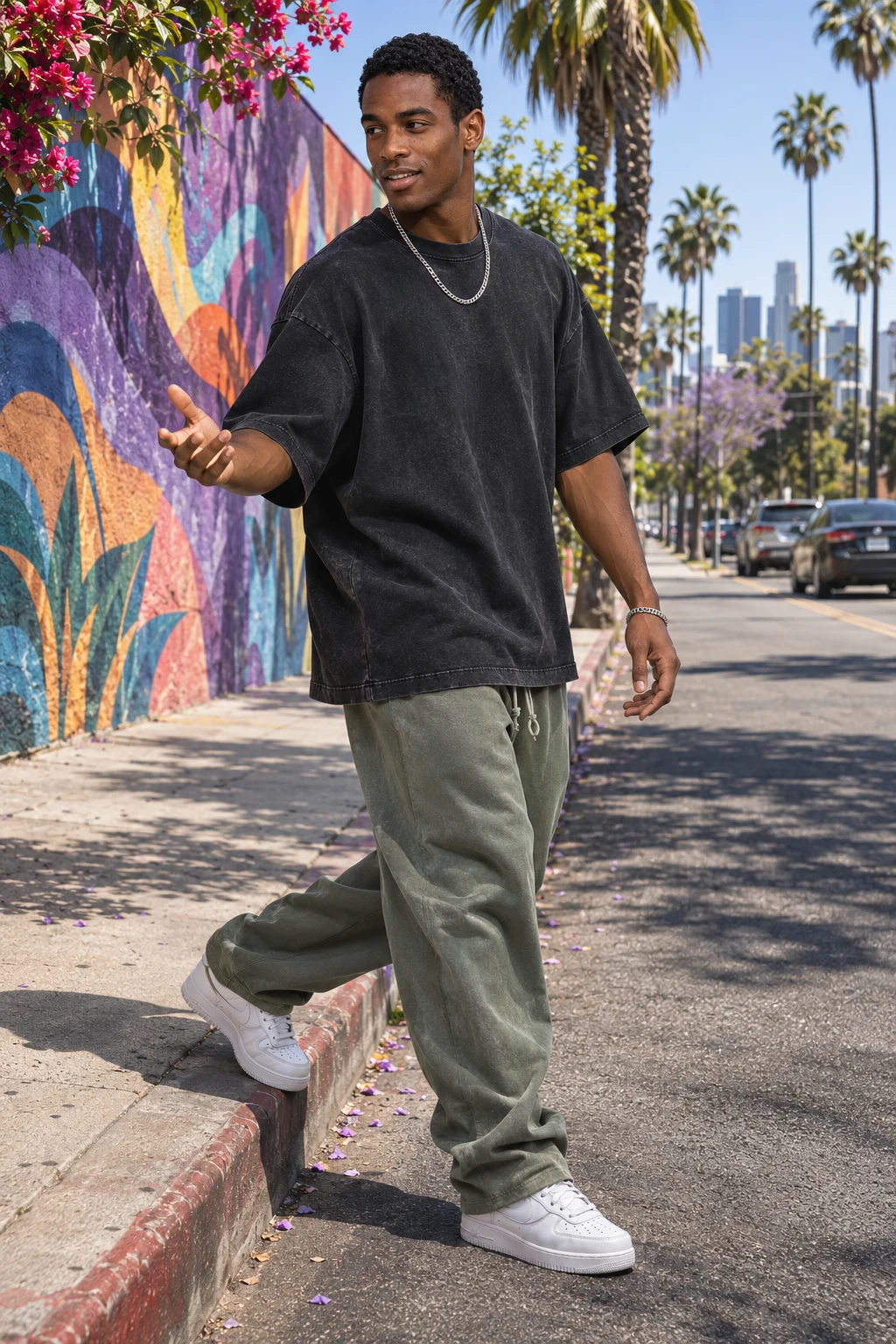
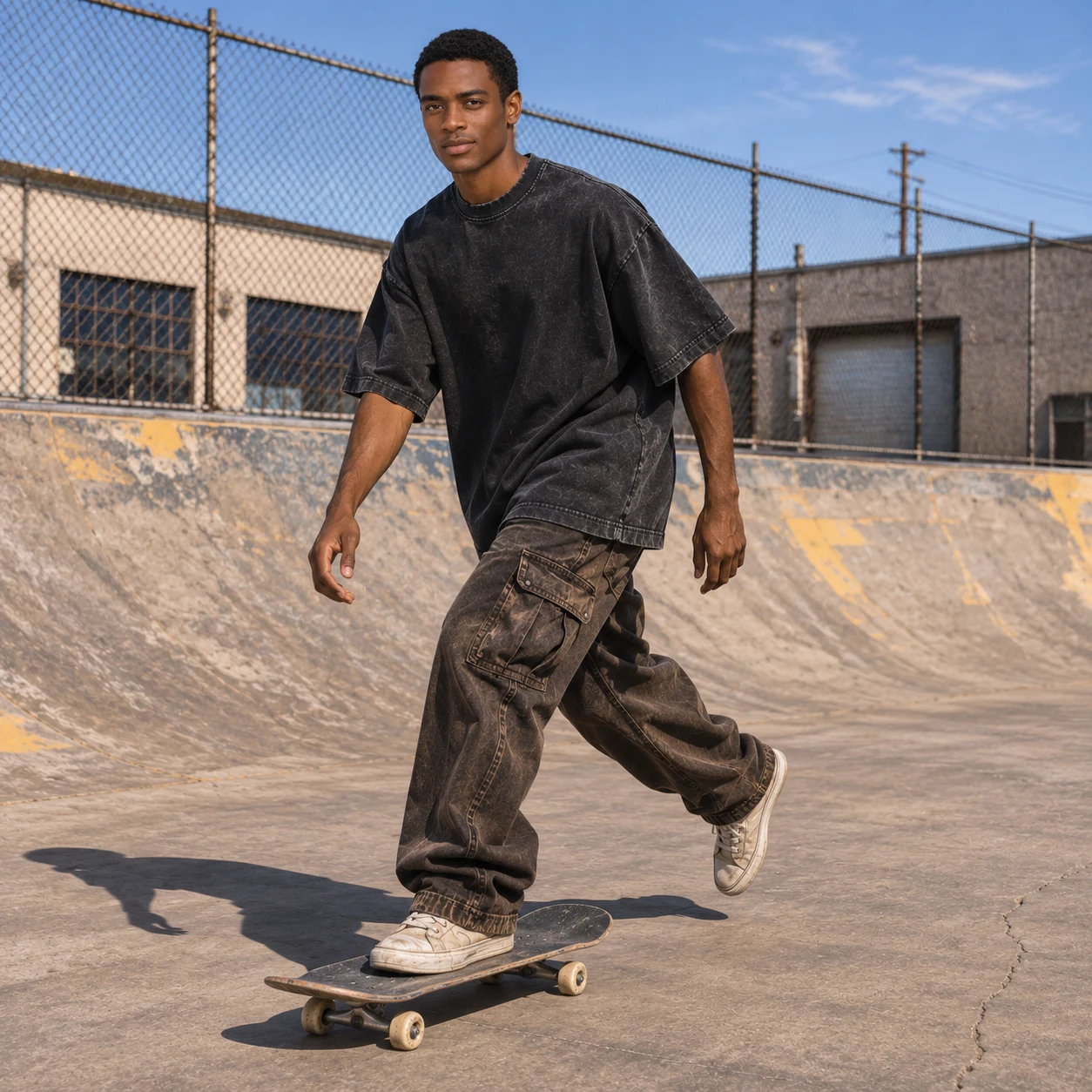
The broad short sleeves and plain dark body can sit over a wide-leg trouser. Compare the lower hem with the intended waistband and examine the sleeve position from the front and side; length and shoulder drop affect the silhouette together.
The model image is an AI-generated styling direction. Confirm the chosen charcoal shade and fit with a physical garment before treating the outfit as an order reference.
Which collections suit X-51?
The plain charcoal tee provides a base for brands that want fit and material to carry the design. It is useful when a collection needs a broad short-sleeve layer without a large front graphic. Use the 300 GSM and 26s catalog references to begin the material discussion, then confirm the actual cloth and drape.
What is needed to quote the tee?
Provide the desired size range, quantities by color and size, target body and sleeve proportions, neck-trim direction and intended destination. Identify whether the front stays plain or needs artwork and supply its dimensions. Request the proposed cloth and finishing route rather than assuming they follow the catalog photograph.
Ask the supplier to itemize sample scope, material availability, minimums, decoration and freight. Changing the weight, rib or color range may change the quotation and should be documented before the next sample.
Questions about developing X-51
What does 300 GSM mean here?
It is a source-catalog weight reference. Confirm the selected fabric and finished sample; weight alone does not establish composition or hand.
Does the catalog confirm cotton content?
The supplied source does not establish fiber composition. Request the material specification and physical submission.
Can the oversized fit be changed?
Provide chest, shoulder, sleeve and length measurements together, then review a revised fitting sample.
Is the snowflake effect a known formula?
The image is a visual reference. Obtain the supplier’s proposed treatment and compare a finished trial.
Can a print be added?
Supply artwork and placement, then test the chosen method on the actual selected surface.
How should the collar be approved?
Record its relaxed opening and rib height, then assess shade, comfort and recovery on a sample.
What are the minimum and lead time?
They depend on the selected material, quantities, colors and destination; request a written quotation.
What makes X-51 ready for production?
Keep the accepted body cloth and rib, relaxed neck measurement, shoulder and sleeve chart, finished charcoal shade range and physical garment in one versioned approval pack. Confirm the proposed treatment, inspection tolerances and order-specific quotation before production.
Discuss your heavyweight washed T-shirt development
Share the X-51 size chart, material direction, quantity and artwork or label files. We can review the sample scope and prepare a project-specific quotation.
Request an OEM review