Developing distressed hoodie for your collection
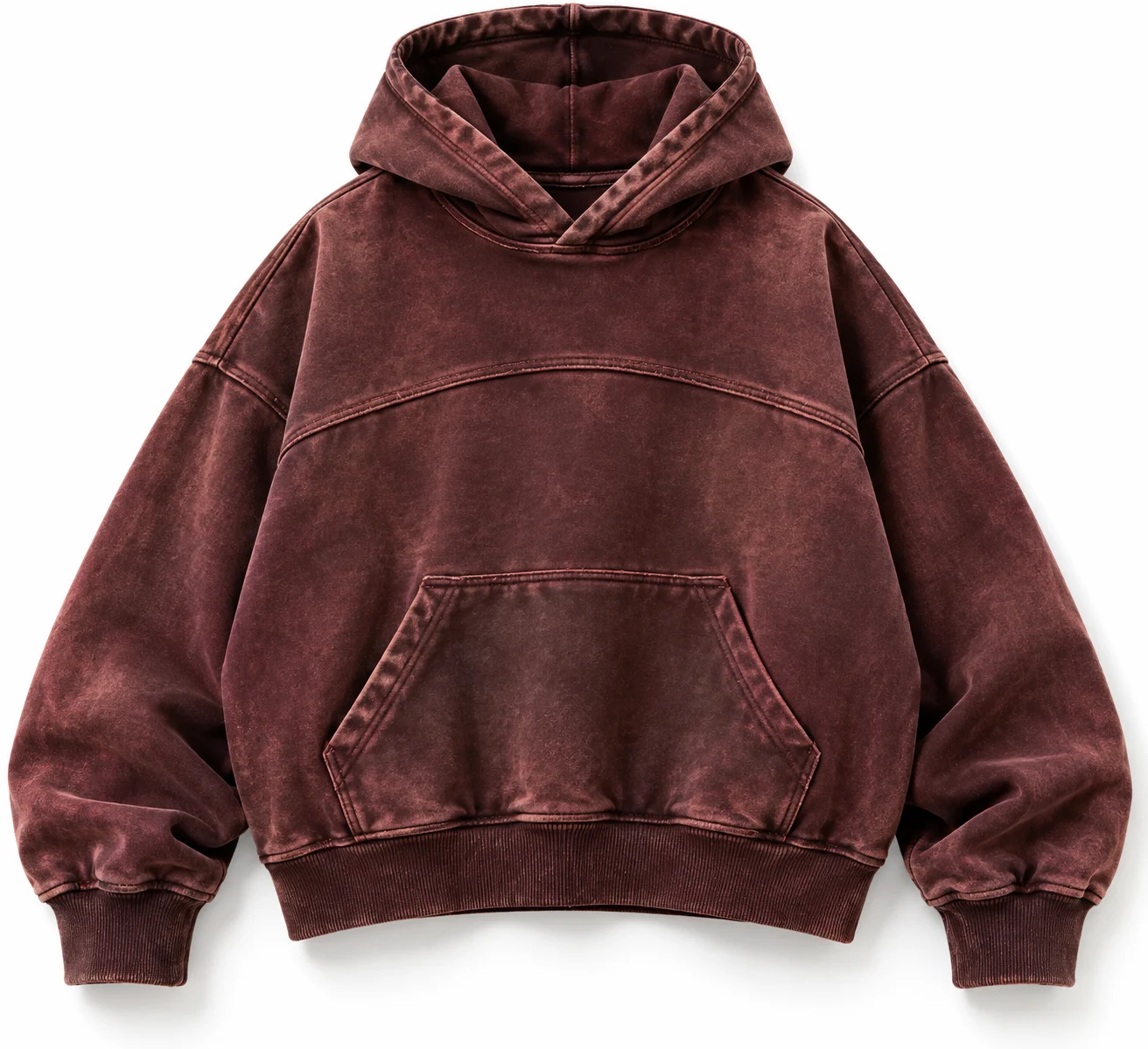
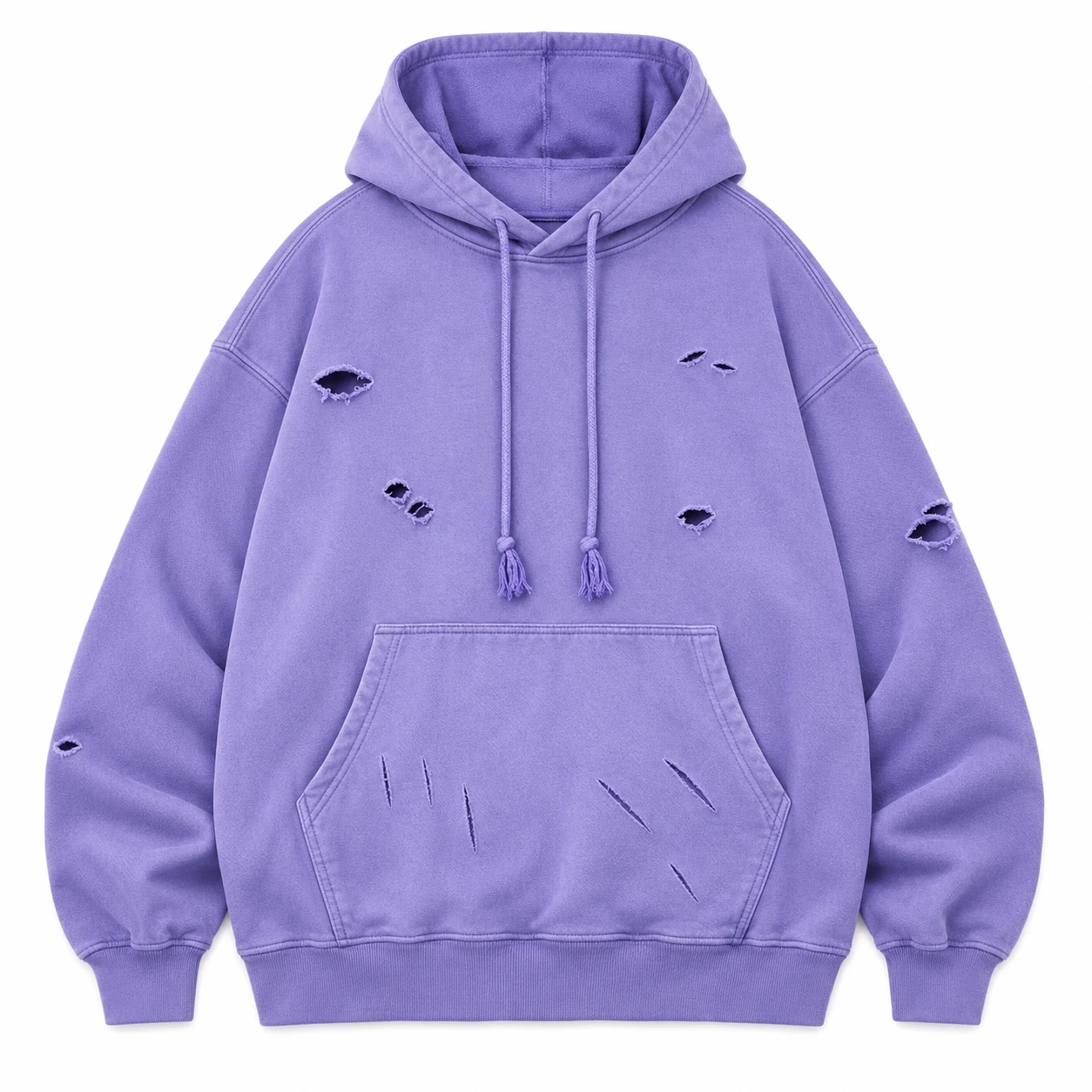
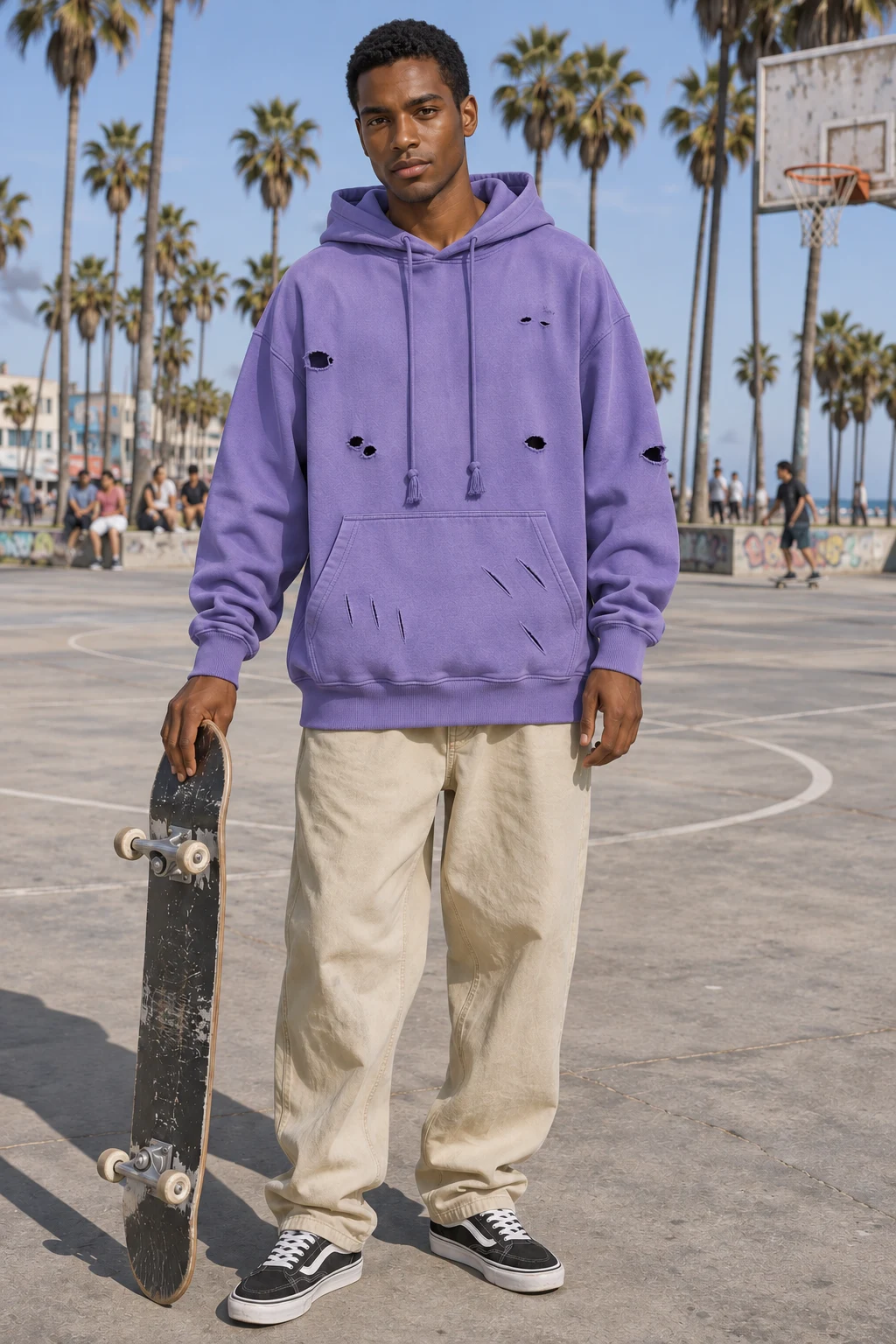
WY-08 is an oversized distressed hoodie reference with a purple body, drawcord hood, kangaroo pocket and ribbed cuffs and lower edge. Visible openings on the chest and sleeve, together with cuts on the pocket, give this pullover its character. Their placement is a design decision as well as a sample-review issue: a hole moved closer to a seam or pocket opening can change both the look and the usable area of the garment.
The catalog lists 420 GSM. It does not establish the fiber composition, interior fabric structure, exact distressing method or current color availability. Request a material submission and a physical finish trial rather than assuming those details from the source image or a generated visualization. Mark the intended openings on a versioned drawing, including the size, placement and areas that must remain intact, and agree how the marks will be treated across the size range.
Develop the fit around the intended wearer and layer. The hood depth, shoulder drop, body length, pocket position and relaxed rib openings should be assessed together. Compare the finished sample before and after the agreed care trial, paying attention to the edges of the distressed areas and the difference between body and rib shades. Retain the accepted sample, material reference and inspection notes with the order brief. Pricing, minimum quantity and delivery timing depend on the selected materials and scope.
Which details shape the distressed hoodie?
Confirm hood depth, drawcord length and trim on a worn sample.
Record each opening’s location and acceptable variation across sizes.
Check entry, pocket position and the relationship to the visible cuts.
Review the cuff and hem openings with the oversized body volume.
How should hood shape and drawcord be reviewed?
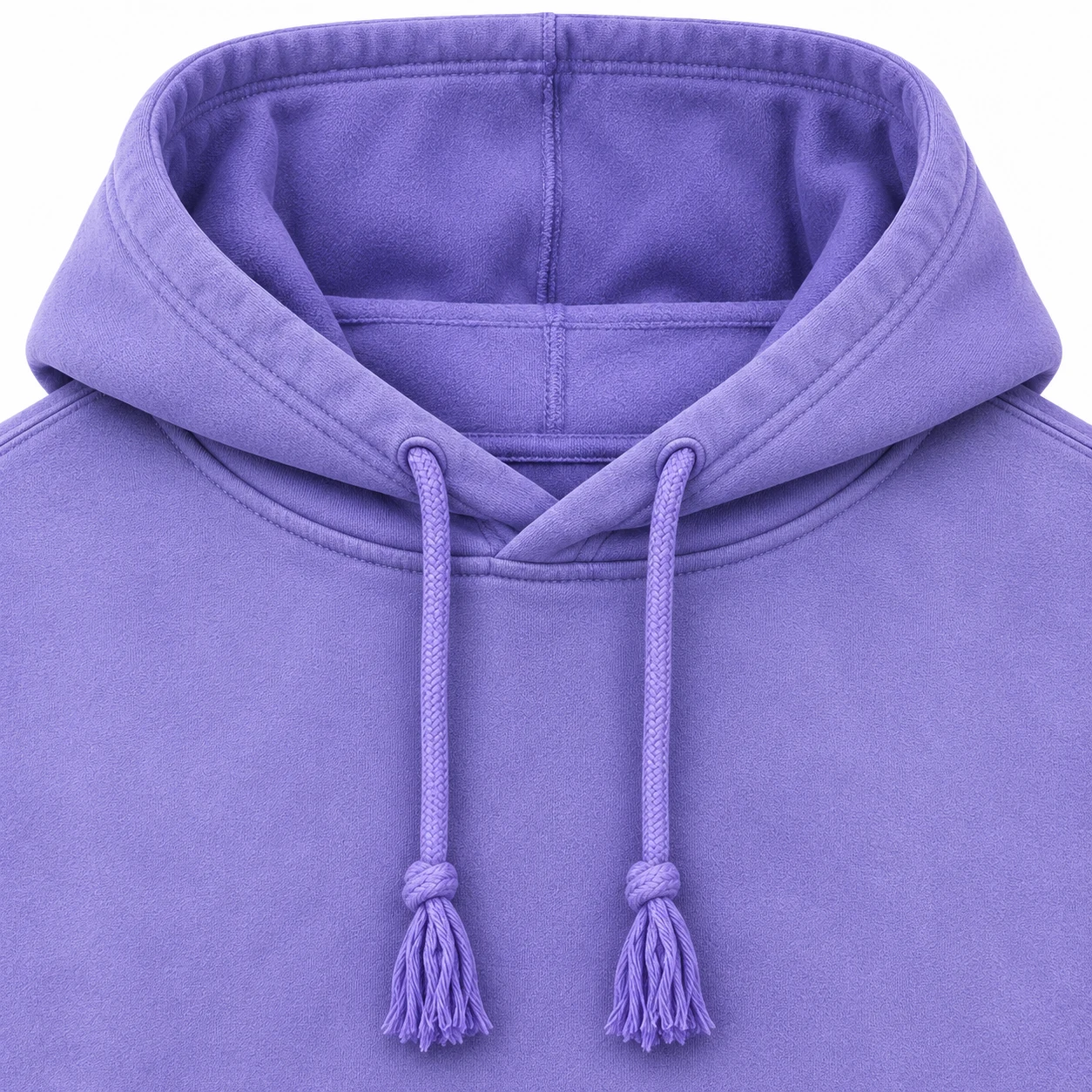
The catalog front shows a purple pullover with a hood and visible drawcord. The hood changes the neckline and the volume around the shoulders, so its depth and the length of the opening should be considered with the intended oversized body. A hood that looks substantial when worn down may fit differently when raised. The image does not confirm the number of pattern panels, interior lining, cord material or eyelet construction.
Begin with a front and side drawing. Mark the opening, height, depth and cord exit points, and identify the intended cord length on the fitting size. Request a physical hood sample in the chosen material and examine it both up and down. Check that the hood does not pull the neck backward and that the drawcord exits are symmetrical. Confirm the inside construction from a real sample rather than assuming that an illustrative rendering documents the original garment.
The catalog lists 420 GSM for the style, but weight by itself does not establish fiber content, interior structure or drape. Request the actual body material and any hood lining separately. Compare the shades after the proposed finishing process, particularly at seams and around the cord openings. Confirm whether the supplier can source the proposed cord and hardware in the selected color and quantity.
For sampling, try the hoodie over the intended base layer and move the head from side to side. Check whether the front opening is comfortable and whether the hood stays in the desired position. After care testing, compare the hood opening and cord length with the initial record. Keep the accepted sample, measurement points and trim references together. A change in material, hood depth or hardware can affect both appearance and costing and should be reviewed before approval.
How should distressed openings and placement be reviewed?
WY-08 is distinguished by visible distressed openings across the front, sleeve and kangaroo pocket area. Their placement is part of the design, but the supplied catalog image is not a complete map of every opening or a confirmed description of the process. The brand should mark each requested opening on a versioned front, sleeve and back drawing instead of assuming that a generated image records the original pattern exactly.
Define the location relative to stable points such as the neckline, shoulder seam and pocket edge. Add the approximate opening size, direction and desired density, and indicate which areas should remain intact. For a graded size range, decide whether the marks stay the same physical size or scale with the garment. A drawing on a base size alone may place a hole too close to a seam on a smaller size.
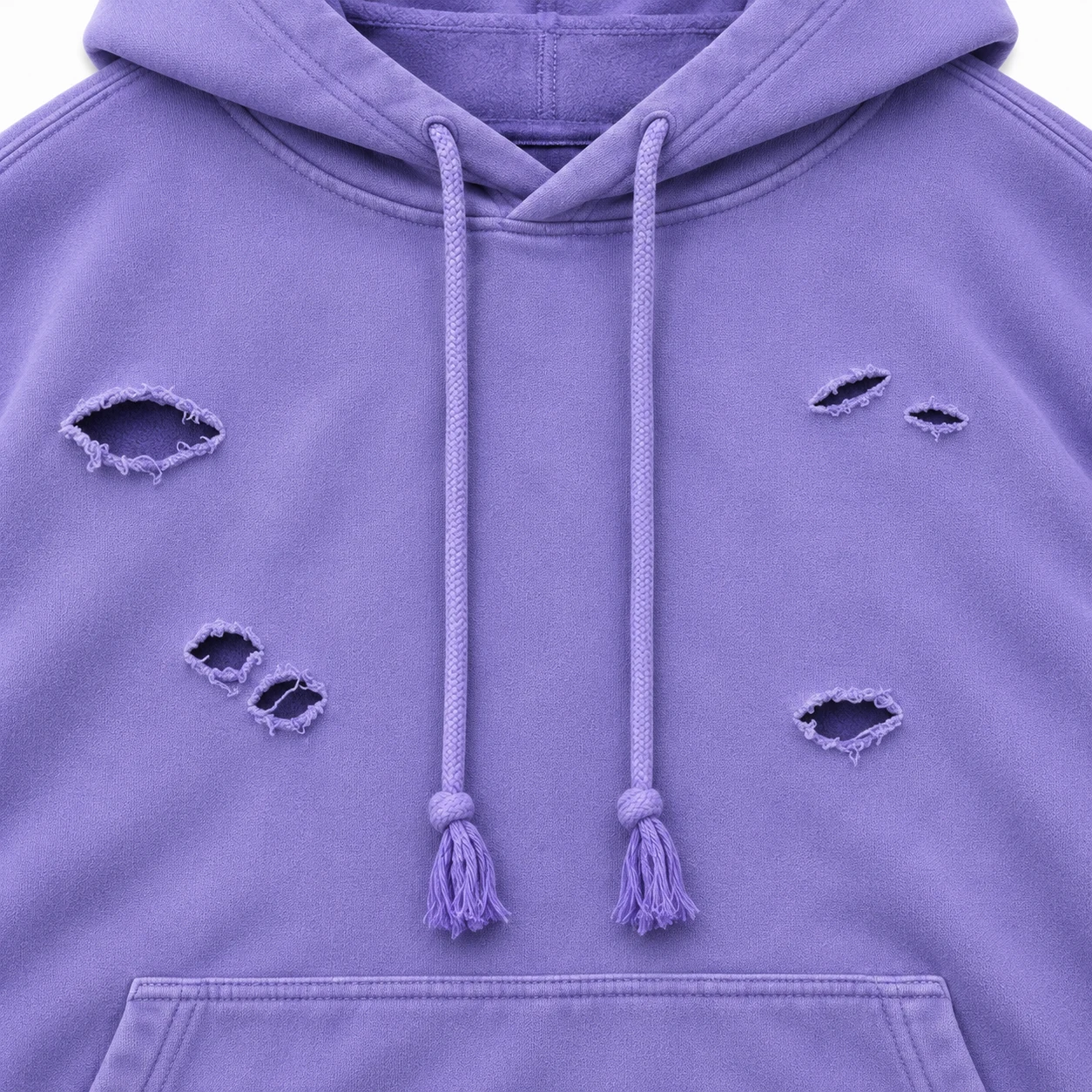
Ask for a physical placement trial on the intended fabric. Review the edges and the remaining material around each opening under normal lighting, then compare the appearance after the proposed finish and agreed care trial. Check whether an opening grows, whether loose yarns catch, and whether nearby seams or pocket joins are affected. These are sampling observations, not a guarantee of durability.
Decide the range of acceptable variation with actual sample references. An intentionally irregular effect still needs boundaries if the brand expects pieces to look related. Record the approved placement map, sample photographs, material and treatment version together. If a revised hole, new material or different finishing route changes the result, request another trial and settle the inspection criteria before ordering.
How should kangaroo pocket and front balance be reviewed?
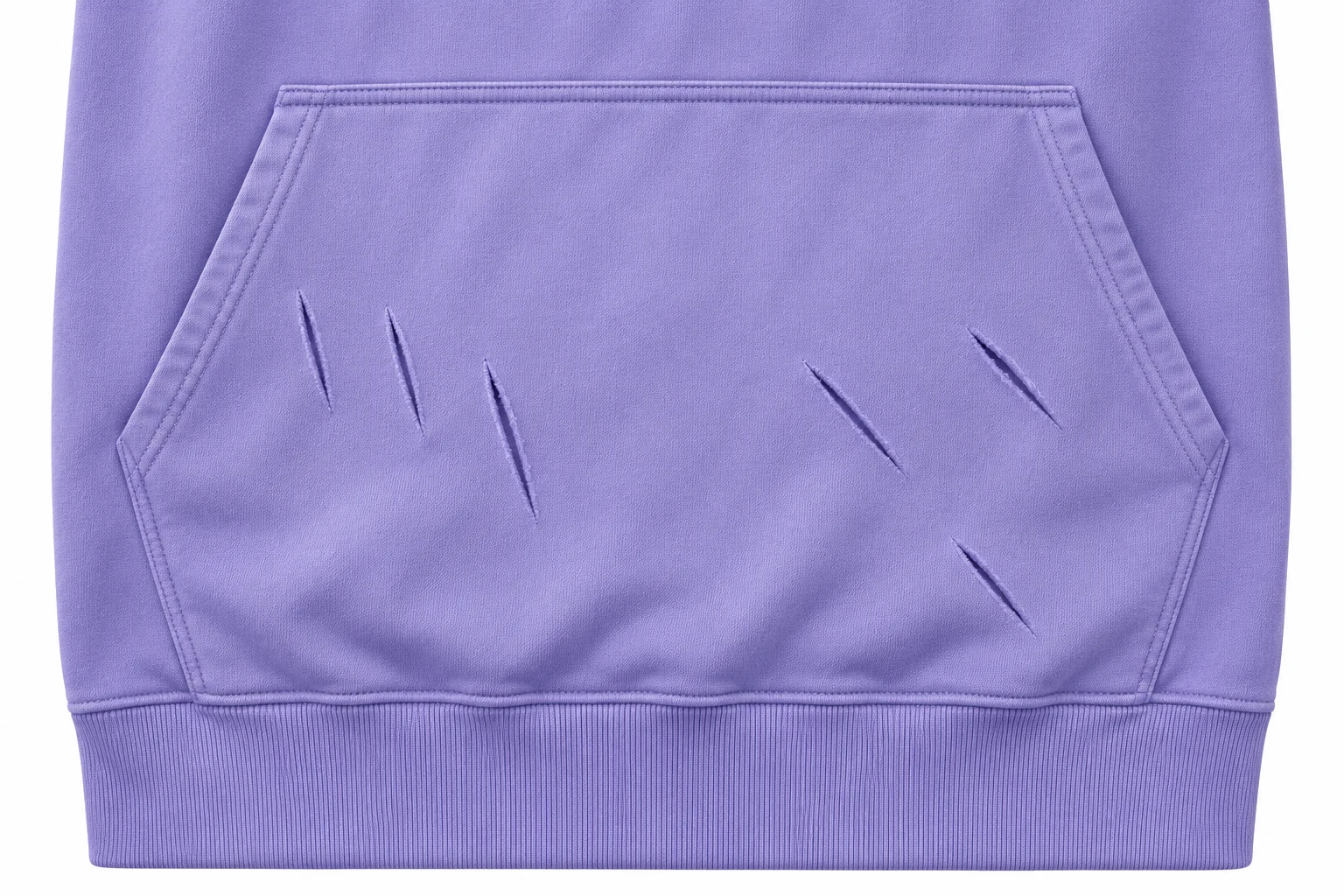
The front reference shows a kangaroo pocket integrated into the distressed visual direction. The pocket is both a functional opening and a large visual block on the lower body. Its width, height and position should be measured against body width and hem position, particularly when the hoodie is intentionally oversized. The photograph does not establish pocket-bag construction or reinforcement hidden inside the garment.
Mark the top corners, side openings and bottom edge on a flat drawing. Measure from agreed garment points and provide the intended hand-entry size. Review the pocket on the actual wearer: hands should enter naturally without forcing the front upward or restricting the intended relaxed fall. Compare the left and right entry angles and check that the pocket lies evenly when empty.
The visible distressing near the pocket needs a separate placement decision. Identify whether any openings are decorative only or whether an actual opening through the pocket layer is intended. Ask the supplier for an inside view and a physical trial so the effect does not unintentionally reduce the usable pocket or create an unapproved exposed area. Do not infer reinforcement, thread type or exact layering from the generated detail illustration.
After the proposed finish and care trial, compare pocket position, edge appearance and the surrounding body. Look for pulling, distortion or an opening that has expanded beyond the agreed visual range. If decoration or a label is added, mark its relationship to the pocket and distress map. Keep the approved pocket dimensions, placement diagram and sample version together with the graded measurement chart.
How should cuffs, lower rib and relaxed volume be reviewed?
The ribbed cuffs and lower edge frame the broad purple body. Their relaxed openings influence how the sleeve sits at the wrist and whether the body falls straight or gathers around the waist. Set the cuff and hem dimensions together with the desired shoulder drop, sleeve length and body length; an oversized label alone does not define their relationship.
Ask for body cloth and rib submissions in the proposed shade. The original image shows a color relationship but does not establish fiber blend, rib recovery or whether both components take the same finish. Compare each submission with the finished sample under consistent lighting. Record the body and rib references separately so a later substitution is visible in the approval record.
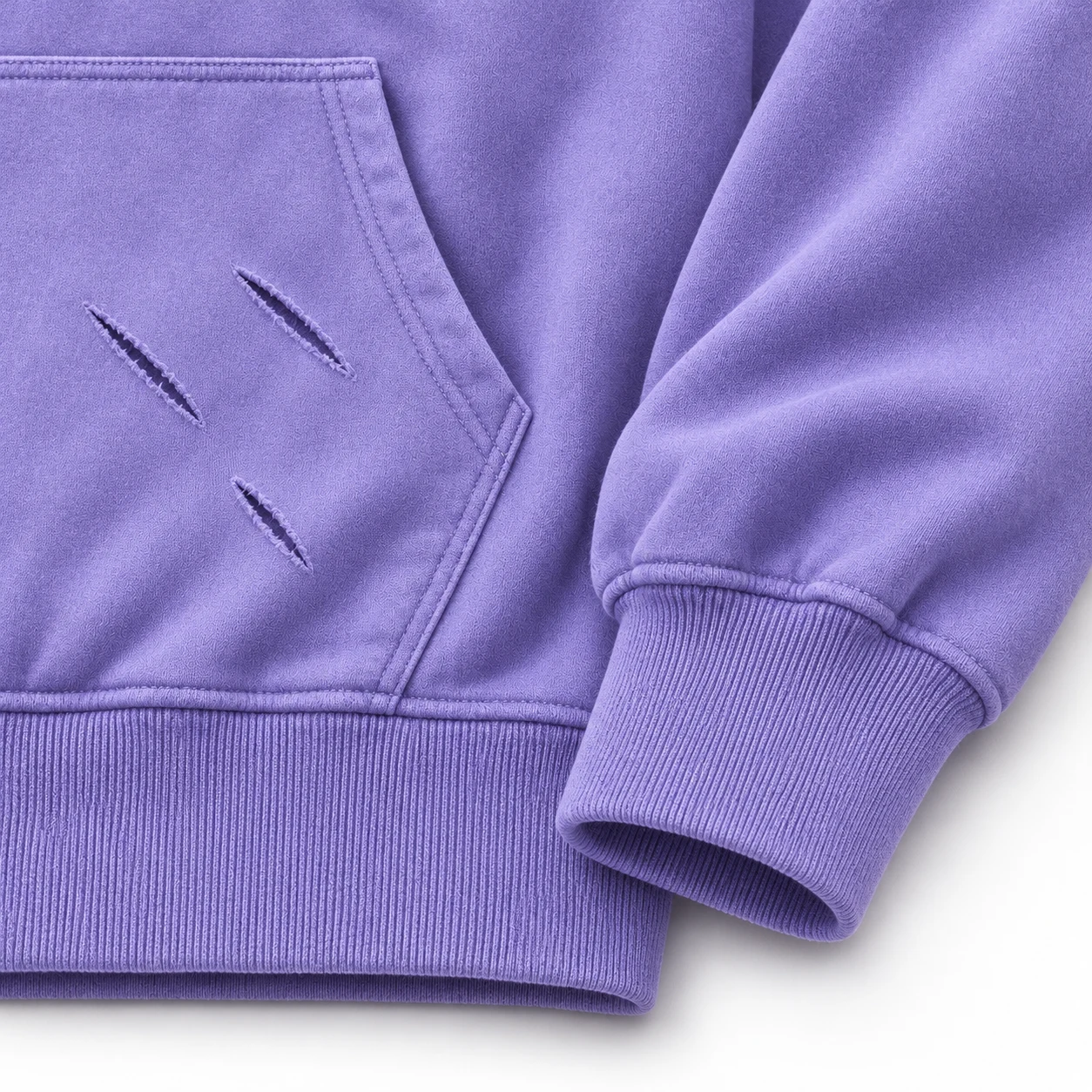
On the fitting sample, measure the relaxed cuff opening, cuff depth, lower band width and band depth using agreed points. Move the arms, reach forward and return to a neutral position. Check whether cuffs are comfortable, sleeves remain balanced and the lower edge returns to the intended position. A narrow band may gather the body; a wider band can create a straighter silhouette. Select the result on a garment rather than from a flat drawing alone.
Review the ribs again after the proposed care and finishing trial, noting shade differences, twisting or changes to the relaxed measurements. Inspect nearby distressed marks at the same time, since their final appearance may change in the process. Record the approved fit, rib shade and acceptable visual variation with the sample version. Any new rib material or altered hem width should trigger a fresh fitting review and project-specific quotation.
What belongs in a WY-08 sampling package?
Build the development pack around the hood, fit and a numbered map of distressed marks. Begin with the catalog front as a visual reference and a separate technical drawing for the proposed garment. Identify the base size and mark the hood opening, cord exits, chest, sleeve, pocket and lower rib. The source does not establish the back or internal pocket construction, so request those details explicitly and mark any new drawing as a proposal.
For every distressed opening or cut, record its position from stable points, approximate size, direction and the range of acceptable irregularity. Specify which locations must remain intact and whether marks should stay the same size or scale through grading. Include a pocket drawing that distinguishes the hand-entry openings from decorative cuts. Ask for a physical placement trial before approving the appearance; illustrations can help communicate the direction but cannot verify the exact original hole layout.
The source catalog lists 420 GSM, while fiber content, interior structure and the actual treatment remain to be confirmed. Request material and rib submissions, the proposed drawcord, and a finished trial in the intended purple direction. Compare the body, hood, pocket and rib under agreed lighting. Record the supplier’s material and finishing versions instead of assuming a recipe from the word snowflake.
Fit the sample over the intended base layer. Check shoulder drop, sleeve length, body length, hood position and relaxed cuff and hem openings together. Place hands in the pocket, raise and lower the hood, and review ordinary reaching movement. Photograph and measure any issue against the correct point: a request for a larger hood is a design change, whereas an asymmetrical pocket outside an agreed tolerance is a separate sample finding.
After the proposed care trial, examine distressed edges, pocket entry, rib shade and the same garment measurements. Note any changes without promising a predetermined result. Retain the accepted material, distress map, physical sample and written criteria together. Artwork and labels should be tested on the chosen finished surface. Provide quantities by size, destination and target date so the supplier can quote sampling, minimums and timing for the actual program.
Which specifications belong in the brief?
The catalog shows an oversized purple distressed pullover with a drawcord hood and pocket and labels it 420 GSM. Composition, reverse and exact distressing method are not established.
| Component | Reference and development decision |
|---|---|
| Style | WY-08 |
| Visible design | Oversized pullover · dropped shoulders |
| Material and weight | 420 GSM listed in the source catalog; confirm the actual material; Fiber composition and interior structure to confirm |
| Color and finish | Purple visual reference; exact treatment to confirm. |
| Fit review | hood shape and the selected drawcord; numbered distress positions and acceptable visual range; pocket entry and the interior pocket construction; rib openings, shade and response to the proposed finish |
| Branding | Artwork, labels and packaging are development options; confirm with a physical trial. |
| Minimum and schedule | To be quoted for chosen materials, quantities, colors and destination. |
Customization and information to confirm
| Item | Options or reference | What to confirm |
|---|---|---|
| Body material | 420 GSM listed in the source catalog; confirm the actual material | Fiber composition and interior structure to confirm |
| Fit and grading | Oversized pullover · dropped shoulders | Provide agreed measurement points and a graded size chart. |
| First review | hood shape and the selected drawcord | Confirm on the physical fitting sample. |
| Second review | numbered distress positions and acceptable visual range | Record the target and permitted variation. |
| Third review | pocket entry and the interior pocket construction | Review on the intended materials and pattern. |
| Fourth review | rib openings, shade and response to the proposed finish | Compare before and after the agreed trial. |
| Artwork and labels | Brand files and packaging are optional development inputs. | Supply actual dimensions, placements and artwork. |
| Quantities and delivery | Color and size quantities, destination and target date. | Obtain written minimums, scope, freight and schedule. |
How should branding work with the distress map?
Mark artwork separately from the numbered holes and pocket slashes. Specify the distance from the collar, chest openings and pocket edge on the actual base-size drawing; a print placed across an opening may look and behave differently from a print on uninterrupted cloth.
Supply editable artwork, label sizes and attachment positions. Test the selected method on the proposed purple finished surface and check whether a neck label affects comfort at the hood opening. Approve the artwork and distress layout together.
How should intentional distress be reviewed?
Give each chest, sleeve and pocket mark a number on the approved drawing, with its location, approximate size and acceptable variation. Identify the material and sample version, then compare the physical garment with the map. Distinguish intentional openings from unplanned damage or a pocket seam that misses its target.
Log the location, photograph, agreed criterion and disposition for every finding. A request to create a new hole is a design change; an opening outside the agreed range needs a separate correction. Reinspect the affected garment or replacement trial before closing the record.
How should the distressed finish be trialed?
Request the proposed process for the 420 GSM catalog direction and keep an untreated material reference alongside the purple finished trial. Confirm the actual composition and process with the supplier; neither the catalog image nor the word snowflake identifies the recipe.
After the agreed care procedure, compare the shape and edges of the numbered openings, pocket cuts, rib shade and body dimensions. Record actual observations rather than promising that the openings cannot change. If appearance or measurements miss the agreed range, update the process or material and review another trial.
What can change the hoodie’s intended look?
A hole too close to the pocket edge may change how the pocket can be used, while an altered body length may shift the apparent position of the same distress map. Review the map against the finished base-size pattern and repeat the check when grading a new size.
Hood, body and rib materials may take the finish differently. Compare their physical submissions and the complete garment before diagnosing a shade mismatch. Document whether a revised trim, treatment or placement requires a new sample and updated inspection criteria.
What evidence is available for WY-08?
The catalog shows an oversized purple distressed pullover with a drawcord hood and pocket and labels it 420 GSM. Composition, reverse and exact distressing method are not established. The product and model visuals on this page are AI-generated illustrations, not photographs of a production sample. Obtain a physical material, measured garment and written quotation before a sourcing decision.
How can the distressed hoodie anchor an outfit?
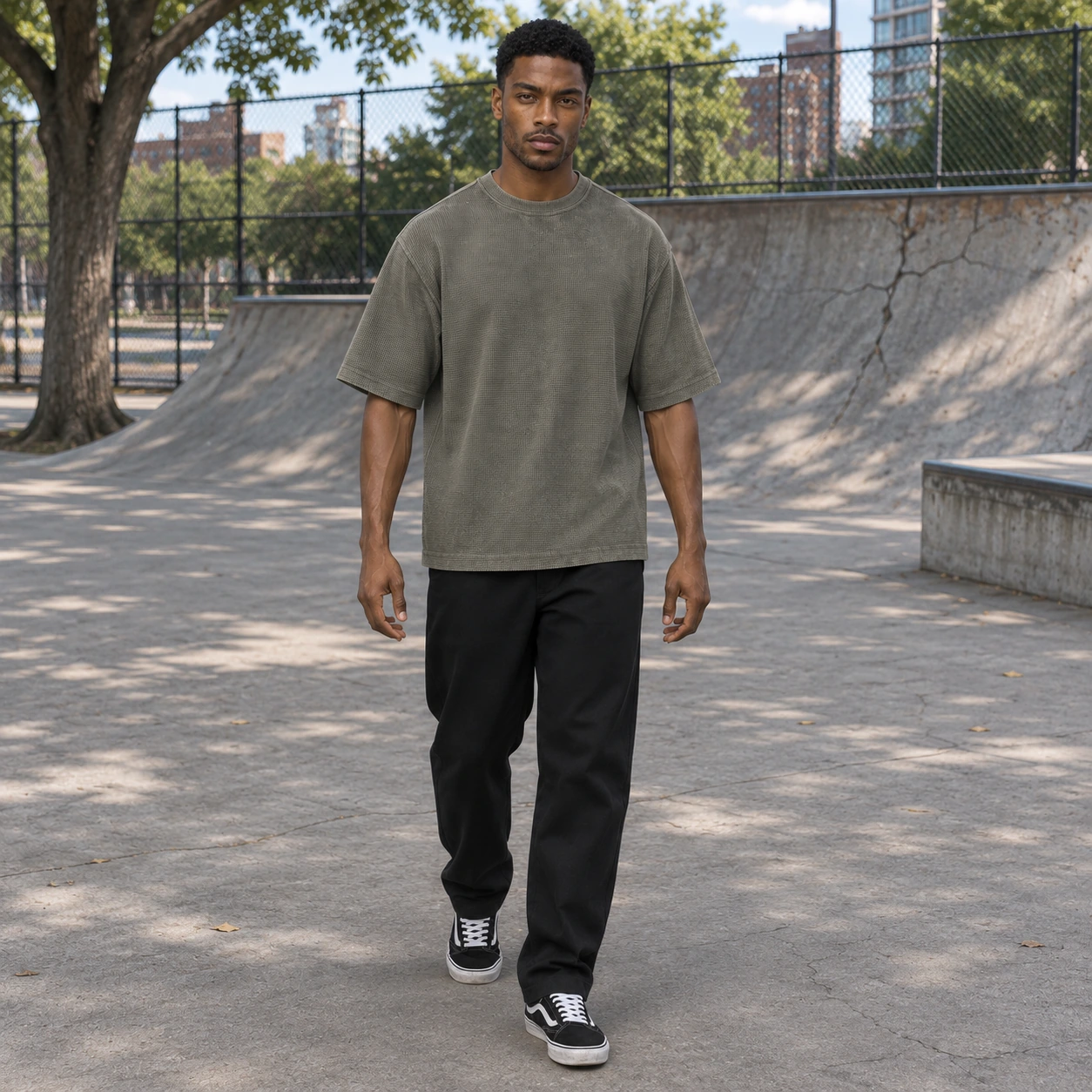
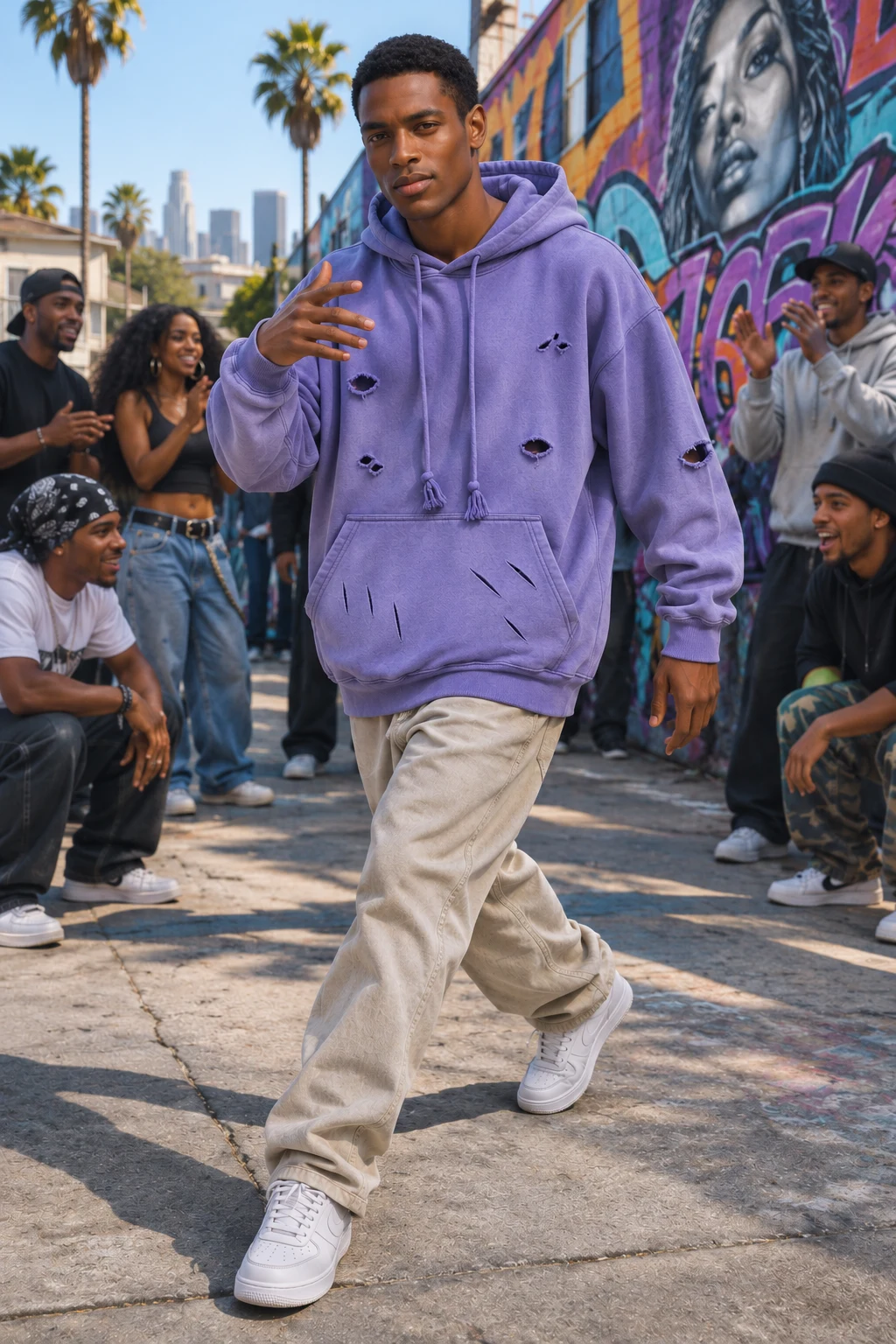
The purple body and visible holes can carry a relaxed look with quiet trousers. Fit the hoodie over the intended base layer and compare body length, pocket height and lower rib position before selecting the surrounding silhouette.
The full-body image is AI-generated for a streetwear styling direction. The exact hole distribution, color and fit must be approved on the physical sample.
Which collections suit WY-08?
The oversized purple pullover suits a collection that uses placed distress as its main visual feature. It is especially relevant when a buyer needs to control the relationship among the hood, chest openings and slashed kangaroo pocket rather than adding a large print. Approve the actual placement range on a sample.
What is needed to quote the hoodie?
Send the size chart, color and size quantities, proposed material and rib, hood and drawcord direction, and the numbered distress map. State whether the pocket cuts are decorative or are intended to open through a layer. The supplier needs this scope to price a meaningful trial.
Request written sampling costs, available purple shades, minimums, schedule and delivery terms. A changed number of openings, a different trim or new artwork can change both the sample scope and quotation.
Questions about developing WY-08
How is the distressed layout approved?
Mark each hole and cut on a size-specific placement drawing and agree a visual range using a physical trial.
Is the 420 GSM fabric composition known?
420 GSM is a catalog figure; fiber and interior construction need a material submission.
Can the holes be changed?
Yes, propose a new placement map and assess the revised result on the selected material.
Does the pocket remain usable?
Confirm its interior construction and hand-entry dimensions on a physical sample, especially around cuts.
Is the finish formula confirmed?
No. Request the supplier’s process proposal and compare an untreated material with a finished trial.
Can artwork or labels be added?
Supply placement and artwork; test their interaction with the distressed surface and finished color.
What are the minimum and timing?
They depend on the chosen fabric, finish, trim, quantities and delivery requirements.
What makes WY-08 ready for production?
Bring the approved purple material and rib, hood and cord submission, size chart, numbered distress map, physical finished sample and accepted variation range into one order pack. Record the agreed inspection and care-trial results and obtain a quotation for the actual quantities.
Discuss your distressed hoodie development
Share the WY-08 size chart, material direction, quantity and artwork or label files. We can review the sample scope and prepare a project-specific quotation.
Request an OEM review