Developing wide leg pants for your collection
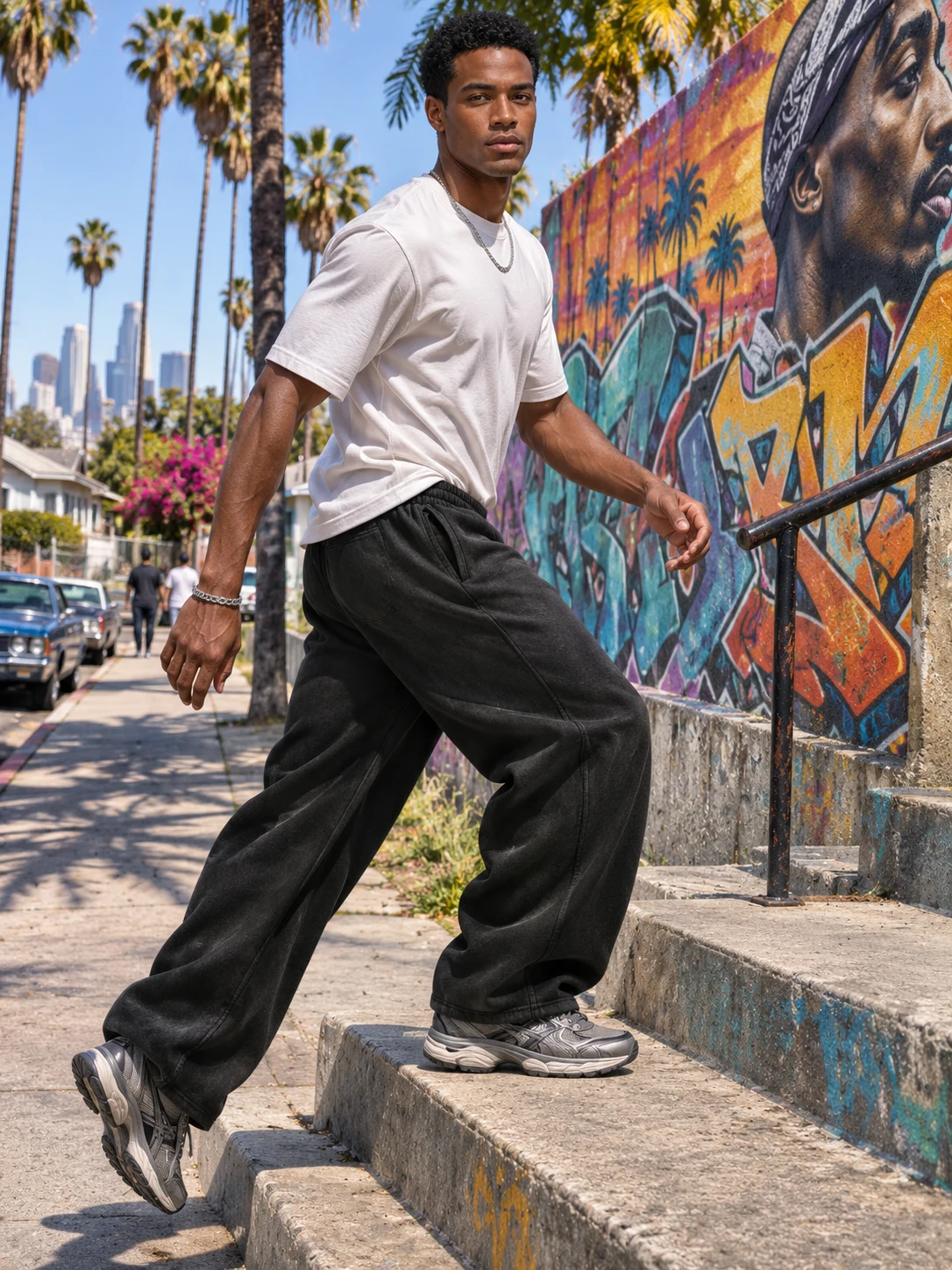
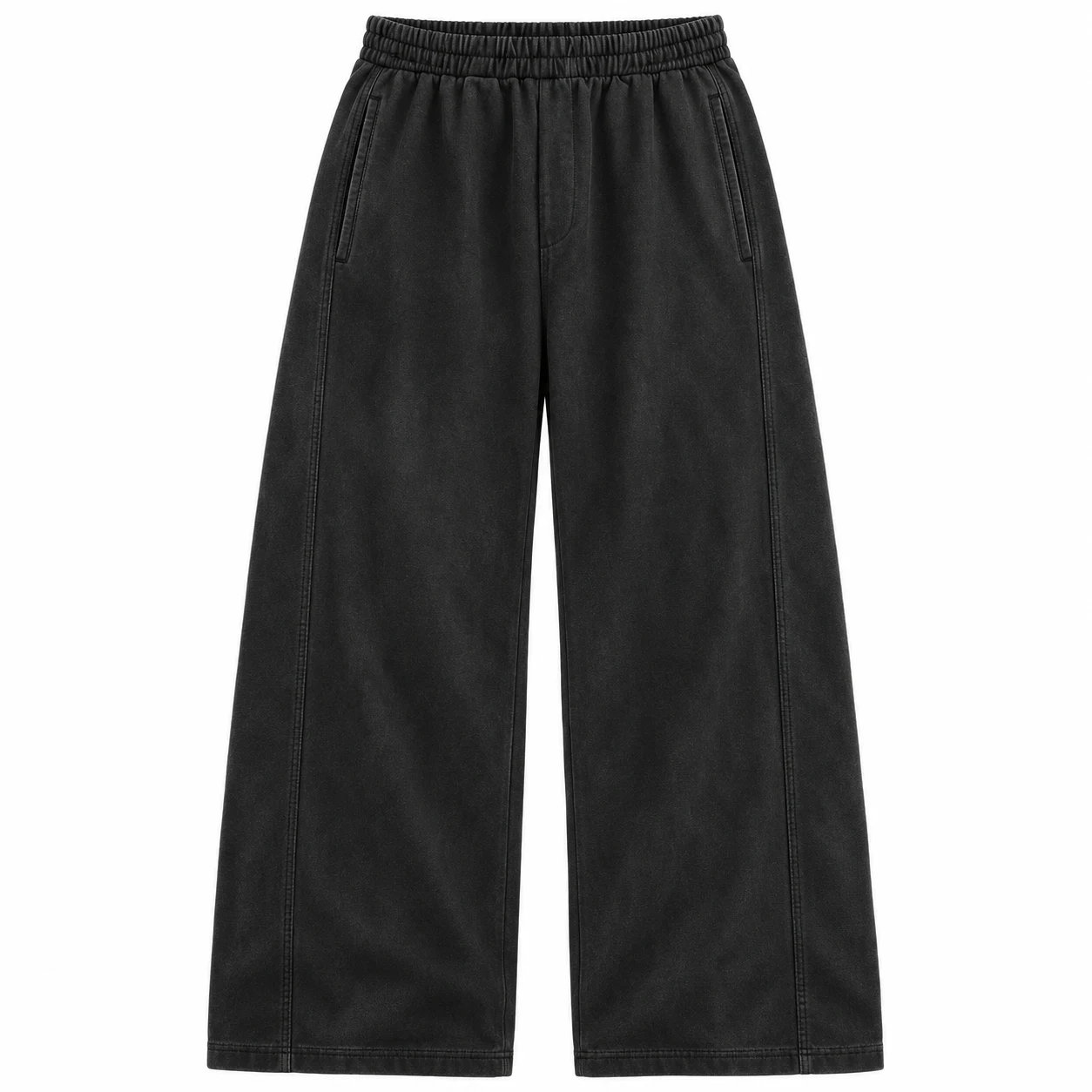
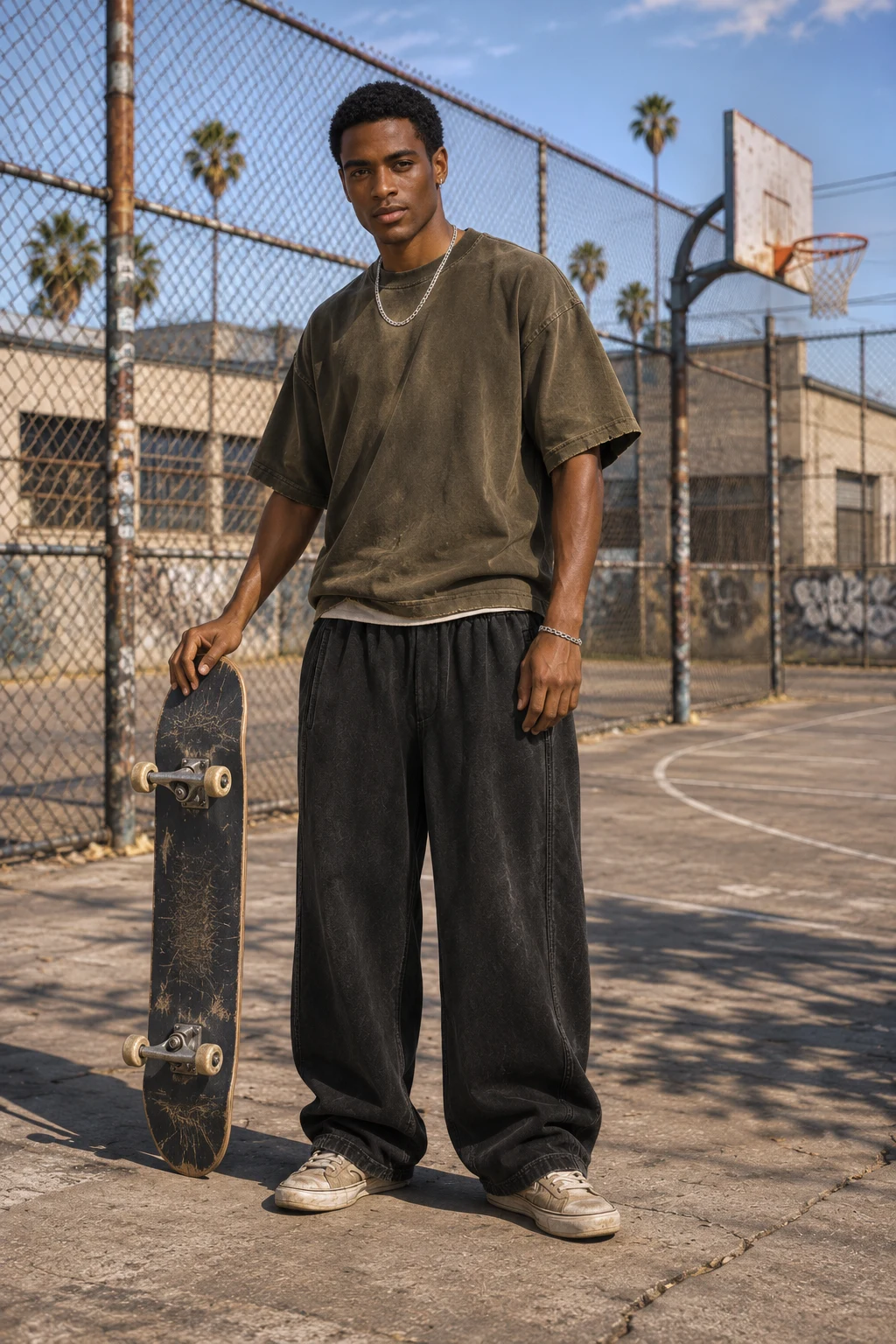
WKL-12 is a wide leg pants reference with a relaxed elastic waist, side-entry pockets and straight, open leg ends. The dark, washed-looking surface supports a pared-back streetwear collection, while the wide silhouette can be developed with a cropped top or a longer oversized layer. The key fit decision is how the waist position, rise, hip and leg width work together; an elastic waist alone does not describe the room through the seat or the way the trousers fall over a shoe.
The catalog lists 360 GSM and 100% cotton and presents four colors. Confirm those catalog values, current availability, material structure and the proposed finish with the supplier. The photograph does not establish whether the cloth is knitted or woven, and the catalog's snowflake terminology does not by itself establish a processing formula. Ask for the selected material and a finished trial before finalizing the production brief.
Prepare a chart with relaxed and extended waist, rise, hip, thigh, inseam and leg opening measured at agreed points. Fit the sample while standing, walking and sitting, and check the side pockets and leg length with the intended shoes. Compare the finished garment after the agreed care trial and record the same points again. Document the accepted shade range and fit alongside the material and pattern version. Branding, color changes, quantities and delivery terms should be evaluated in a project-specific quotation.
Which details shape the wide leg pants?
Set relaxed and extended waist with the front and back rise.
Confirm entry position, depth and interior pocket construction.
Grade hip, thigh, inseam and opening as a coordinated shape.
Review length, leg opening and shoe coverage on the wearer.
How should elastic waistband and rise be reviewed?
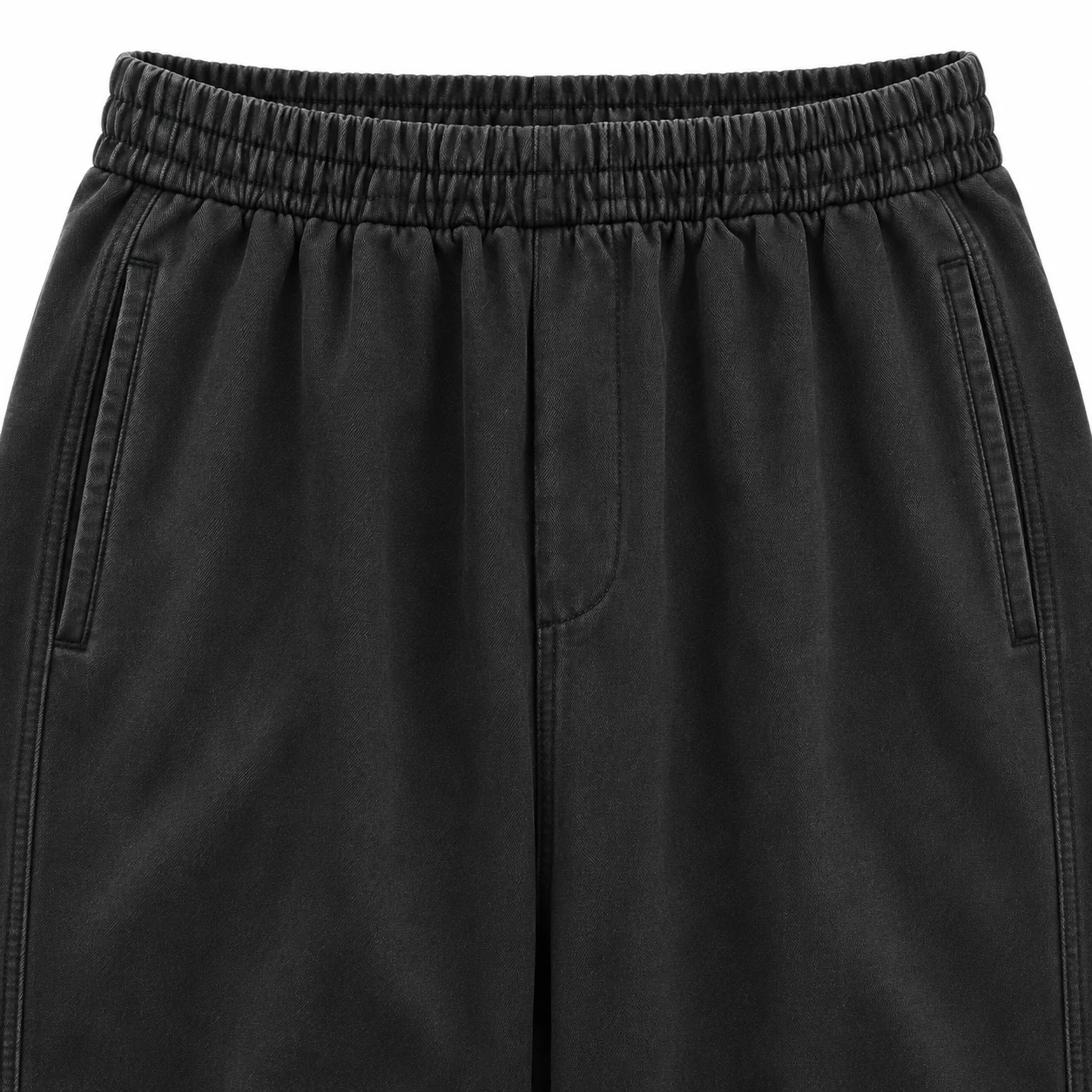
The catalog front shows a relaxed wide-leg pant with an elastic waist and no visible drawcord. The waist controls where the trousers sit, while the front and back rise determine the room available through the seat and crotch. Set both dimensions with the intended top and footwear rather than choosing an elastic width in isolation. The photograph does not establish the internal waistband construction or elastic specification.
Mark the relaxed and extended waist measurement methods on the size chart. Add front rise, back rise, hip and the position of the waistband on the intended wearer. Ask for a fitting sample in the proposed cloth and check that it can be put on comfortably, stays at the desired height and does not twist. The waistband should be considered across the size range: a comfortable base size does not prove that the grading works at the smallest or largest size.
The catalog lists 360 GSM and 100% cotton as product information; confirm these with the selected supplier and material submission. Weight and composition do not identify the cloth's knit or weave structure. Review the body fabric and waistband material after the proposed finish, since they may behave differently. Request an inside view or physical sample before specifying an internal seam or elastic channel.
Test the sample through ordinary walking, sitting and standing. Record any rolling, uneven gathering or restricted movement, then measure the relaxed waist again using the same method. Compare the waist position with the garment length and shoe chosen for fitting. Keep the accepted dimensions, elastic and body-material references together. Any change to rise, elastic or fabric calls for another fit and costing review.
How should side-entry pockets be reviewed?
The visible front includes side-entry pockets. Their placement and opening affect both the relaxed outline and everyday use. A pocket set too far forward can change the appearance of the front; one placed too far back may be difficult to reach. The supplied view does not establish the size or shape of the interior pocket bags, reinforcement or the construction on the reverse.
Provide a marked drawing showing the top and bottom of each opening in relation to the waistband and side seam. Specify the opening length and the approximate depth needed for the intended use. Ask the supplier to show the proposed interior pocket construction on a physical sample. If the buyer needs a secure phone pocket or a particular lining, state that requirement separately instead of assuming it from the outer photograph.
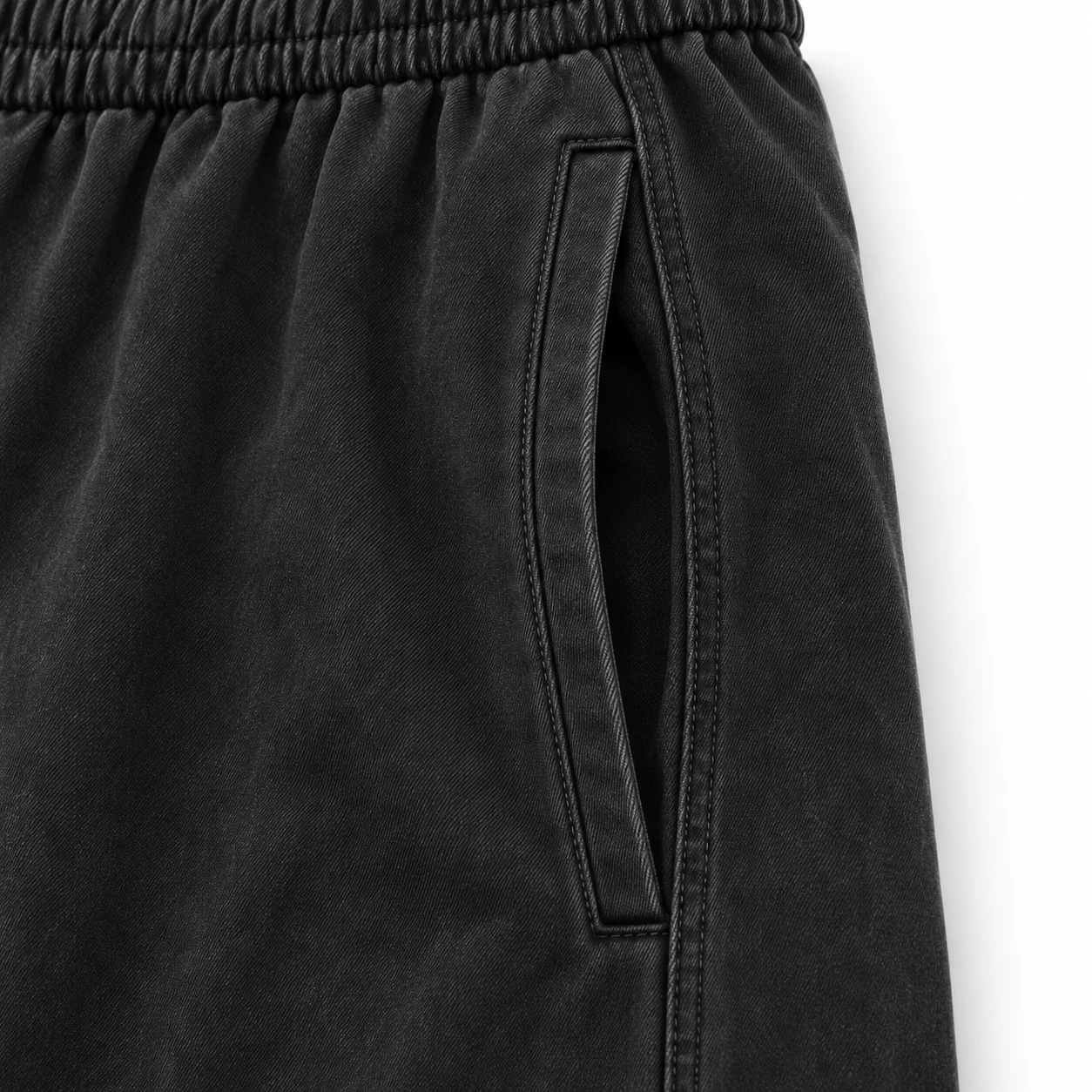
During fitting, place hands in both pockets and sit and stand naturally. Observe whether the entries gape, whether the front pulls, and whether the pocket bag shows through the selected cloth. Lay the garment flat and compare left and right placement and opening length. Review the pockets with the elastic waist at its intended wearing position because moving the waist can change access and the apparent angle.
If a wash-like finish is proposed, inspect the pocket edges and adjacent side seams after the trial. Look for visible shade differences, twisting or puckering, and measure the openings using the original points. Record the selected pocket depth, lining and construction with the approved sample. Do not add cargo pockets or describe them as existing features: they are not visible in this reference and would require a separate design and quotation.
How should wide legs, seat and movement be reviewed?
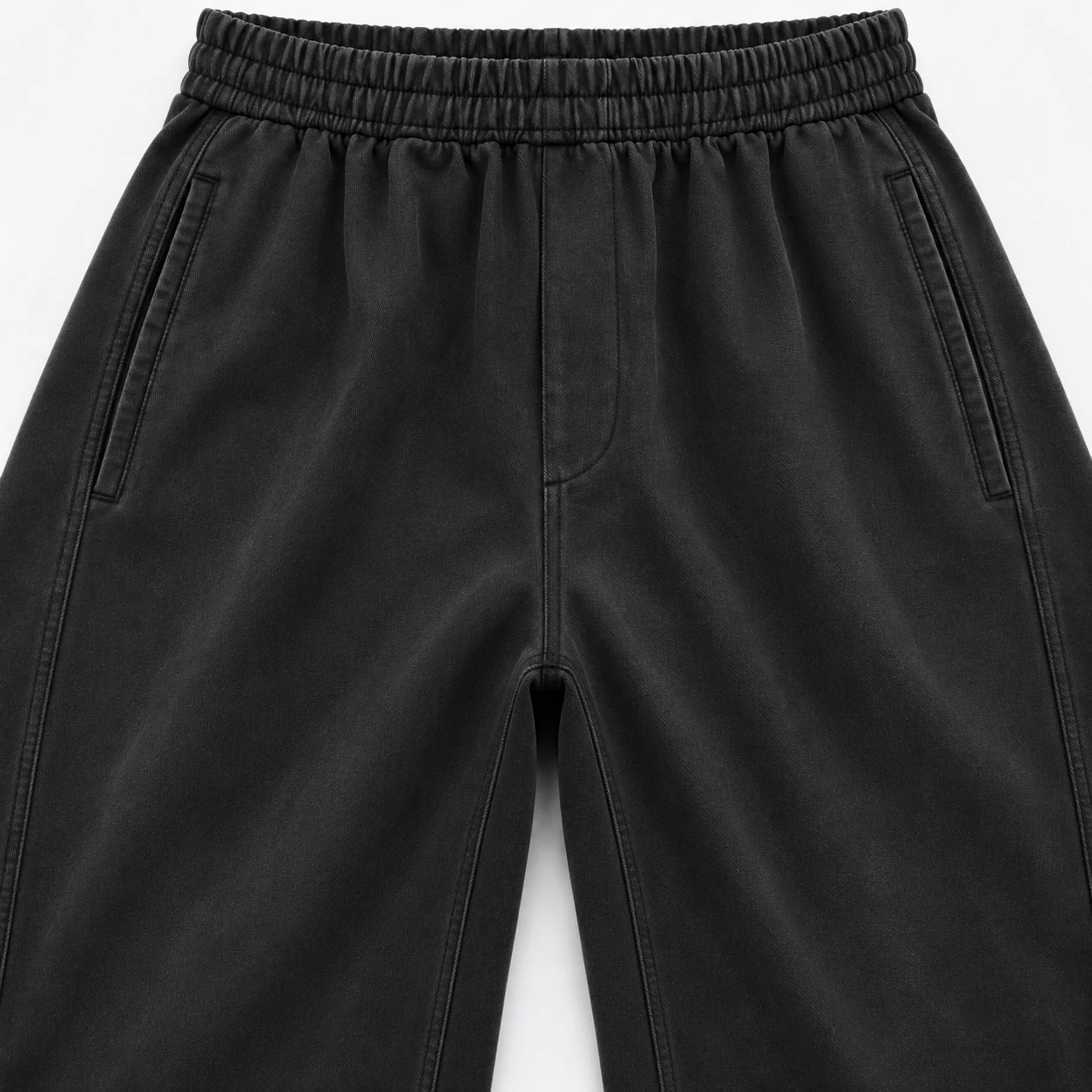
The defining WKL-12 shape is a wide, fairly straight leg falling from a relaxed upper body. The relationship among hip width, thigh width, rise and leg opening determines whether the garment reads as relaxed or excessively baggy. A single waist measurement cannot capture that shape. The catalog picture is a front reference and does not confirm the back seam layout.
Create a size chart with hip, thigh, knee, inseam and leg opening measured at defined points. Add the intended front and back rise and identify whether the leg is meant to fall straight or taper. Compare the dimensions with a known garment, but fit the sample in the proposed material: equal flat measurements can drape differently when the fabric changes.
On the wearer, check the front and side while standing, walking and sitting. Watch for pulling across the seat or crotch, twisting at either leg and uneven fabric pooling above the shoe. The generous leg should permit ordinary movement without forcing the wearer into an unnatural stance. Review the sample with the selected shoe and top because their proportions change the visible balance.
For grading, specify how hip, thigh and opening change along with waist and length. Confirm the back pattern and seam construction with the supplier rather than deriving it from a generated model image. If the finish or fabric changes, repeat the fitting and measurement review. Keep the approved sample and chart version together and distinguish fit revisions from defects against the accepted brief.
How should straight hems, length and surface be reviewed?
The reference shows straight, open leg ends with a washed-looking dark surface. Set the intended finished length with the selected rise, waist position and shoe. A wide leg can cover more of the shoe or create a fold at the ankle even when its inseam is unchanged. The supplied image does not prove the inside hem allowance, stitch class or exact finishing recipe.
Measure inseam and outseam from agreed points and note the desired amount of break over the footwear. Request the proposed hem construction and an inside view of the sample. Compare the left and right leg lengths and openings on a flat garment, then examine them on the wearer. Check for twisting, uneven hems and folds that obscure the intended straight line.
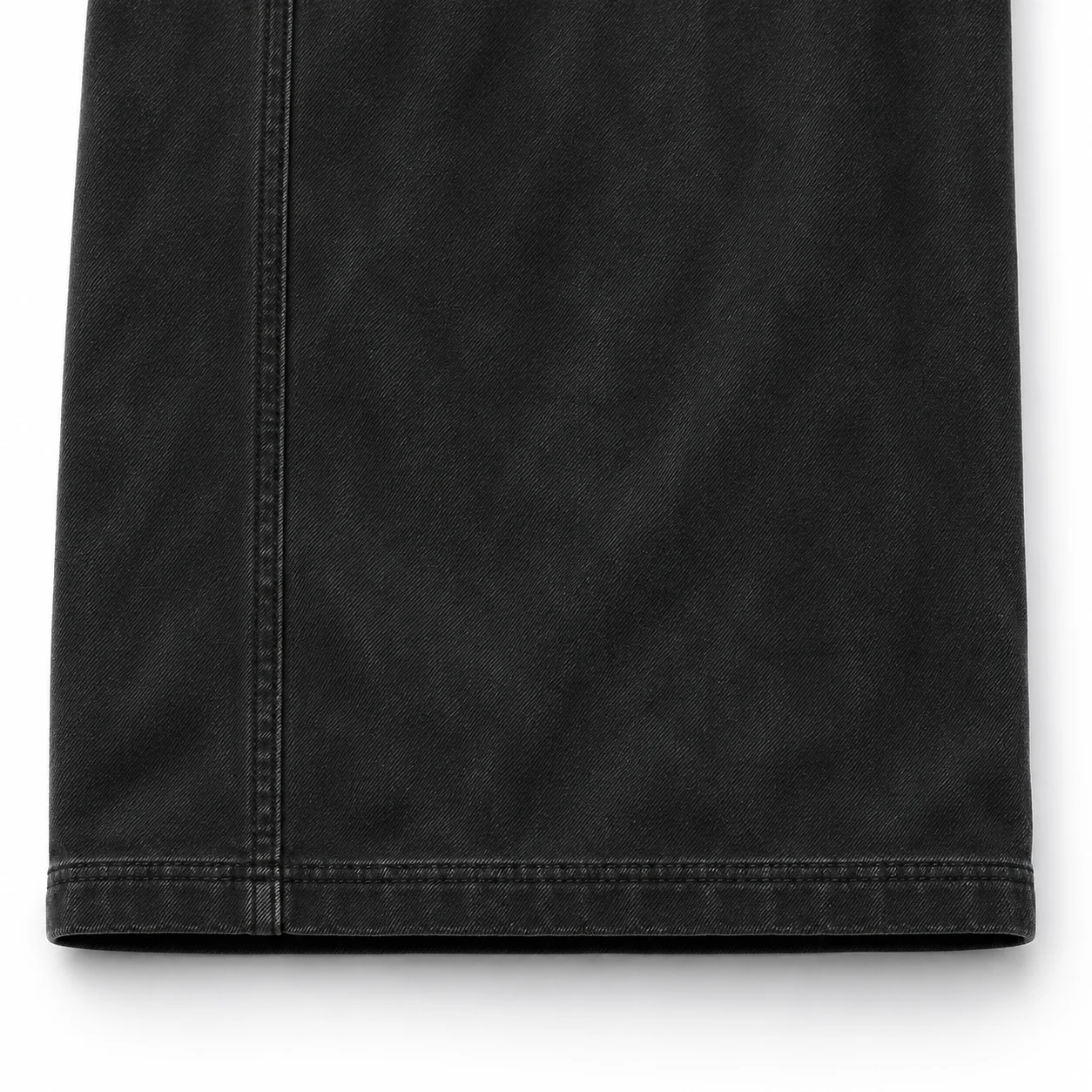
The catalog calls the appearance a snowflake wash and lists four colors. Treat these as catalog references, not a guarantee of current availability or a confirmed process formula. Request physical shade and finish submissions for the selected material. Compare the front, sides and hems under the same lighting and define an acceptable range for natural visual variation.
After the proposed finish and agreed care trial, remeasure the garment with the same method and inspect whether leg length, opening or surface appearance has changed. Record the result rather than assuming a fixed shrinkage value. Retain the accepted garment, shade range and measurement tolerances with the order pack. A changed finish or cloth requires an updated sample and a fresh production quotation.
What belongs in a WKL-12 sampling package?
Prepare a versioned drawing of WKL-12 showing the elastic waist, side entries and intended wide, straight legs. Add a proposed back view and request supplier confirmation because the supplied image primarily establishes the front. Identify the intended wearer, shoes and waistband position: a wide trouser can appear longer or shorter depending on the rise and the way the waist is worn.
Write measurement points for relaxed and extended waist, front and back rise, hip, thigh, knee, inseam, outseam and leg opening. Explain how each point changes through the size range. A single waist measurement does not establish seat room or leg balance. Include the desired pocket-entry length and bag depth, and request an inside sample or construction drawing to verify the pocket and elastic details that are not visible in the source.
The catalog lists 360 GSM, 100% cotton and four colors. Treat these as source claims until the supplier confirms the actual material and available shades. Request the cloth composition and structure, a hand sample and the proposed finish. Compare physical color submissions under agreed lighting; the catalog’s snowflake name does not provide a verified treatment formula. Define the acceptable range for the selected shade before judging a finished trial.
On the fitting sample, compare the waist position and leg length while standing, walking and sitting. Check that both side pockets are accessible, that the crotch does not pull and that each leg falls without an unintended twist. Assess shoe coverage from front and side, then lay the sample flat to compare left and right hems. Record a fit change separately from a discrepancy against an already agreed dimension.
After the proposed finish and care trial, use the same measurement points to evaluate the completed garment and compare the appearance at the pocket and hems. Keep the accepted sample, fabric identification, grade chart and shade range together. Specify any artwork or labels as new options, not as existing catalog features. A quotation should identify selected material, sizes, color quantities, packaging, destination and schedule; minimums and freight must be confirmed for the project.
Which specifications belong in the brief?
The catalog lists 360 GSM, 100% cotton and four colors for a relaxed wide-leg pant. The fabric structure, reverse, availability and actual finishing method need confirmation.
| Component | Reference and development decision |
|---|---|
| Style | WKL-12 |
| Visible design | Relaxed elastic waist · wide straight leg |
| Material and weight | 360 GSM listed in the source catalog; confirm the actual material; 100% cotton listed in the catalog; confirm the submitted cloth and its construction |
| Color and finish | Black reference; catalog lists four colors, availability to confirm; exact treatment to confirm. |
| Fit review | relaxed and extended waist with rise measurements; side-pocket placement and bag depth; hip, thigh, crotch and leg balance during movement; length, straight hems and finish after the care trial |
| Branding | Artwork, labels and packaging are development options; confirm with a physical trial. |
| Minimum and schedule | To be quoted for chosen materials, quantities, colors and destination. |
Customization and information to confirm
| Item | Options or reference | What to confirm |
|---|---|---|
| Body material | 360 GSM listed in the source catalog; confirm the actual material | 100% cotton listed in the catalog; confirm the submitted cloth and its construction |
| Fit and grading | Relaxed elastic waist · wide straight leg | Provide agreed measurement points and a graded size chart. |
| First review | relaxed and extended waist with rise measurements | Confirm on the physical fitting sample. |
| Second review | side-pocket placement and bag depth | Record the target and permitted variation. |
| Third review | hip, thigh, crotch and leg balance during movement | Review on the intended materials and pattern. |
| Fourth review | length, straight hems and finish after the care trial | Compare before and after the agreed trial. |
| Artwork and labels | Brand files and packaging are optional development inputs. | Supply actual dimensions, placements and artwork. |
| Quantities and delivery | Color and size quantities, destination and target date. | Obtain written minimums, scope, freight and schedule. |
Where can a label sit on the wide-leg pants?
Draw the waist and side entries before proposing an exterior mark. Give its dimensions and measure its position from the waistband or side seam so it remains visible without obstructing the pocket. Confirm the back construction before using it as a label location.
Provide care-label and packaging files separately. Test any decoration on the proposed finished cloth and check its placement on the fitted garment, since a change to rise or leg width can move the apparent position.
How should the pants sample be reviewed?
Record relaxed and extended waist, front and back rise, hip, thigh, inseam, outseam and each leg opening using the approved points. Check left and right pocket access and hem alignment on the flat garment, then observe the trousers on a wearer with the intended shoes.
Log the pattern and cloth version with every measurement and photograph. A request for a wider leg is a design revision; different left and right inseams outside an agreed tolerance are a separate discrepancy. Verify the correction on the relevant garment size before closing the review.
How should the pants finish be evaluated?
The catalog calls the surface a snowflake wash, but the method is not established by the front image. Request an untreated cloth and finished trial identified by supplier and version; confirm the selected cloth’s composition and construction before comparing treatments.
Measure the same waist, rise, inseam and leg openings before and after the agreed care procedure. Compare the surface around the side entries, seams and hems with the approved shade range. If the finished length or appearance falls outside the brief, revise the trial before using it as an order reference.
What can shift the wide-leg fit?
A hem that pools too much can result from inseam, waist position, rise or footwear. Check all four on the fitting sample before shortening the pattern. A change to the elastic may move the wearing position even when the outseam measurement stays the same.
Pocket bags can affect the fall of the front if their material or placement changes. Request the inside construction and inspect the trousers in motion; document whether a correction changes the pocket pattern, body cloth or waistband. Refit the affected size before approving the revision.
What evidence is available for WKL-12?
The catalog lists 360 GSM, 100% cotton and four colors for a relaxed wide-leg pant. The fabric structure, reverse, availability and actual finishing method need confirmation. The product and model visuals on this page are AI-generated illustrations, not photographs of a production sample. Obtain a physical material, measured garment and written quotation before a sourcing decision.
How can the pant length work with footwear?
Review the wide legs with the actual intended shoes and waist position. A longer inseam can stack over the shoe while a shorter length leaves the upper more visible; document the desired break from front and side when the wearer stands and walks.
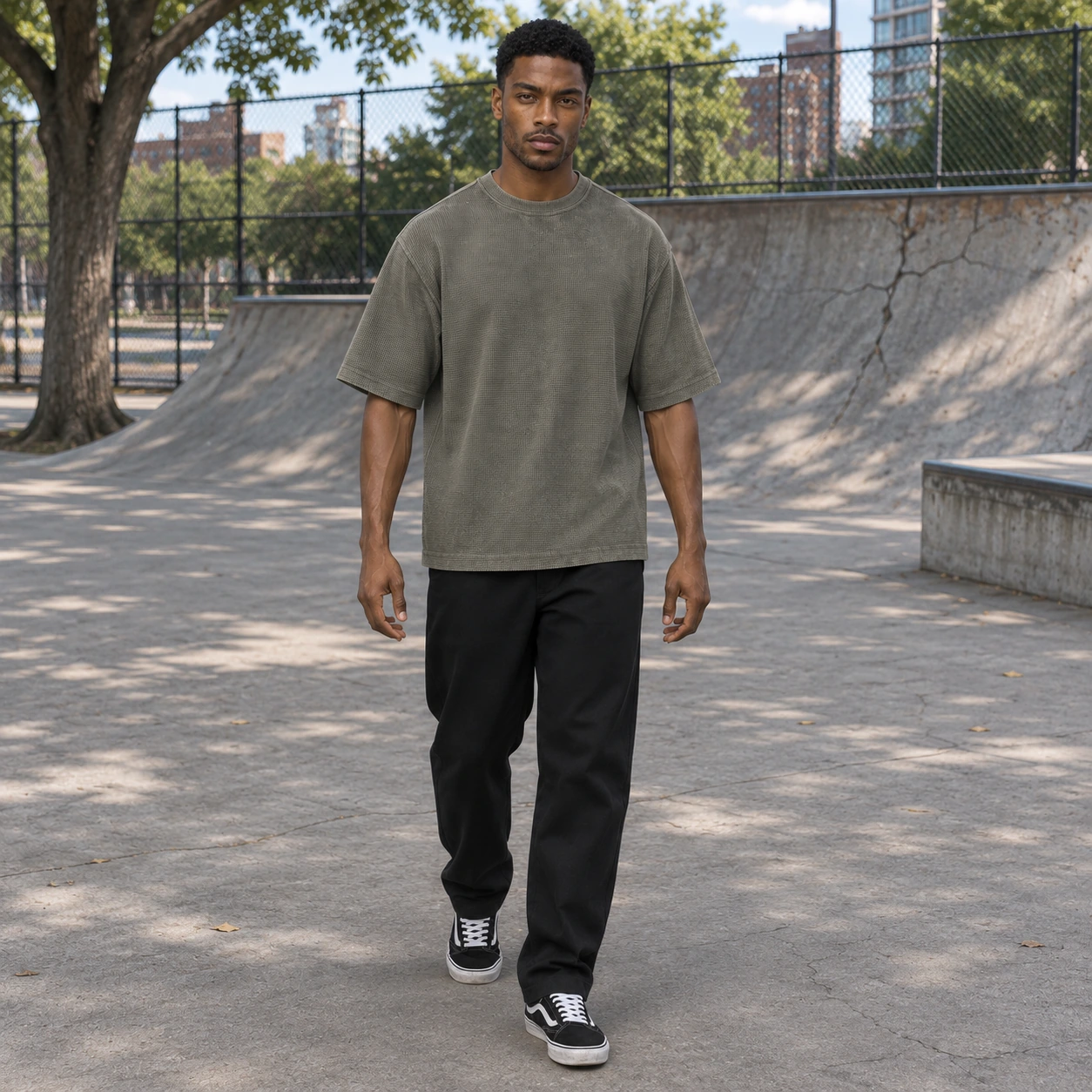
The model image is an AI-generated styling direction. The leg proportions and finish require a physical fitting sample in the selected material.
Which collections suit WKL-12?
The straight wide leg and easy waist suit a relaxed streetwear capsule built around volume rather than cargo-pocket detail. Brands can evaluate the silhouette with either a short layer or a longer tee, then set rise and shoe coverage on a wearer. The underlying fabric structure remains to be confirmed.
What is needed to quote the pants?
Provide the intended waist and rise, graded hip and leg measurements, pocket requirements, color and size quantities, and delivery destination. The catalog lists 360 GSM and 100% cotton; ask the supplier to confirm the actual submitted fabric, finish and current color availability.
Request a written breakdown of sampling, minimum quantities, packaging and freight. A different elastic, pocket construction or leg width can change sourcing and pattern work, so identify those changes before accepting the quotation.
Questions about developing WKL-12
Is the material 100% cotton?
The catalog lists 100% cotton; confirm the composition and fabric construction with the actual submission.
Are these cargo pants?
The visible reference has side-entry pockets; cargo pockets are not established.
Are these sweatpants?
The fabric structure is not confirmed. Request the material specification rather than assuming a knit.
How is the waist specified?
Record relaxed and extended waist measurements, rise and elastic details on the fitting sample.
How many colors are available?
The catalog lists four colors, but current availability and achievable shades require confirmation.
How should leg length be approved?
Compare inseam and outseam with the intended waist position and shoes, then check a finished sample.
What are the minimum and lead time?
Request a written quotation for the selected cloth, colors, quantities and destination.
What makes WKL-12 ready for production?
Retain the confirmed cloth, elastic and pocket construction, graded waist and rise chart, approved leg width and length, shade range and measured physical garment as a single order reference. Record the finishing trial and written inspection tolerances before agreeing quantities and timing.
Discuss your wide leg pants development
Share the WKL-12 size chart, material direction, quantity and artwork or label files. We can review the sample scope and prepare a project-specific quotation.
Request an OEM review