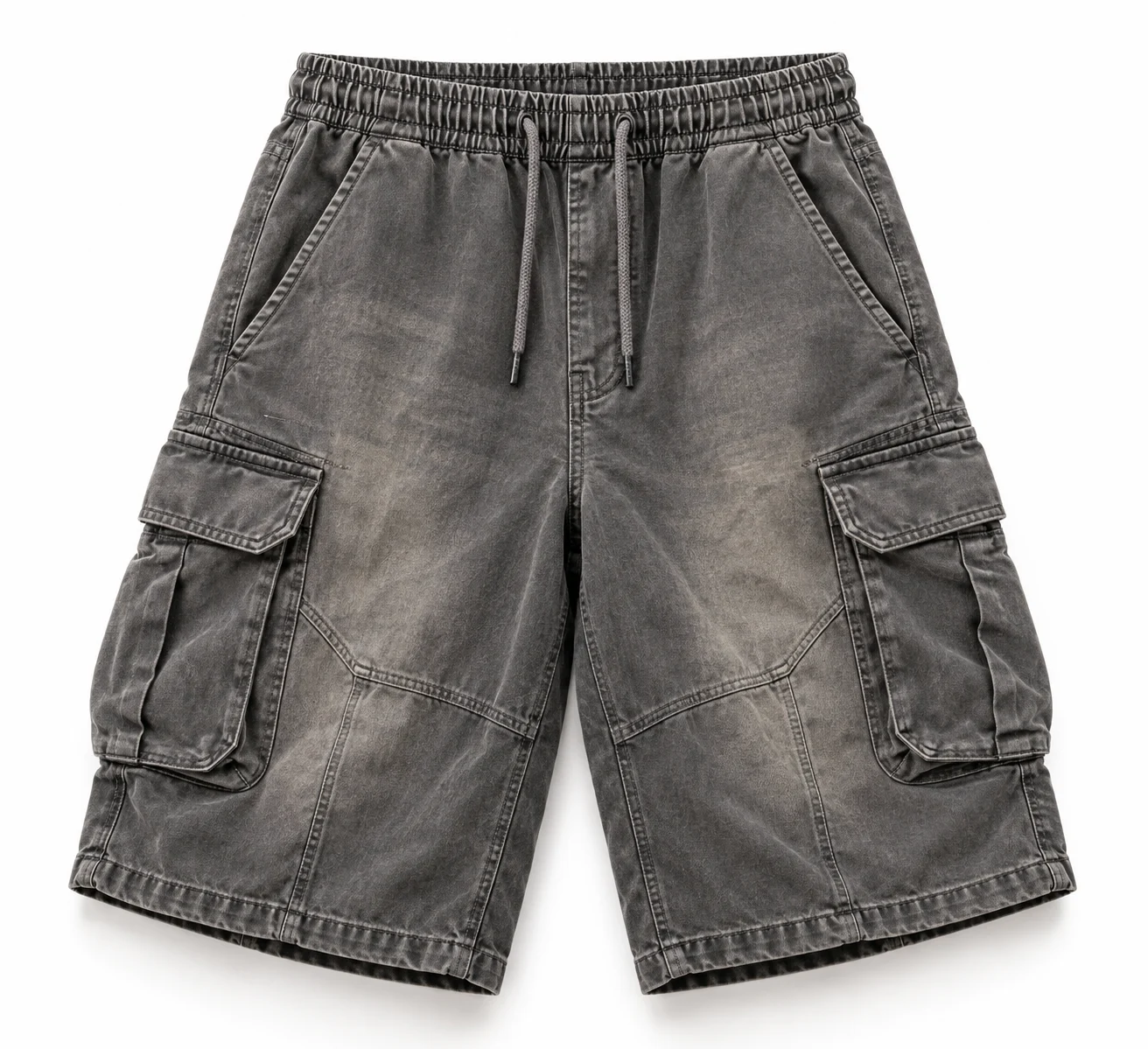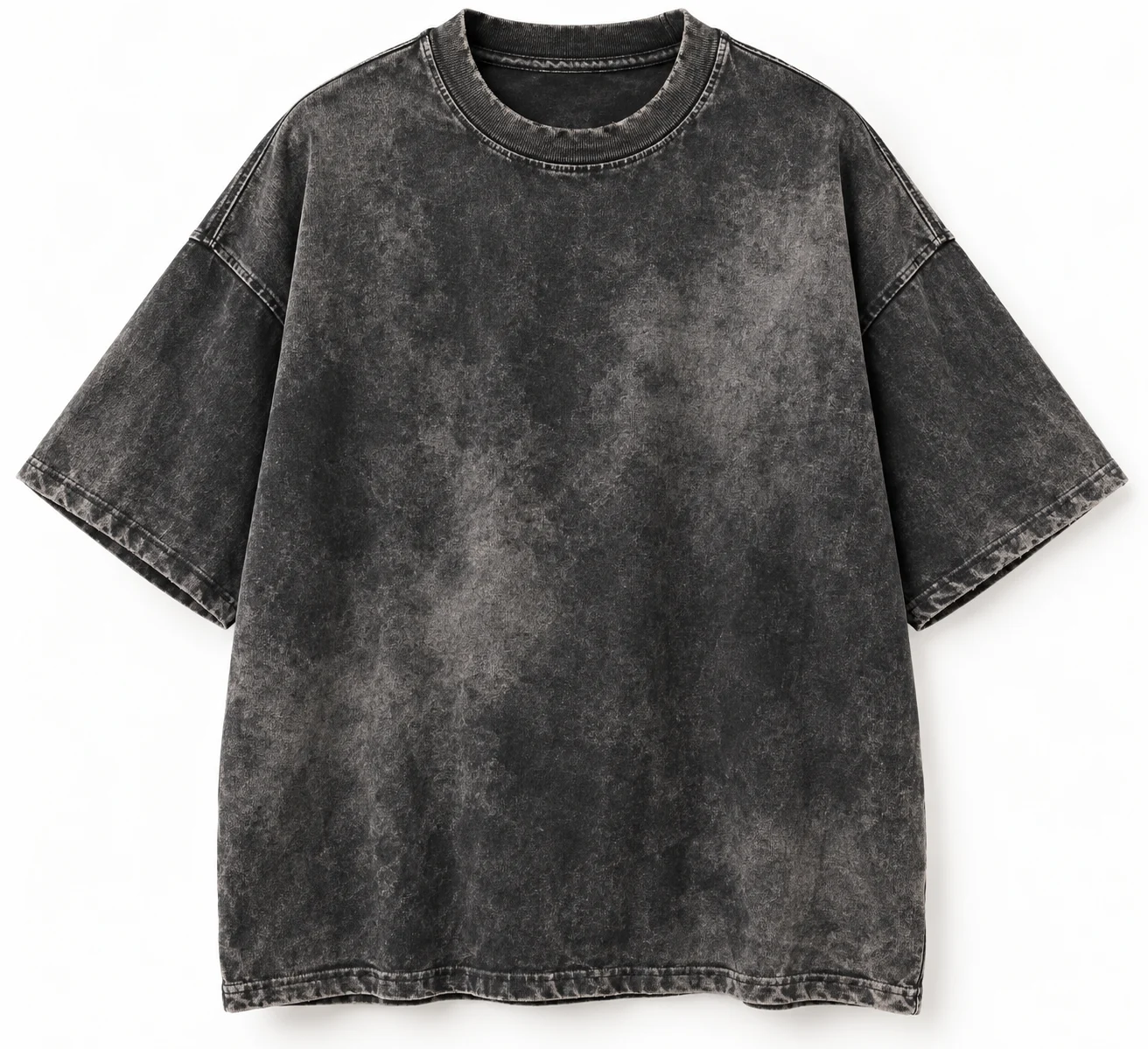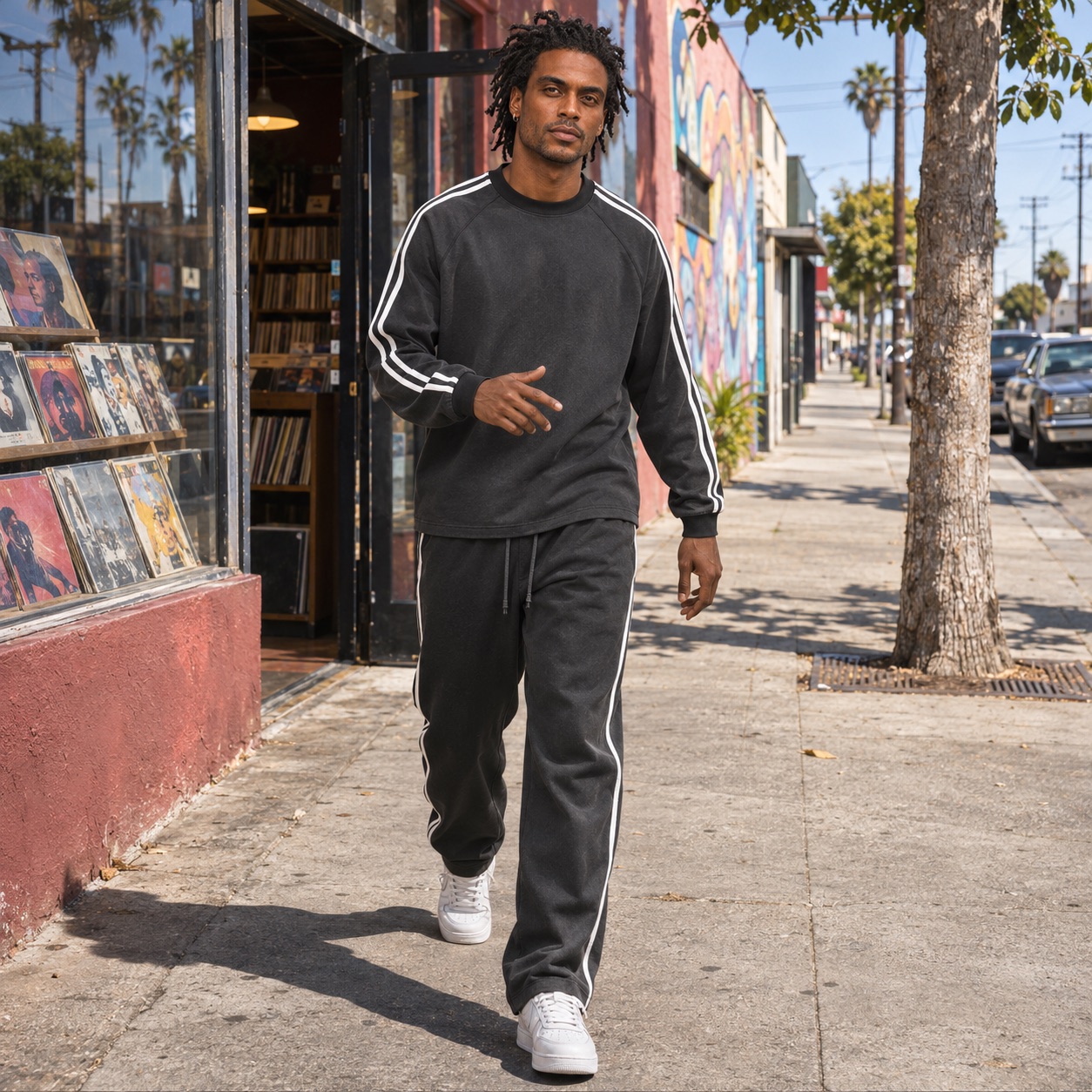
Custom charcoal raglan tracksuit development for streetwear collections
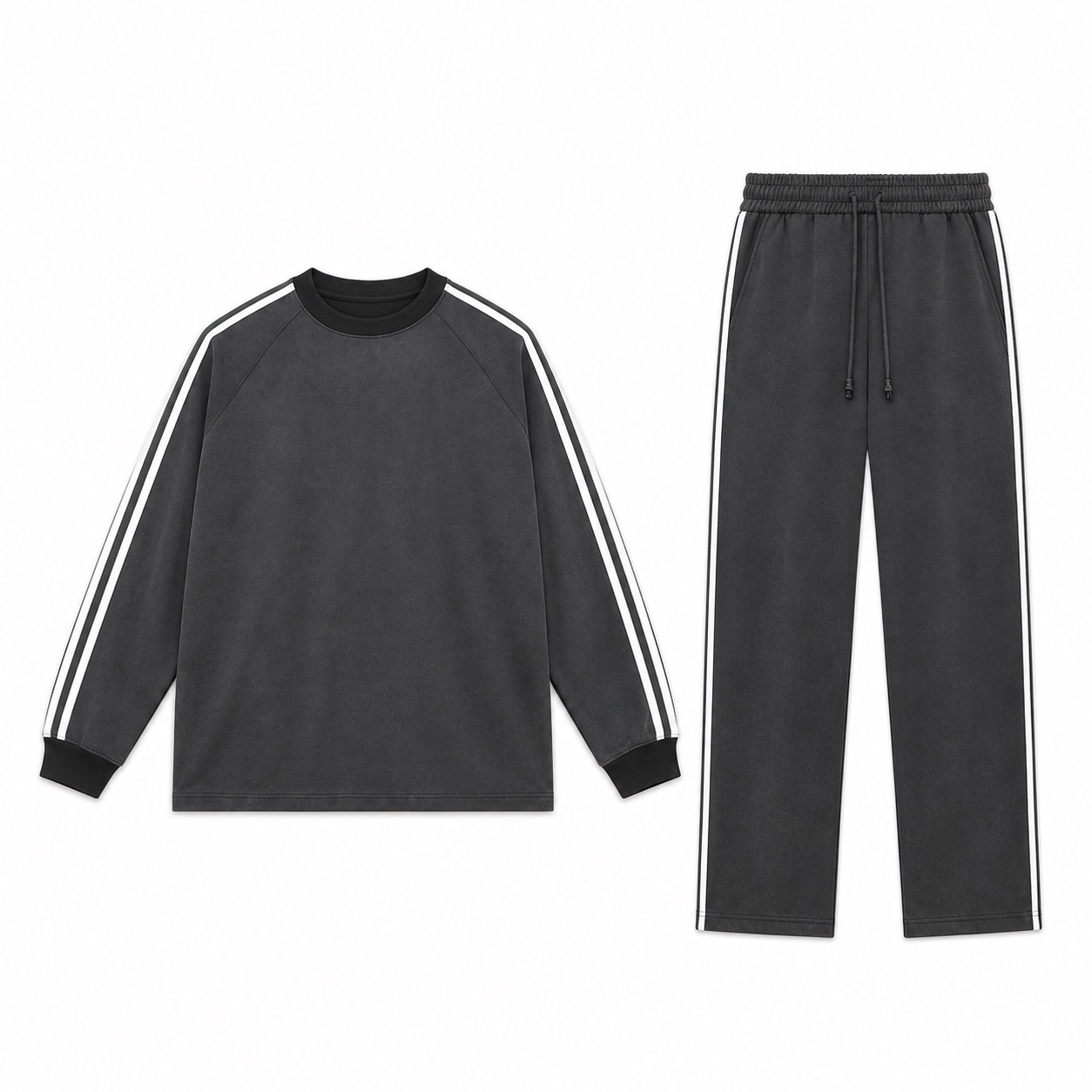
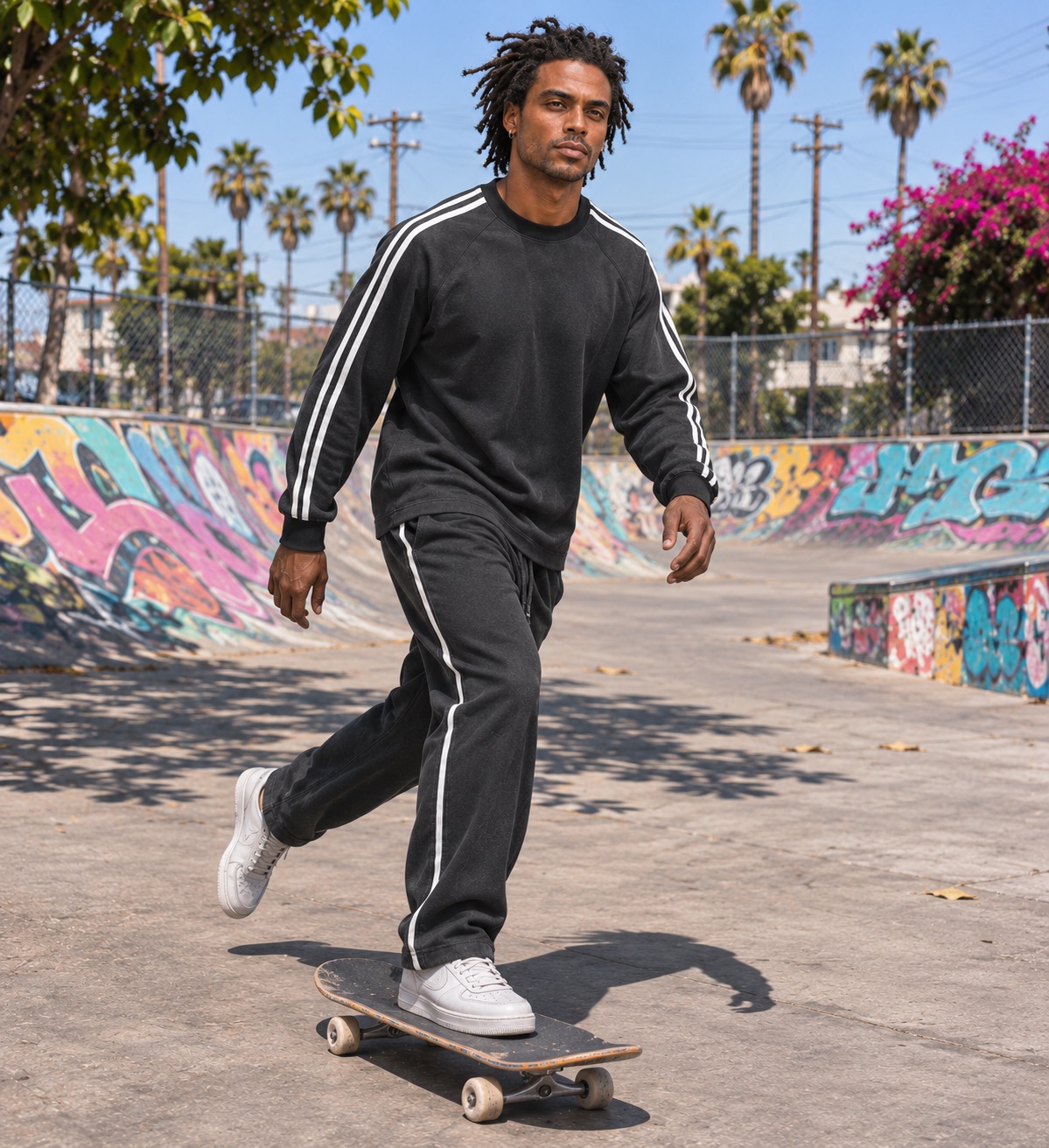
This custom tracksuit development direction brings together two separately cataloged references: MTZ-217, a charcoal raglan long-sleeve top, and MTZ-218, relaxed straight-leg drawstring pants. The top has two light stripes along the sleeves and a plain sewn lower edge; the pants have a narrow light stripe down each side. The coordinated look is a proposed development direction, not confirmation that the source items are sold as a set.
The visual relationship depends on how the contrasting lines travel across the outfit. The paired sleeve stripes give the top an athletic focus, while the slimmer leg stripe keeps the pants comparatively restrained. The top length and trouser rise determine how much of the adjustable waistband remains visible, so those dimensions should be checked together on a wearer.
Each catalog entry lists 360 GSM, but equal listed weight does not prove that the pieces use the same fiber blend, construction or dye lot. Compare separate physical material submissions and the white stripe shade before selecting them for one program. Confirm whether the supplier can develop and supply the two codes as a coordinated order.
Provide separate top and pant size charts, quantities per size, stripe dimensions and any original branding. A change in fabric, stripe method or proportions may require another sample. The final quotation should identify the two components, approved materials and delivery scope rather than treating their visual similarity as a verified set.
What connects the top and pants visually?
The neckline-to-underarm seam creates the relaxed shoulder direction.
The top uses paired pale lines, whose width and spacing need a sample review.
The trousers combine adjustable waist fit with a relaxed straight leg.
The two catalog items need a joint fabric, shade and supply review before ordering as a set.
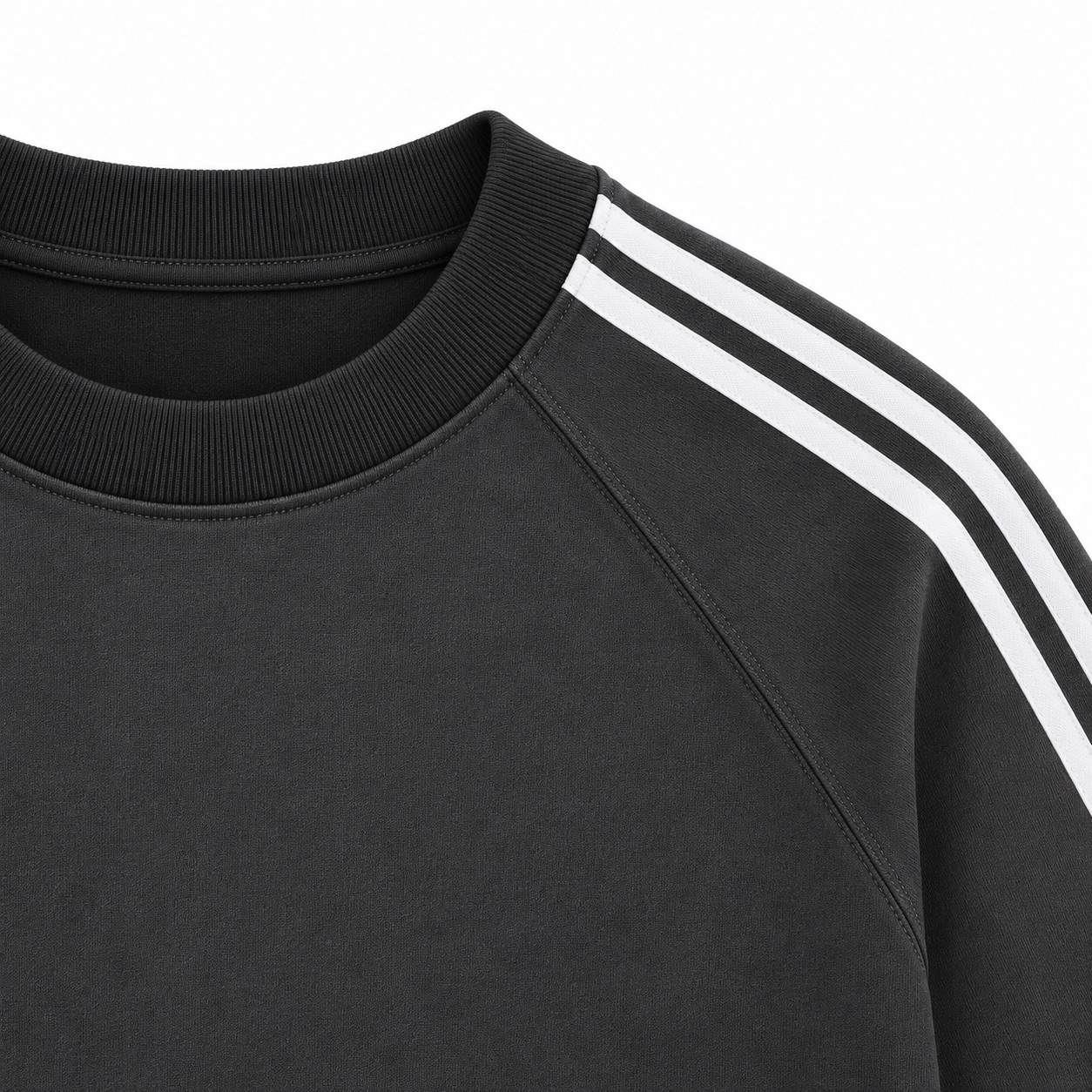
How should the raglan neckline and shoulder line fit?
The raglan seam travels from the neckline toward the underarm and changes how the long sleeve fits across the shoulder. The two contrasting sleeve stripes begin close to the collar. Review the seam path and stripe spacing together, particularly where the neckline curves and the sleeve joins the front.
Set out the neckline opening and raglan seam path in a drawing, including where the pale stripes start in relation to the collar. Compare both sides at the front and request a back reference before specifying details that are not visible. A different neck width changes the available space for the stripe placement.
The sleeve and body should provide enough ease for the intended relaxed fit. Measure across the chest and along the sleeve using agreed points, and identify how sleeve length is measured when there is no conventional shoulder seam. A change to the raglan line may require a fresh fitting sample.
Review the top while the wearer reaches forward and raises the arms. Look for pulling at the neck, uneven stripe spacing and twisting through the sleeve. Then lay it flat to compare the two seam paths and the collar opening. Record any correction with a marked photograph and actual dimensions.
The reference picture cannot prove the stripe attachment, seam construction or neck rib composition. Confirm those choices with a physical sample and the proposed supplier. When the top is developed alongside MTZ-218 pants, compare the finished shades and trims; matching materials and set supply still require confirmation.
How should the two sleeve stripes meet the cuff?
Two pale stripes run along each sleeve and finish near the dark cuff. Their widths, spacing and alignment are key to the athletic look. Specify whether the stripes are separate material or another decoration method only after reviewing the proposed construction and sample; the image alone cannot establish the method.
Provide stripe width, spacing and intended color on an annotated sleeve drawing. Measure at several points, including the upper sleeve, elbow area and transition to the cuff. Consistent spacing matters because the pair of light lines creates a strong contrast against the dark ground.
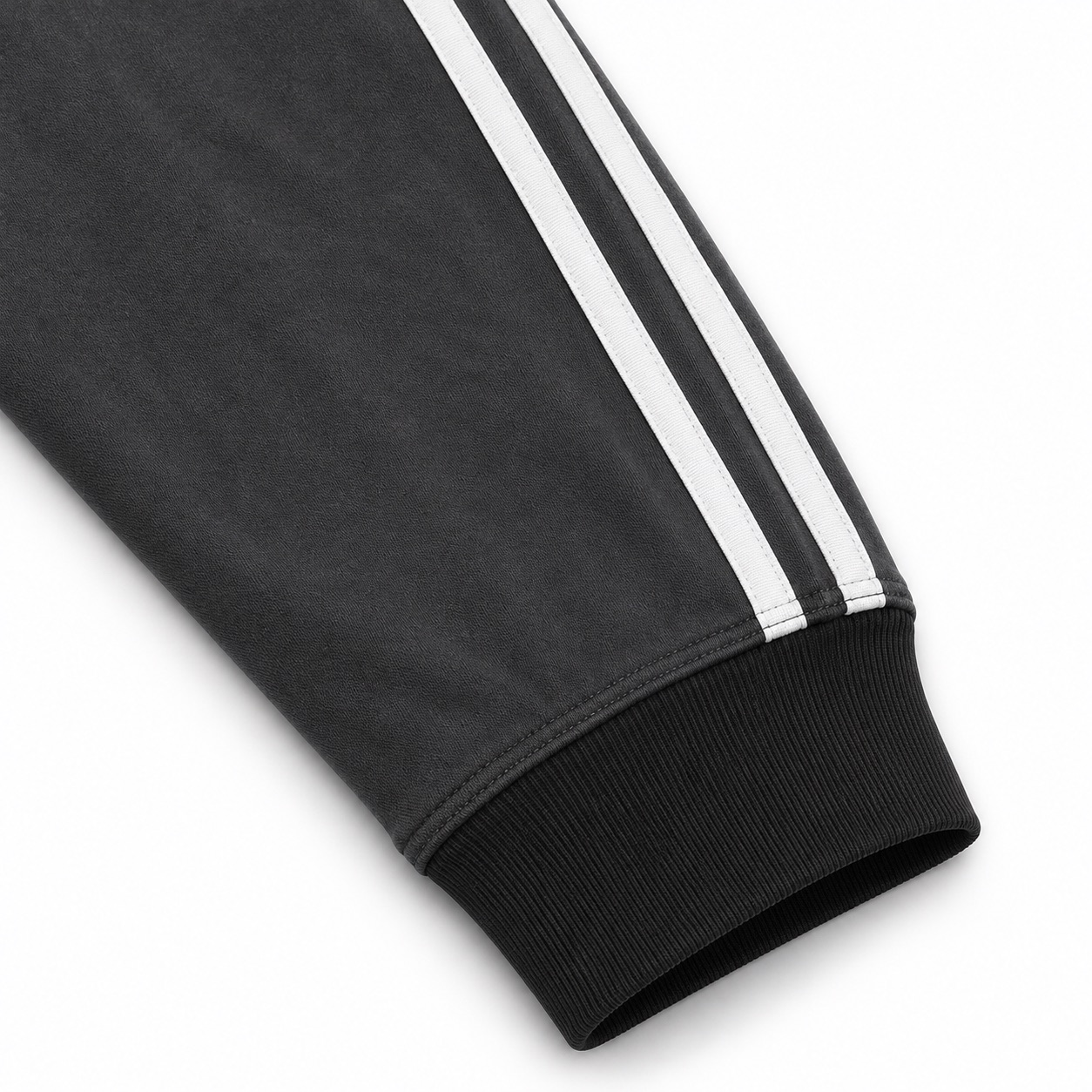
Discuss possible construction methods with the supplier and request a test in the chosen material. The source image shows the visible lines but cannot distinguish sewn tape from another application. Confirm how the method affects stretch, thickness, comfort and the appearance of the inside before approving it.
Check each stripe from the front and side on a worn sample, then compare the left and right sleeves laid flat. Look for waviness, irregular gaps, damaged edges or a change in spacing where the sleeve bends. Inspect the cuff joining area so the stripes end cleanly without distorting the sleeve opening.
If the stripes or body undergo a finishing or care process, assess color transfer, edge appearance and dimensional behavior on a physical trial. Agree on the desired white shade and acceptable variation in writing. Any change to stripe width, application or sleeve fit should be reviewed on another sample.
What should the drawstring waistband achieve?
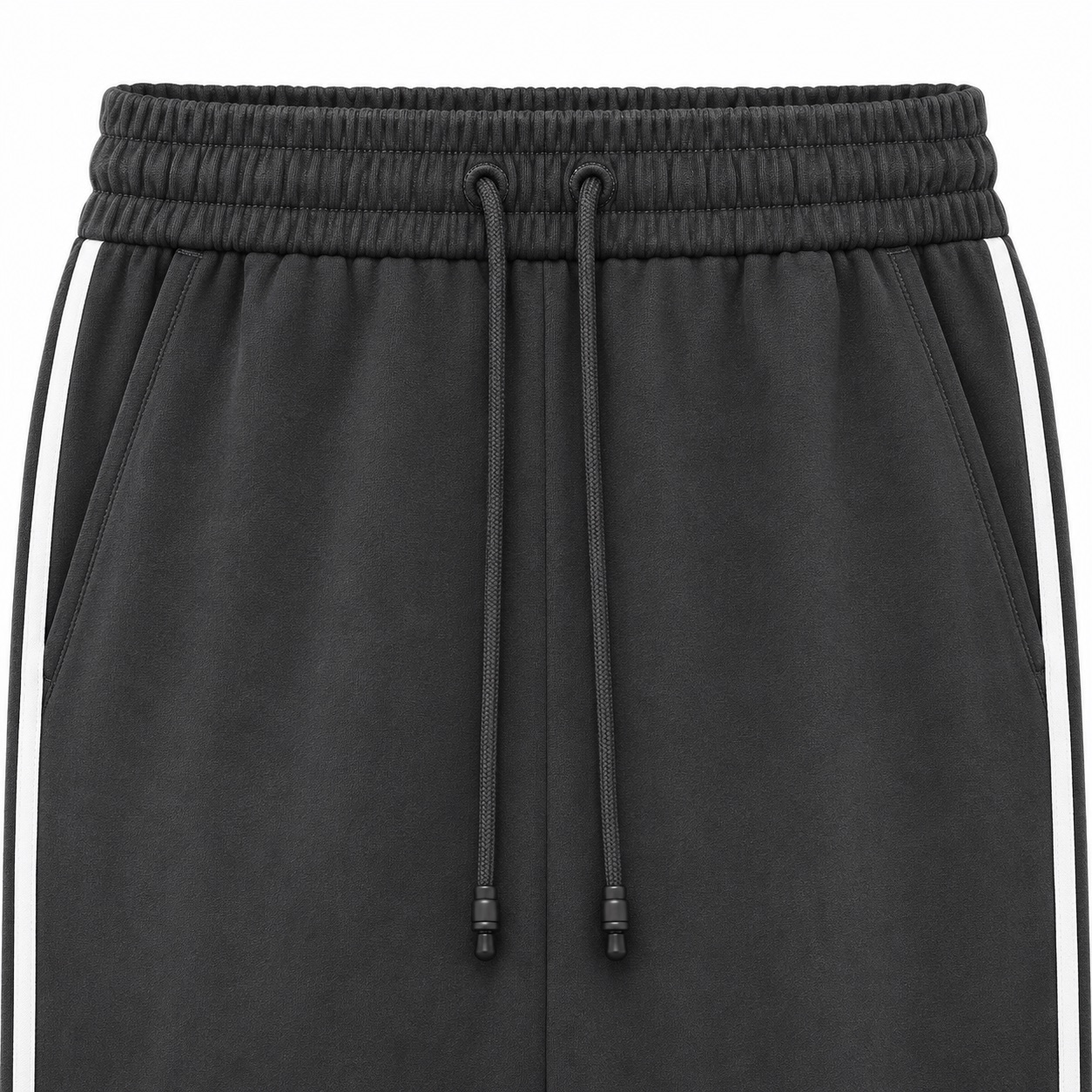
The pants reference shows a gathered waist with an adjustable drawstring. Relaxed and stretched waist measurements, rise and cord length should be considered together. The wearer needs enough room to pull the pants on, while the waist should sit securely at the intended position without excessive bunching.
Record the relaxed waist, stretched waist and rise using agreed measuring points. The relationship between those values determines both ease of entry and the way the pants sit when worn. Add the intended cord length and finish to the brief, keeping comfort and the target wearer in mind.
Ask for a physical waistband sample showing the proposed elastic, cord and openings. The visible reference does not establish the elastic width, cord material, internal stitching or tip construction. Compare a sample before committing to those details and consider whether the cord can be adjusted without bunching the waist unevenly.
On a fitting sample, pull the pants on, adjust the waist and sit, walk and bend normally. Check for twisting inside the waistband, uneven gathering and uncomfortable pressure. Lay the garment flat afterward and measure the waist again. Review both side stripes where they meet the waistband.
If a brand label or size marking is added at the waist, specify its placement and check comfort against the wearer. Confirm how the drawstring and elastic will be inspected in the finished sample. The matching top remains a separate source item until material, availability and supply conditions have been confirmed.
How should the side stripe and straight-leg hem align?
The long straight leg carries a narrow contrasting stripe down the side and finishes with a sewn opening. The position of the stripe and the finished inseam influence how the pant falls over footwear. Compare both legs from the front and side to see whether the stripe stays visually consistent as the fabric drapes.
Define inseam, outseam, knee width and leg opening together. A long inseam can create stacking above the shoe, while a shorter one changes how much of the footwear is visible. Select the intended result with the wearer and footwear used for fitting rather than relying on a model image alone.
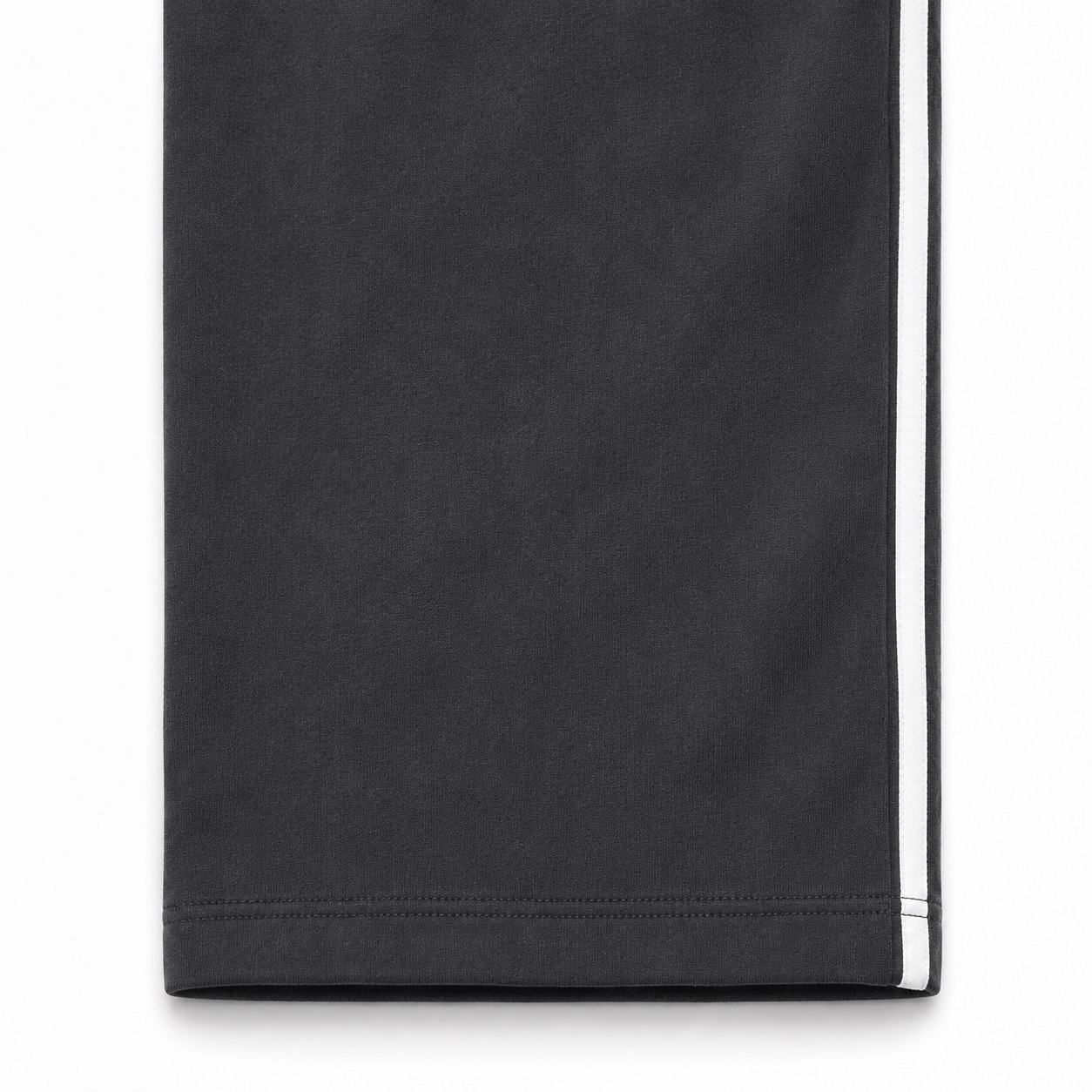
Mark the side stripe width, location and the point at which it reaches the lower edge. The front reference does not establish its attachment method or internal construction. Request a physical sample and review how the stripe behaves where the leg bends and where the opening is turned and finished.
Compare the two legs laid flat for length, opening width and stripe position. On the wearer, view the pants from the front and both sides, checking that the stripe follows the side without a prominent twist. Walk and sit in the sample to see whether the fabric and hem remain comfortable.
After the proposed care process, measure the inseam and openings using the same points as the original chart. Check the light stripe against the dark body for any change in appearance. Record the accepted measurements and tolerances with the supplier, and repeat this review if the fabric or stripe method changes.
What should a two-piece sampling package contain?
Create two linked briefs rather than one combined specification: MTZ-217 for the raglan top and MTZ-218 for the pants. Attach each source catalog image to its own versioned drawing. Identify the plain sewn top hem, paired sleeve stripes, adjustable pant waist and single narrow leg stripe on the corresponding drawing. Add a separate outfit sheet describing the intended relationship between the top hem, waist and footwear.
Provide separate size charts and size-by-color quantities for the two pieces. For the top, specify the measurement path for the raglan sleeve as well as body dimensions; for the pants, give the intended waist position and leg length. State whether the brand wants identical size ratios for each garment or expects to buy different combinations. A shared size label does not establish that two independently cataloged items fit together.
Request separate material and stripe submissions, each labeled with its proposed use and supplier reference. The two catalogs both list 360 GSM, but they do not establish a common composition or lot. Ask whether matched materials and a coordinated order are available before treating them as an existing set. If the proposed sources differ, record the approved relationship between the two finishes rather than using a single unidentified swatch.
Before sampling, supply top and pant label files, any artwork, stripe dimensions and packaging requirements. Ask which changes affect the pattern or the application method, then agree whether one paired fitting or separate first samples will be supplied. Keep a revision identifier for each garment: an alteration to the top should not accidentally become an undocumented change to the pant specification.
On receipt, review each garment against its own brief and then assess the pair on the intended wearer. Consolidate corrections into a two-part review, with the affected component named for every issue. Request revised samples where a change affects fit, material or stripe construction, and approve the final versions together with the supplier’s written statement of availability, minimums, timing and order structure.
Which measurements and materials need confirmation?
The visual pairing uses an athletic raglan top and easy straight-leg pants. Two stripes at the sleeves contrast with the slimmer side stripe at the leg, while the top has a plain sewn lower edge.
| Component | Reference and development decision |
|---|---|
| Style | MTZ-217 + MTZ-218 |
| Visible construction | Relaxed raglan long-sleeve top and straight-leg drawstring pants |
| Material and weight | Each separate catalog reference lists 360 GSM; composition and whether the fabrics match remain unconfirmed. |
| Color and finish | Charcoal ground, two light sleeve stripes and one light side stripe on each pant leg; stripe method to confirm. |
| Fit measurements | Top chest and sleeve length; pants waist, rise, inseam and leg opening |
| Branding | Artwork, labels and packaging are development options subject to sample review. |
| Minimum and schedule | To be quoted for the chosen materials, quantities, colors and destination. |
Customization and information to confirm
| Item | Options or reference | What to confirm |
|---|---|---|
| Top and pant fabrics | Both separate catalog items list 360 GSM | Submit and compare both cloths; composition and a common source remain unverified. |
| Two-piece supply | Proposed combination of MTZ-217 top and MTZ-218 pants | Confirm whether both can be supplied together and whether minimums apply separately. |
| Top fit | Raglan neck, chest, sleeve and plain sewn hem | Provide the top size chart and the measuring method for the raglan sleeve. |
| Pant fit | Drawstring waist, rise, inseam and straight-leg opening | Supply relaxed and stretched waist targets and the pant size chart. |
| Stripe layout | Two sleeve lines and one narrow line down each pant side | Specify widths, spacing and white reference; trial the application method. |
| Color matching | Charcoal top and pant reference | Compare finished components and stripe whites together under the same light. |
| Branding and packing | Artwork, labels and packaging for each component | Provide separate placements and label files; trial on each selected cloth. |
| Quantities and timing | Separate top and pant quantities by size and destination | Confirm paired availability, sample scope, component minimums and written quote. |
How should stripe and branding files be prepared?
Prepare separate top and pant drawings with the sleeve stripe spacing, leg stripe width, logo size and placement. Identify whether a mark sits between stripes or on an uninterrupted area, and provide artwork at final scale. Confirm the application on each selected cloth because the two source items may not share the same material.
Keep the two sets of production files distinct, even when a shared logo is intended. Provide a measurement from a fixed garment edge for each placement and show how artwork relates to the stripes. Before final approval, compare test applications on the two proposed fabrics and confirm whether the same technique works on both pieces without changing their feel or stripe alignment.
How should the two samples be signed off?
Maintain one inspection record per code and a third short record for the proposed pairing. Each record should identify the sample revision, materials and agreed measurement method. Log the affected piece, location, target, observation and photograph for each finding; distinguish a stripe placement error from a new request to change stripe width.
For a paired fitting, record the top and pant sizes used and whether their visual relationship meets the buyer’s brief. If the pants need a correction, request an identified pant revision rather than replacing an accepted top without reason. The paired approval is complete only when both individual versions and their documented combination have been reviewed.
How should care trials be planned for both pieces?
Agree a care procedure and obtain separate labeled trials for the proposed top and pant materials. The two 360 GSM catalog entries do not establish that they will react alike. Keep untreated and treated references for each piece, with the supplier’s process information and the relevant sample revision, so the team can trace any change to the correct material or component.
After the agreed trial, compare the garments together for the intended visual relationship, and review each piece against its own pre-trial record. If only one component changes, isolate whether the body material or its stripe application needs another trial. Do not approve a common care claim or assume a coordinated production method until the actual pair and supplier have been confirmed.
What can break the visual relationship between pieces?
A coordinated look can fail for several independent reasons. If the charcoal grounds differ before any treatment, the issue is material or dye selection; changing a pants pattern will not solve it. If the grounds initially match but diverge after a trial, review each component’s proposed processing and material response before selecting the next submission.
Similarly, a leg stripe that appears twisted may reflect the application path or the way the leg hangs, while an uneven sleeve stripe concerns a different piece and inspection point. Identify the component and symptom on the review sheet, then request the relevant correction and recheck the pair. Do not replace a confirmed top merely because the pant specification needs revision.
What do the two catalog references establish?
MTZ-217 and MTZ-218 are two source catalog references, each labeled 360 GSM. The images do not prove identical composition, a single fabric lot or set availability. Request confirmation of the pairing, physical swatches and separate measurements before an order.
How should the top and pants sit together?
Review where the plain sewn top hem meets the drawstring waist and how the straight legs fall over the intended footwear. The visual styling is a starting point; a physical fit sample establishes the actual overlap and length.
For a coordinated capsule, check the top and pants as individual pieces as well as together: the paired sleeve lines can lead the top, while the single leg stripe gives the pants a quieter role. Compare both charcoal surfaces with the planned footwear and outer layers. A matching look remains a proposal until the actual materials and paired supply have been confirmed.
Which collections suit this pairing?
A coordinated athletic capsule can use the contrasting stripes as the visual link between pieces. Teams should choose this direction when they are prepared to review both garments separately and approve their relationship as one outfit.
What information is needed for a coordinated quote?
Send quantities and size breakdowns for each source code, proposed materials, stripe dimensions, labels and destination. Ask whether both pieces can be sourced and supplied as one coordinated program and whether minimums apply separately. Confirm sampling, availability, cost and schedule in writing before treating the pair as an orderable set.
Specify whether each size is needed in equal quantities or whether tops and pants need different size ratios. Ask the supplier to identify any component-specific minimum or extra sampling cost before combining the items into a planned set.
Questions about developing the proposed tracksuit
Are MTZ-217 and MTZ-218 already sold as a set?
That is not established. They are separate catalog references presented as a possible coordinated development; confirm availability with the supplier.
Do both pieces use the same fabric?
Both source entries list 360 GSM, but matching fiber content, construction and lot have not been verified. Compare physical submissions.
Can stripe colors or spacing change?
Those changes can be discussed with supplied dimensions and color references. Review the construction and appearance on a new sample.
How should the sizes be specified?
Provide separate measurements and quantities for the top and pants, then check their overlap and fit together on a wearer.
What are the minimum and lead time?
They require a quotation for each selected material, quantity, decoration and delivery destination.
Do the sleeve and leg stripes have the same construction?
The references do not verify the attachment method for either stripe. Ask for separate samples and confirm the chosen construction for each piece.
How can the two charcoal shades be matched?
Compare physical submissions and finished samples together under the same light. Agree a visual range and confirm availability before placing a coordinated order.
What must be resolved before paired production?
A repeatable coordinated program needs two approved garment specifications, a documented shade relationship, separate size charts and a supplier-confirmed supply plan. Approve stripe placement and the finished top-to-waist proportion on the paired samples. Do not infer a common fabric or set availability from the catalog photographs alone.
Discuss your top and pants development
Share your size chart, material direction, quantity and any artwork or label files. We can review the sample scope and prepare a project-specific quotation.
Request an OEM review