Custom faded asymmetric denim overshirt development for private label streetwear collections
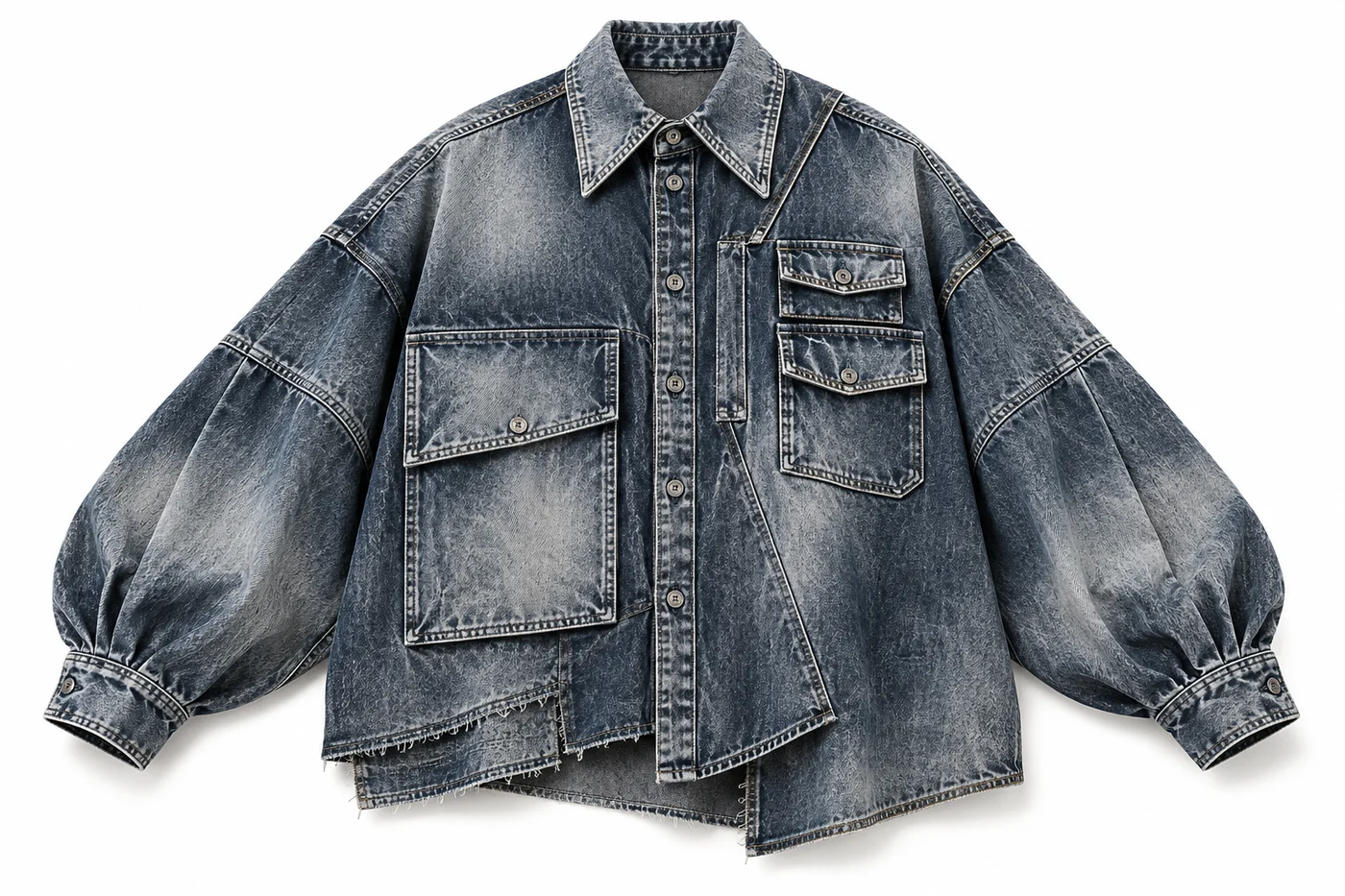
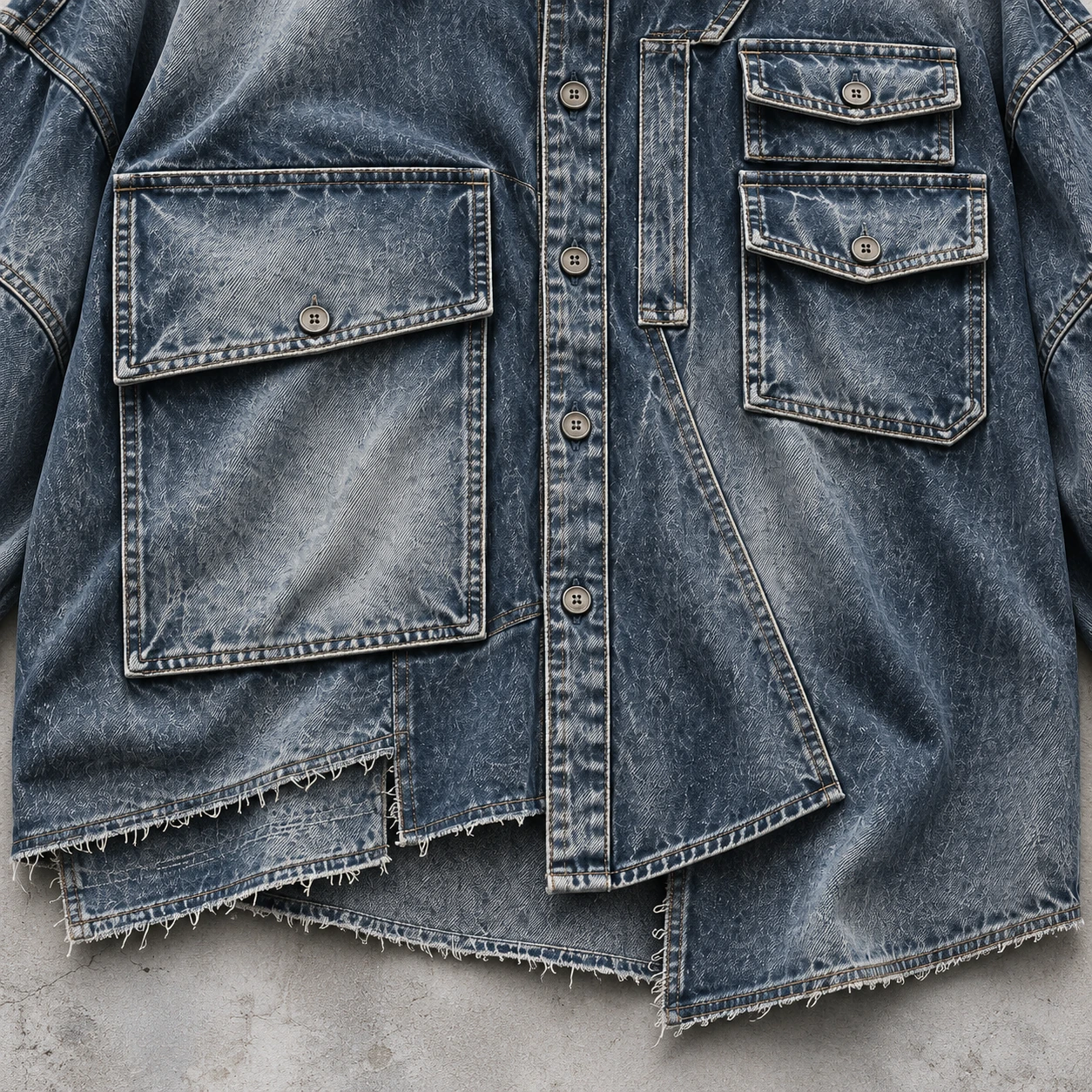
JK-001 uses pocket placement and an irregular lower edge to give a plain button-front overshirt its identity. The faded blue reference shows a pointed collar, broad dropped sleeves, one large flap pocket on one side and stacked flap pockets on the other. A vertical front edge and layered hem reinforce the deliberately uneven construction. When assessing an oversized casual jacket manufacturer, provide the intended layering fit and pocket layout for sampling. Give a men's streetwear jacket manufacturer the intended layering measurements and pocket diagram. A custom mens jean jacket manufacturer can use the collar and asymmetric pockets as pattern references.
This is a useful starting point for a collection built around visible utility details rather than printed graphics. The broad body can be considered as a layering piece, with pocket scale, sleeve volume and finished length developed together. Material weight and the exact finishing route still require a cloth and sample review.
Which details define this faded asymmetric denim overshirt as a coordinated garment?
The large and stacked pockets give the two sides different visual weight. Review placement from the center front and shoulder on each size.
The uneven front layers and visible fraying define the hem. Specify their shape and acceptable edge condition on a finished garment.
The placket and pointed collar establish a clear center line. Check the closed garment over the intended base layer.
Lighter seam edges emphasize the pockets, sleeves and collar. Review shade contrast together with the proposed denim and hardware.

Which faded asymmetric denim overshirt specifications matter before a private label order?
The overshirt depends on the relationship between its unequal pocket arrangement and the layered lower edge. Mark flap widths and their distances from the front opening on a drawing; compare both sides and the exposed hem layers on a buttoned sample before grading. Ask an oversized streetwear denim jacket factory to review sleeve width and layering ease.
| Component | JK-001 reference and development direction |
|---|---|
| Product type | Faded blue button-front denim overshirt; asymmetric flap pockets and layered irregular hem |
| Material | Check fabric composition and the thickness of overlapping hem layers; the inside finish is not established. |
| Fabric weight | No weight is verified. Compare candidate denim for how the layered edge hangs and how pocket flaps fold. |
| Fit | Chest and layering ease, sleeve volume, collar shape, pocket placement and hem profile |
| Color and finish | Blue faded reference with pale seam edges; exact material and finish route to establish |
| Branding | Test label and artwork placement away from the asymmetrical pocket flaps, then approve the actual position. |
| Minimum order | A quotation must account for the pocket configuration, shade choice and size distribution. |
| Timing and terms | Set dates for the pocket placement sample and approval of the layered edge before discussing production timing. |

What should a faded asymmetric denim overshirt sample review resolve?
The asymmetric front needs an explicit drawing for each side. Mirroring a pocket accidentally would remove a central feature of JK-001, while changes in pocket width or vertical position can make the broad body look unbalanced. The center placket remains the consistent reference line for those decisions. When assessing a denim jacket manufacturer china, request a sample and written material specifications.
Fit the overshirt fastened over the intended base layer. Review collar lay, shoulder position and cuff opening, then check the lower layers while standing and reaching. The hem drawing should distinguish deliberate offset from unwanted distortion. Record how much fraying is intended, which edges remain sewn and how the appearance behaves after the agreed care check. Review cuff width with the sleeve volume, and retain the intended button positions through the size run.
How can this faded asymmetric denim overshirt adapt to your brand collection?
Denim selection
Compare cloth weights, surface and drape on finished overshirts. A different fabric changes pocket bulk and the way the hem layers hang.
Layering block
Develop body width, shoulder drop, sleeve volume and length around the intended base layer and measurement chart.
Pocket mapping
Provide separate left and right placement drawings. Pocket scale, flap overlap and access should remain coherent through grading.
Hem development
Define the front offset, layer depth and edge condition. Review the silhouette from front and side after finishing.
Buttons and labels
Discuss button appearance, cuff closure, neck and care labels and packaging against the actual proposed material.
Shade and order
Agree a blue shade reference, quantities by size and color and sampling scope before quotation and scheduling.
How should material, construction and finishing risks be reviewed for JK-001?
A striking front can lose clarity when pocket edges, button positions and hem layers move independently. The faded surface also makes uneven seam tension more visible. Each side should be checked against its own placement map rather than a generic symmetric jacket drawing. Discuss the front flap positions with a casual pocketed jacket manufacturer before approval.
The proposed control record should connect cutting references, sewing sequence, hardware and finished measurements. Check the overshirt closed and open, including pocket entry and the lower edge after movement. The actual material and care route determine which durability checks are appropriate; a generated view cannot establish those results.
What evidence supports a JK-001 sourcing decision?
The original front reference supports the visible blue denim appearance, button closure, pocket asymmetry and layered hem. It does not establish fiber composition, fabric weight, internal finishing or back construction. Those need drawings, a material submission or a physical sample. Ask an OEM denim jacket factory to document the proposed pocket layout and hem construction.
A purchase review should add the approved left/right construction map, finished measurements, shade range, button specification and quotation. The generated styling and close-ups illustrate this design direction. They do not show an inspected physical garment, a factory process or a completed order. Actual supply terms and timing remain project-specific.
Which collection briefs suit this faded asymmetric denim overshirt?
JK-001 suits product teams seeking an overshirt where construction carries the visual identity. Its asymmetric utility front can support a denim capsule, a layered streetwear range or a collection with restrained branding and prominent seams. Compare a washed denim jacket factory using the approved shade reference and measurements.
It offers a different direction from the cleaner zip-front JK-002 bomber. Compare the actual pocket system, closure, layering ease and hem position before selecting the outerwear reference for development.
How can this faded asymmetric denim overshirt work across a streetwear outfit?
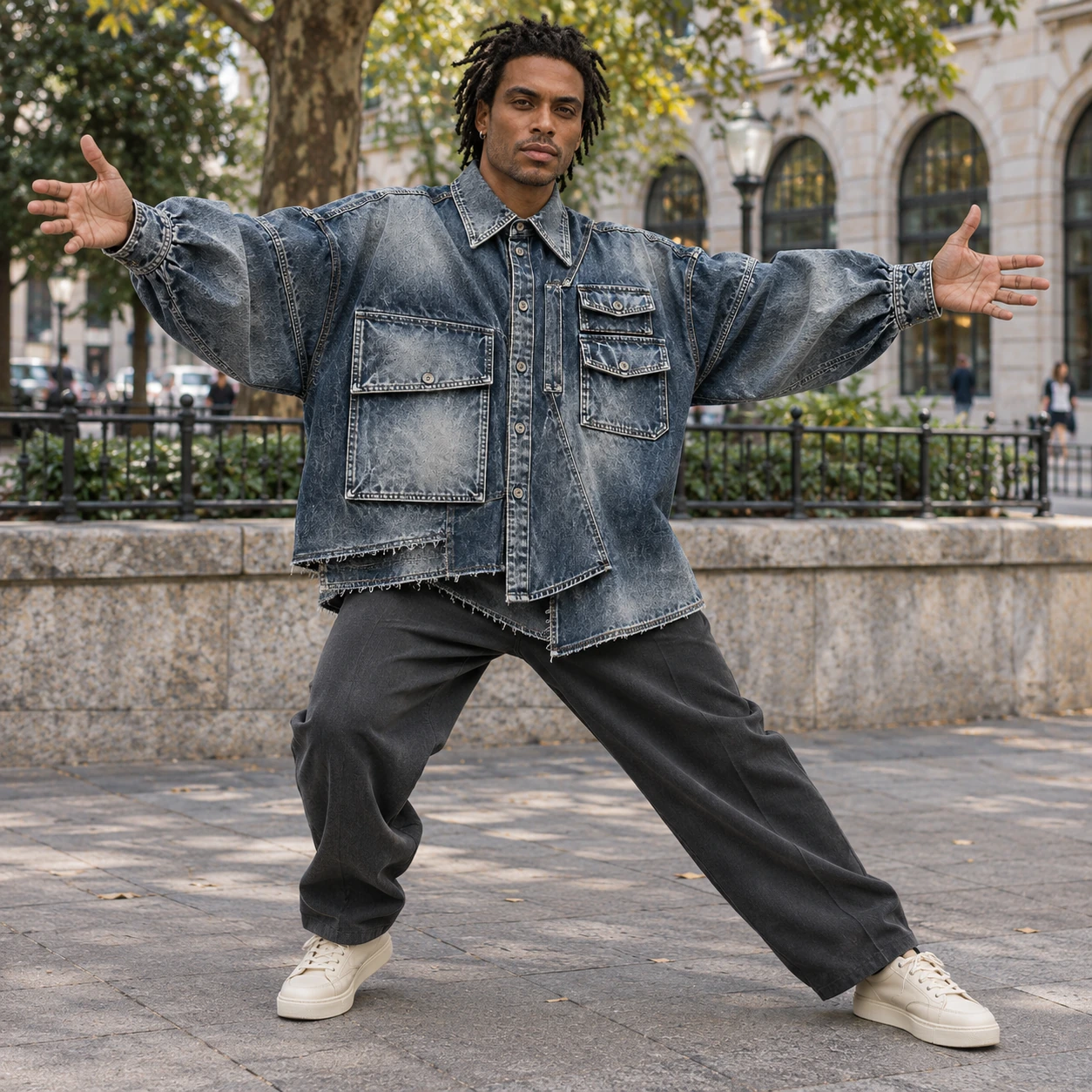
The broad overshirt can be balanced against a quiet base tee and relaxed trousers. The shorter and longer hem layers should remain visible, so the base-layer length and trouser waist position matter alongside the sleeve volume.
Use a fitting outfit to compare the silhouette with the placket open and fastened. A darker lower half can make the faded pocket edges more visible. Coordinate shade and proportion across garments while reviewing their cloths and finishing separately; a denim-looking outfit does not establish an identical fabric, process or matched set.

FAQ about custom faded asymmetric denim overshirt development
Can the two pocket sides be made symmetrical?
That would be a separate design revision. The current reference uses different pocket arrangements on each side. Compare a revised drawing and sample before replacing that defining feature.
How should the uneven hem be specified?
Use a dimensioned front and side drawing identifying each layer, its offset and edge condition. Agree the acceptable fraying and check the finished garment after the proposed care cycle.
Can the overshirt carry our labels or artwork?
Original branding is a development option. Place it with the pocket flaps, placket and hem in view, then trial the selected application on the actual cloth.
What MOQ and lead time apply?
Neither is verified by the reference. Material, hardware, colors, size quantities and destination need a written quotation and schedule.
What physical evidence is still needed?
The material, back and inside construction, measurements, hardware and finished shade need approval. Generated images do not replace those physical and technical records.