Review how washing and artwork affect the surface of the finished garment.
Tradition and Disruption
Streetwear turns familiar shapes into cultural expression. The Craftsmanship of Streetwear brands comes through in tactile embroidery, sculpted print and the contrast of worn cloth with precise artwork. A custom streetwear clothing manufacturer brings these layers together; a streetwear manufacturer connects material, silhouette and graphic character.
Material compatibility and final construction are developed on the chosen garment; availability is confirmed by order.
Streetwear Craftsmanship
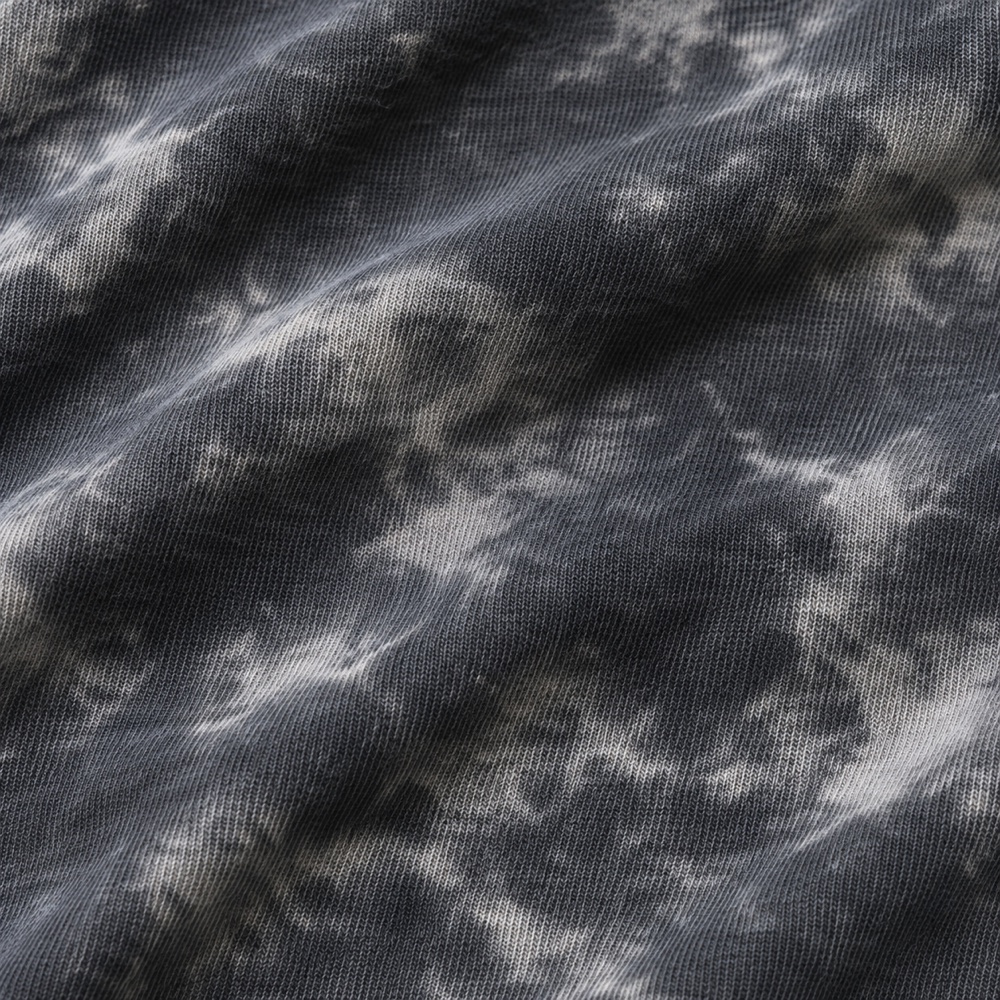
Acid Wash
A mottled fade brings contrast to broad panels and seams. Set a physical shade reference and agree the acceptable variation. Review the effect on the finished garment, including the neckline and other trim.
A smooth raised surface can give a graphic a distinct tactile edge. Review the artwork scale, relief and flexibility on the proposed material. Check its appearance after the intended finishing sequence.
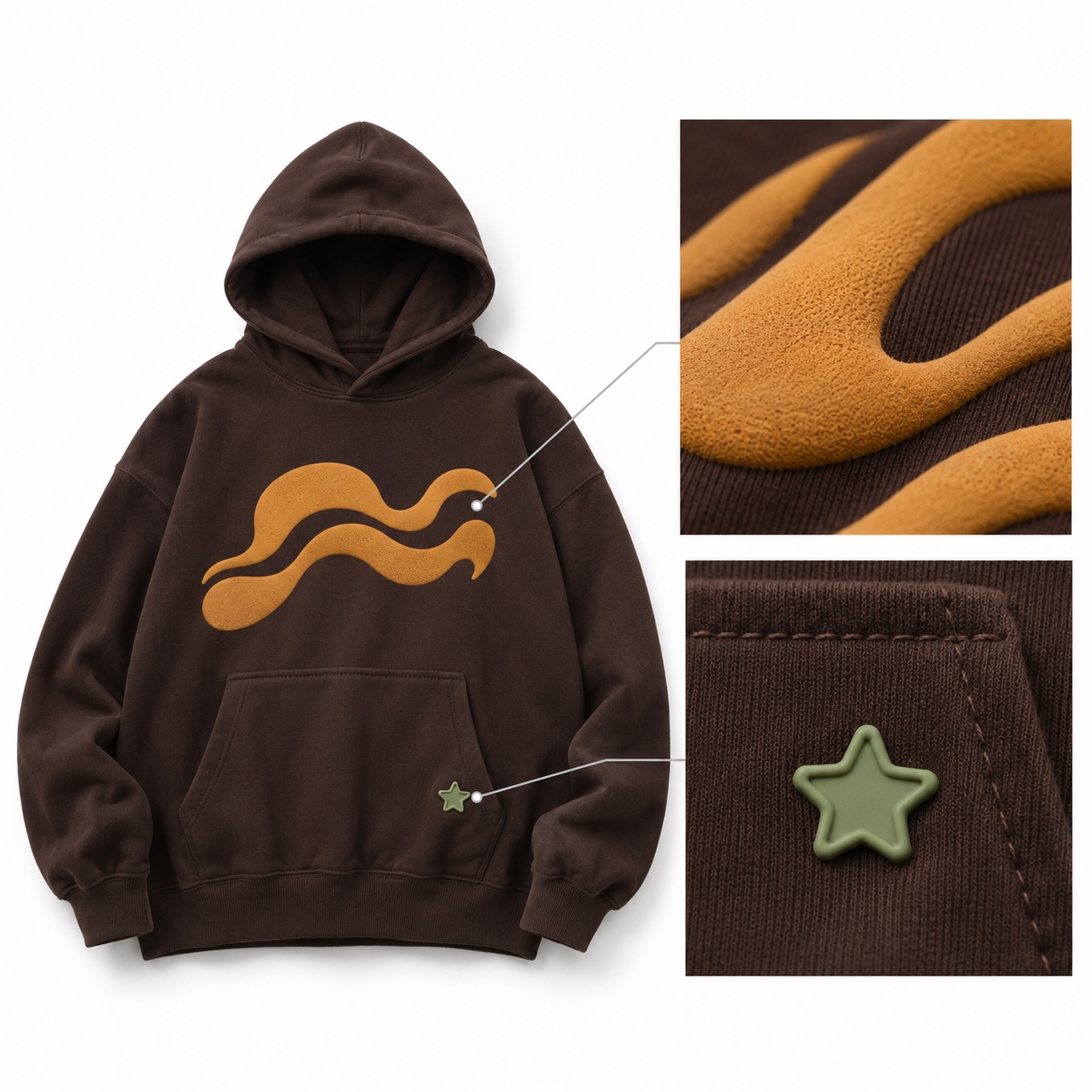
A rounded raised print adds volume to an emblem or graphic. Compare the actual sample for edge definition and hand feel. Review small details and the relationship between the raised surface and the garment.
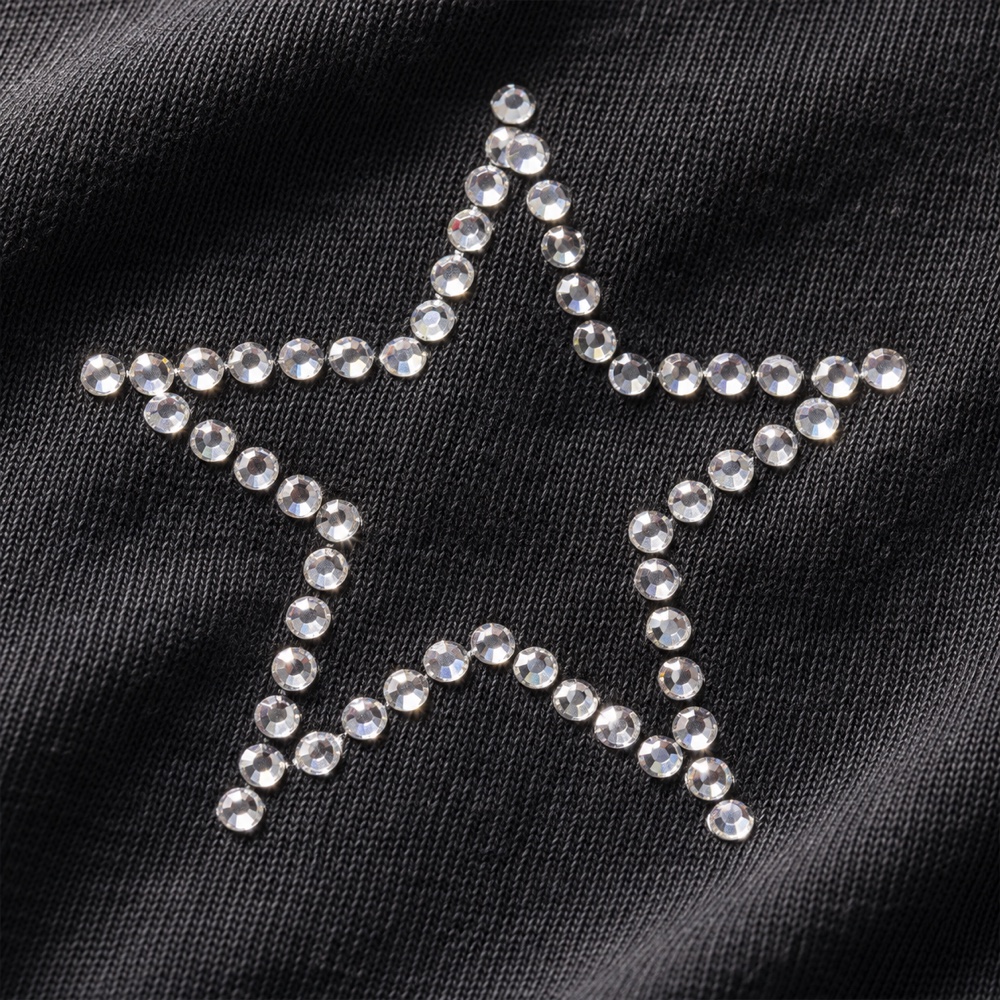
Reflective stones can emphasize a placement or outline. Specify the size and arrangement in the brief. Ask how attachment, comfort and care will be evaluated on the proposed garment.
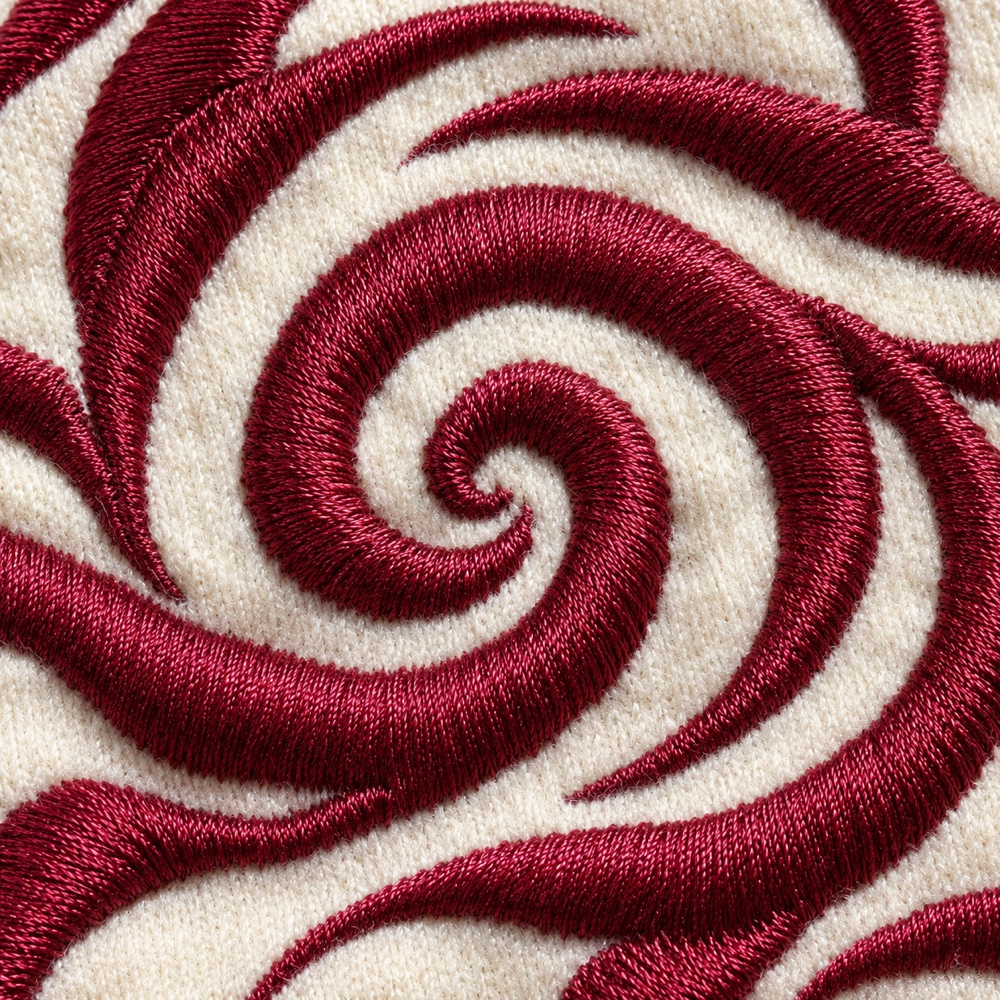
Raised stitching gives a motif visible depth. Review stitch definition, backing and bulk at the placement. Check the outside appearance and inside comfort on the same finished sample.
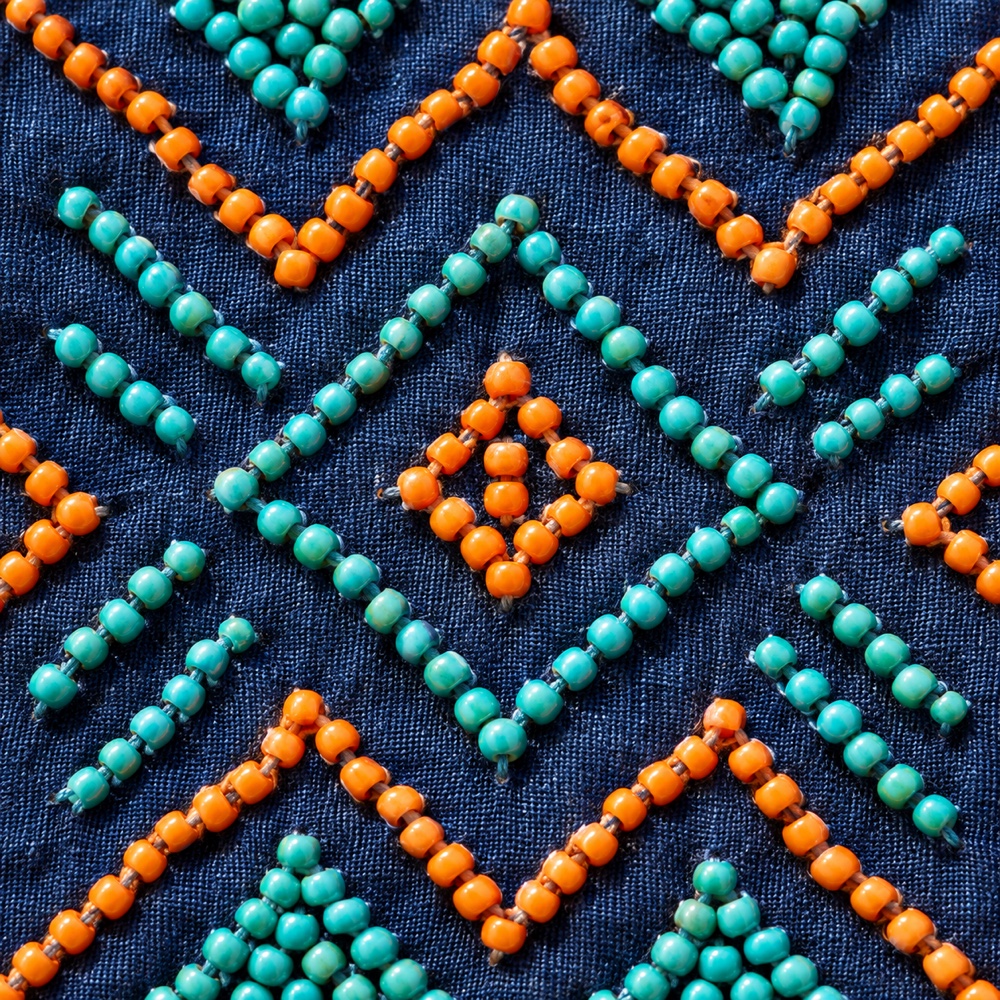
Beads add a separate texture and weight to the fabric surface. Mark the intended pattern and density. Review attachment and movement on the sample, including how the garment hangs around the decoration.
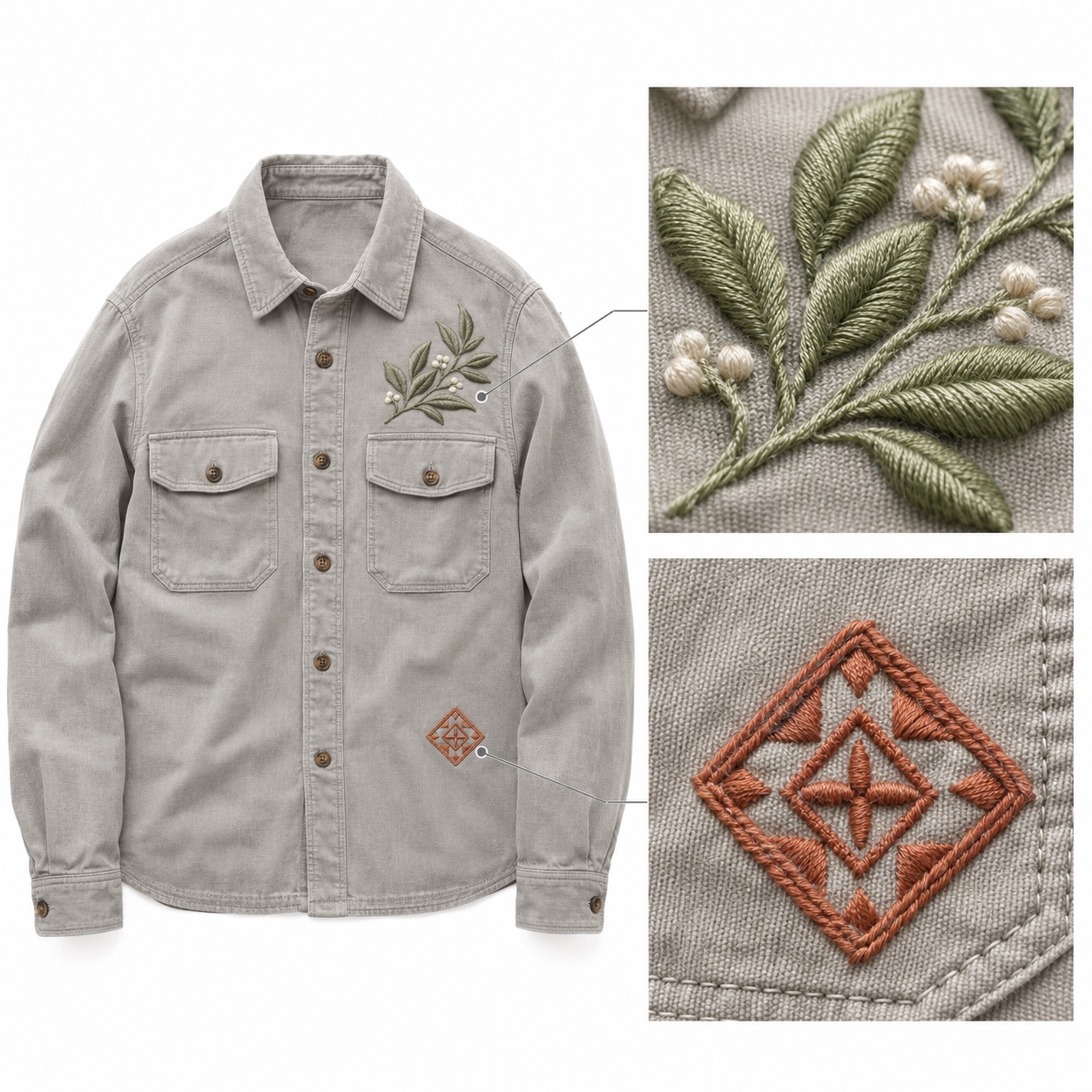
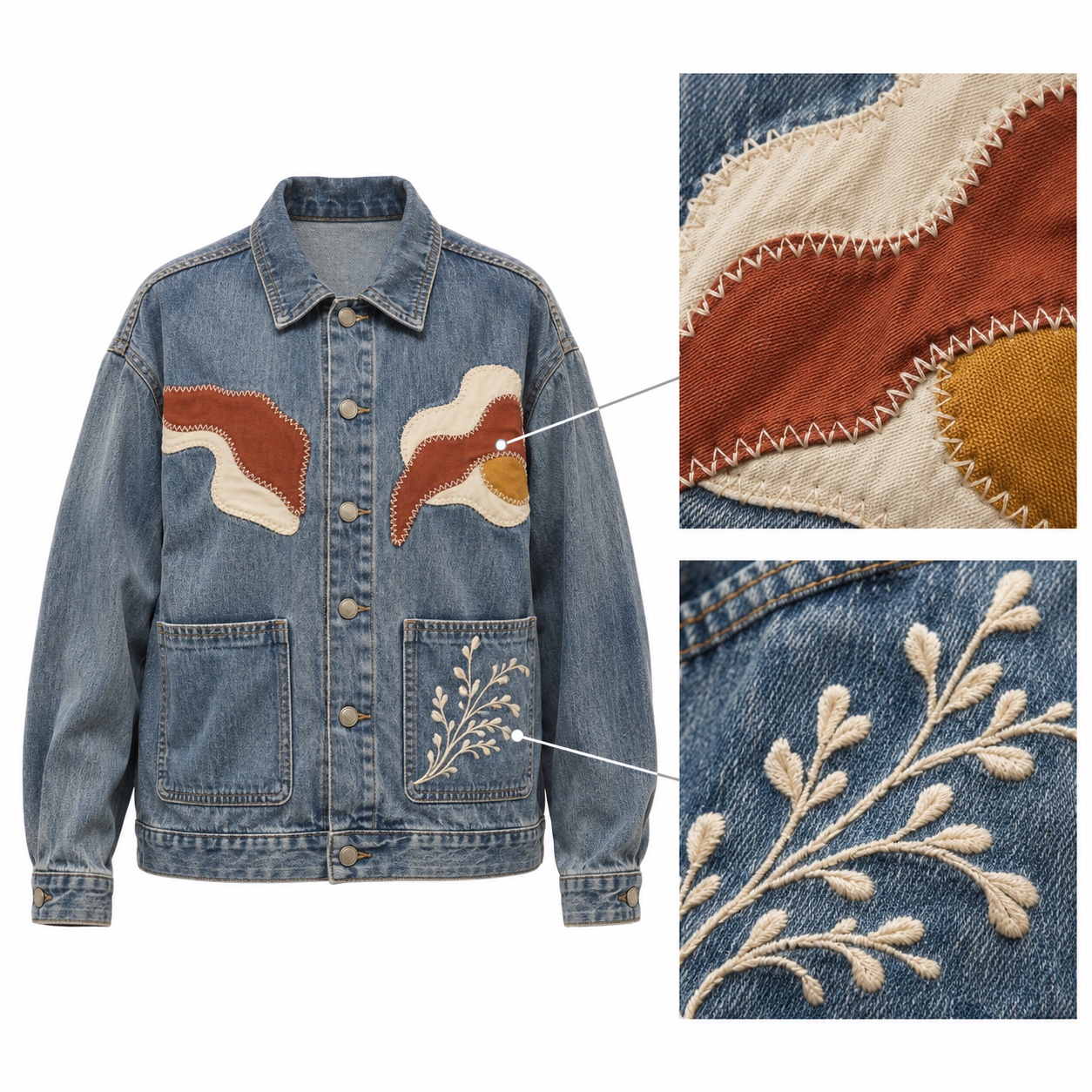
Review thread color, stitch definition and the reverse side at the intended scale. Approve placement on the actual garment and assess the result after the proposed finish.
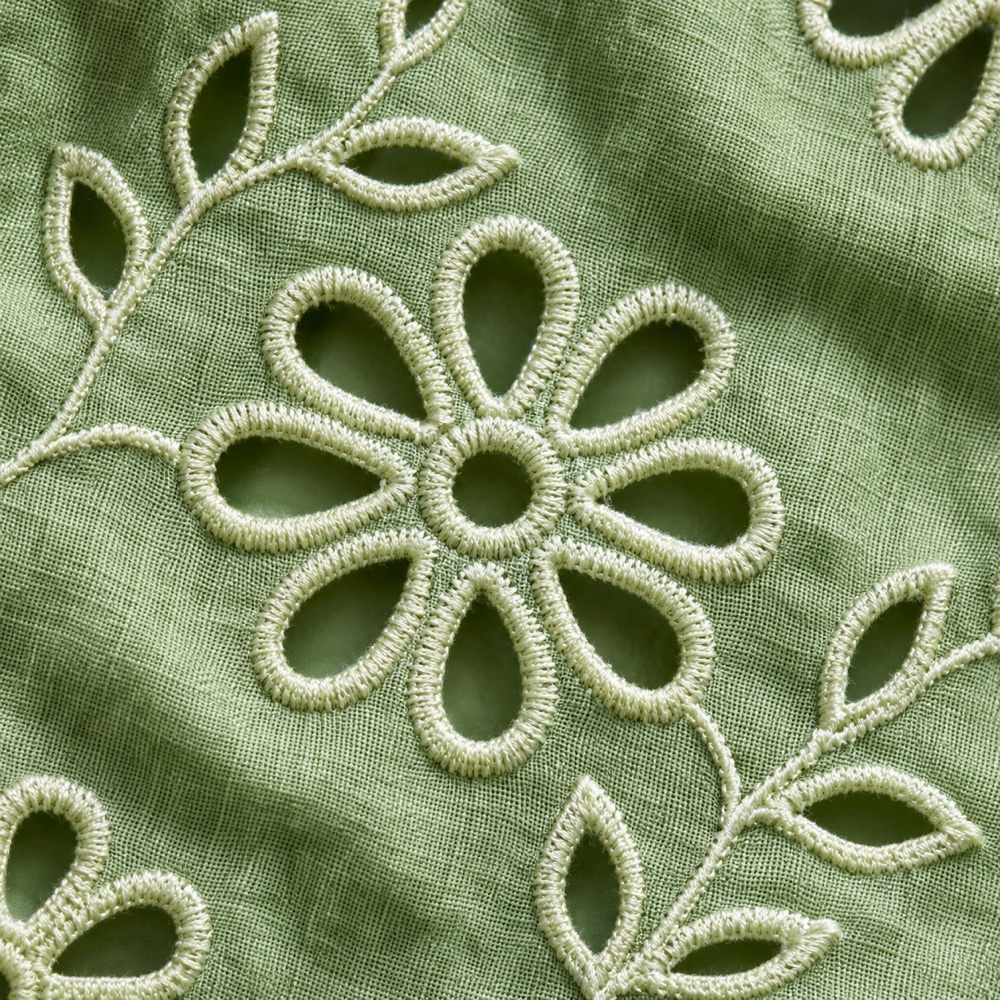
Open areas and stitched edges create a layered surface. Compare the opening shape, edge finish and fabric stability on a sample before agreeing the final placement.
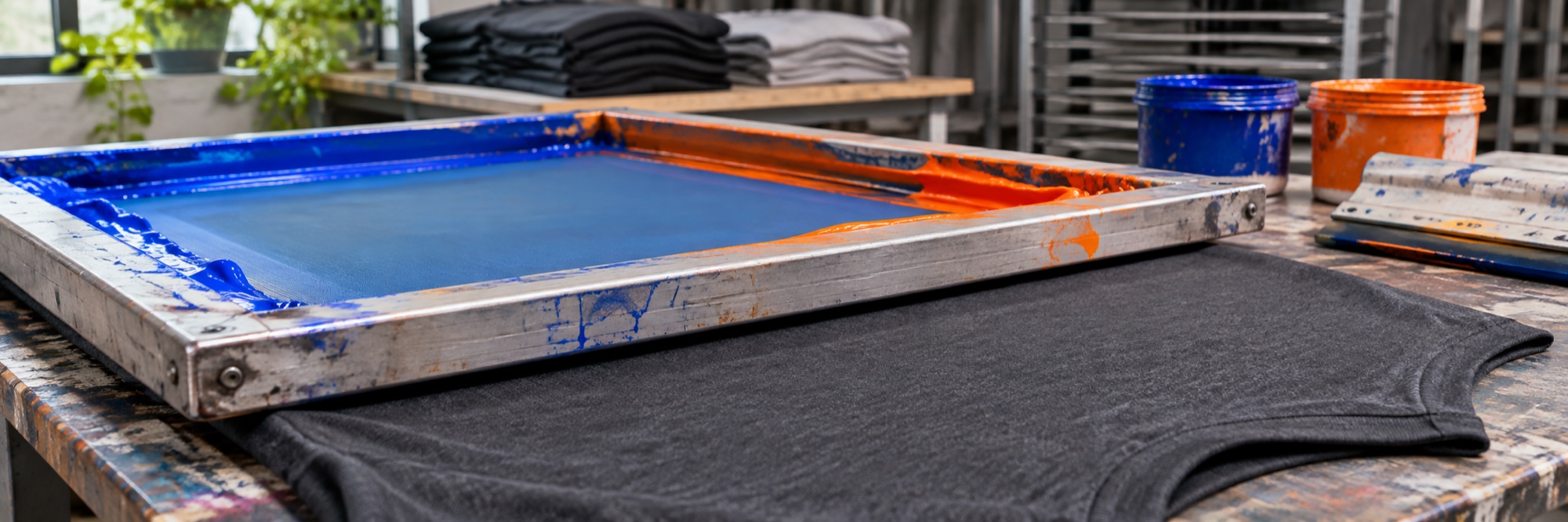
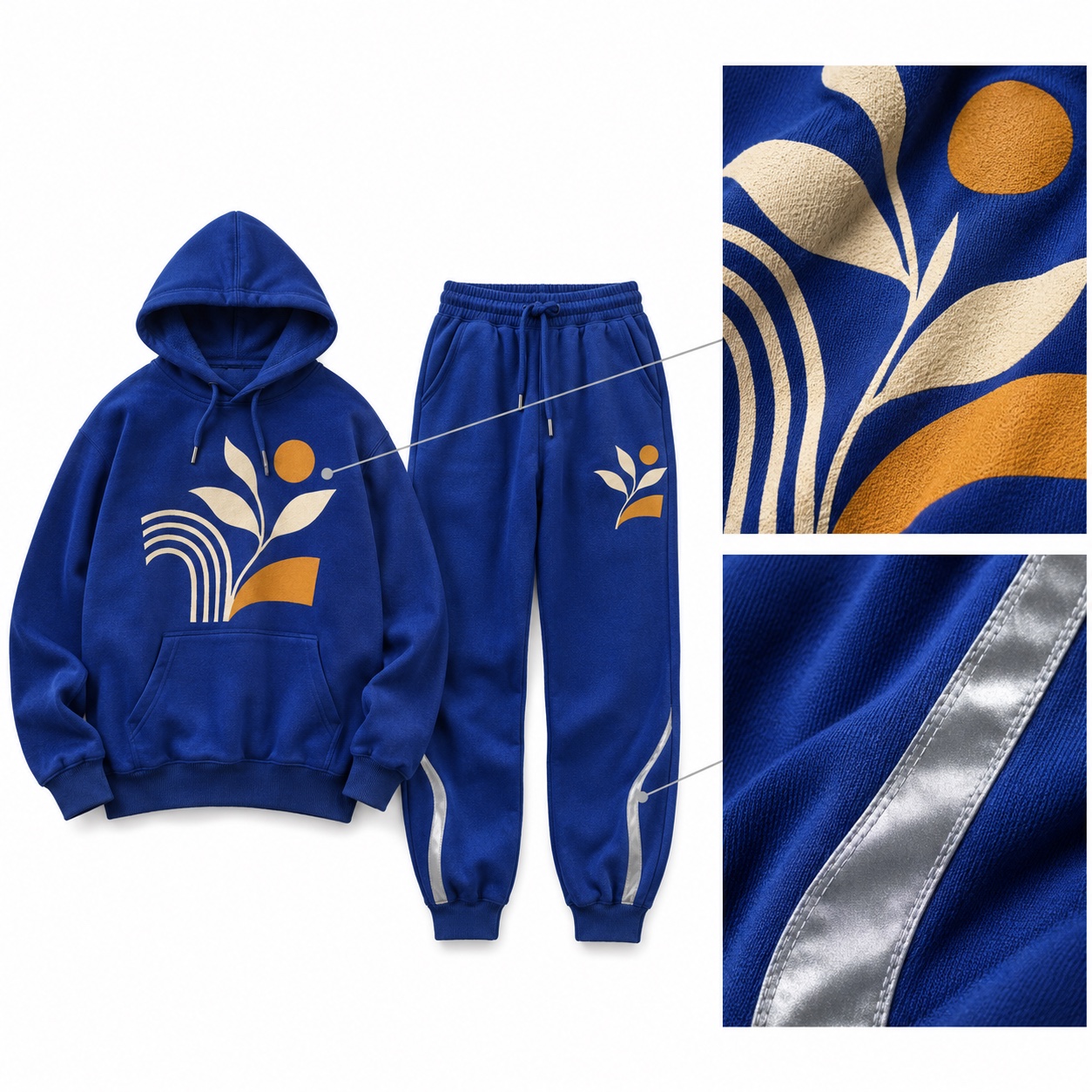
A flat printed graphic depends on coverage and clear edges. Review color and detail on the chosen base shade, then check the hand feel and appearance after finishing.
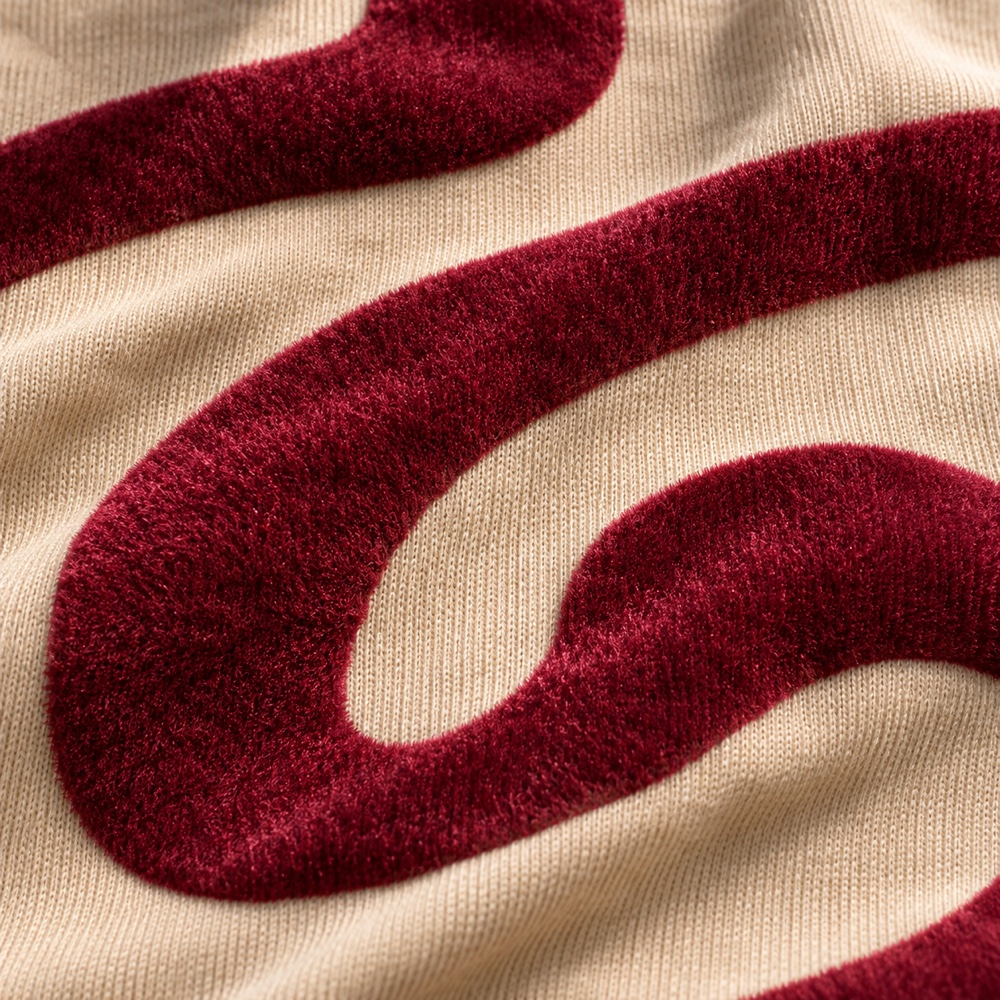
A plush surface introduces a soft contrast to the base cloth. Review the texture and edge definition. Ask which care and durability checks are appropriate for the proposed sample.
Compare the graphic under normal and directed light. The appearance does not establish a safety rating. Confirm any required performance test separately for the actual material.
Printed trims can carry a repeated visual element along seams or drawcord details. Confirm width, placement and the way the trim lies on the finished garment.
Loose embroidered fringe creates movement beyond the stitched motif. Review length, attachment and the inside finish, then assess how the detail behaves when the garment moves.
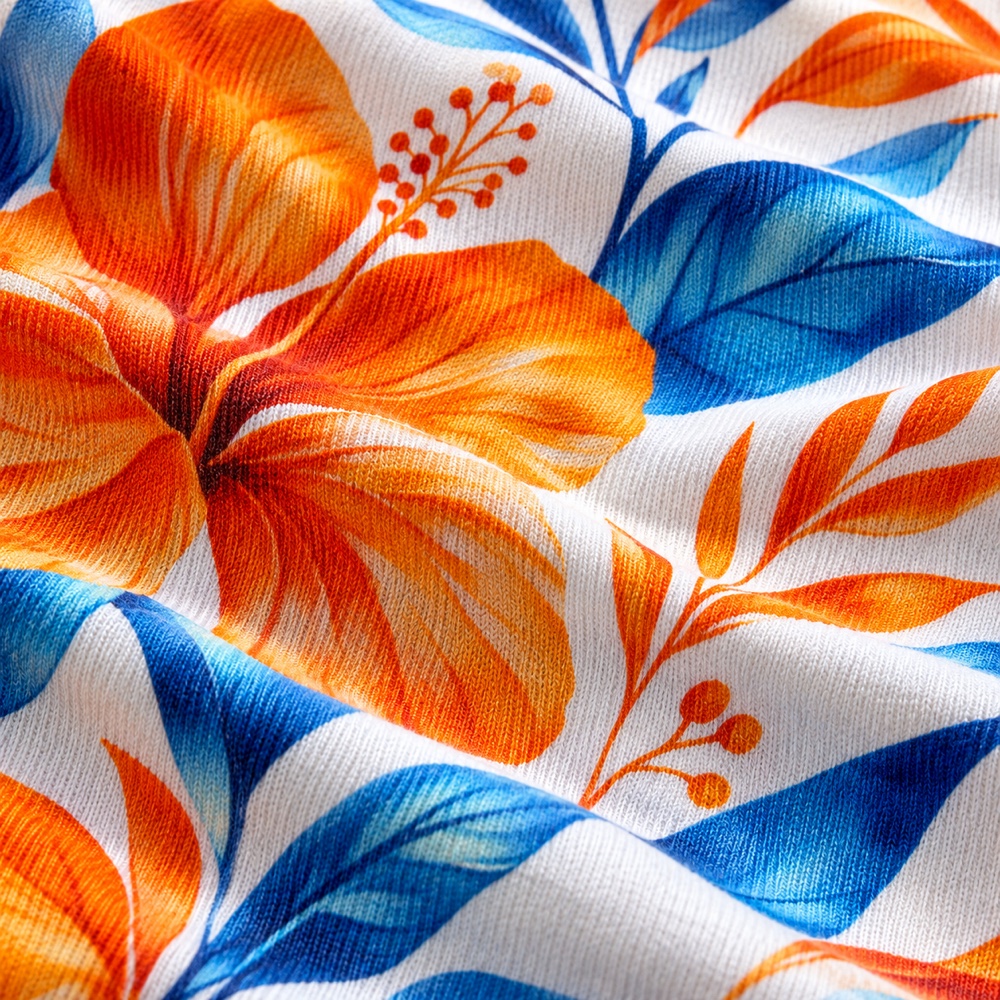
Detailed color transitions can be evaluated on a printed fabric trial. Compare fine lines, scale and color on the selected base and review the effect after the planned finishing route.
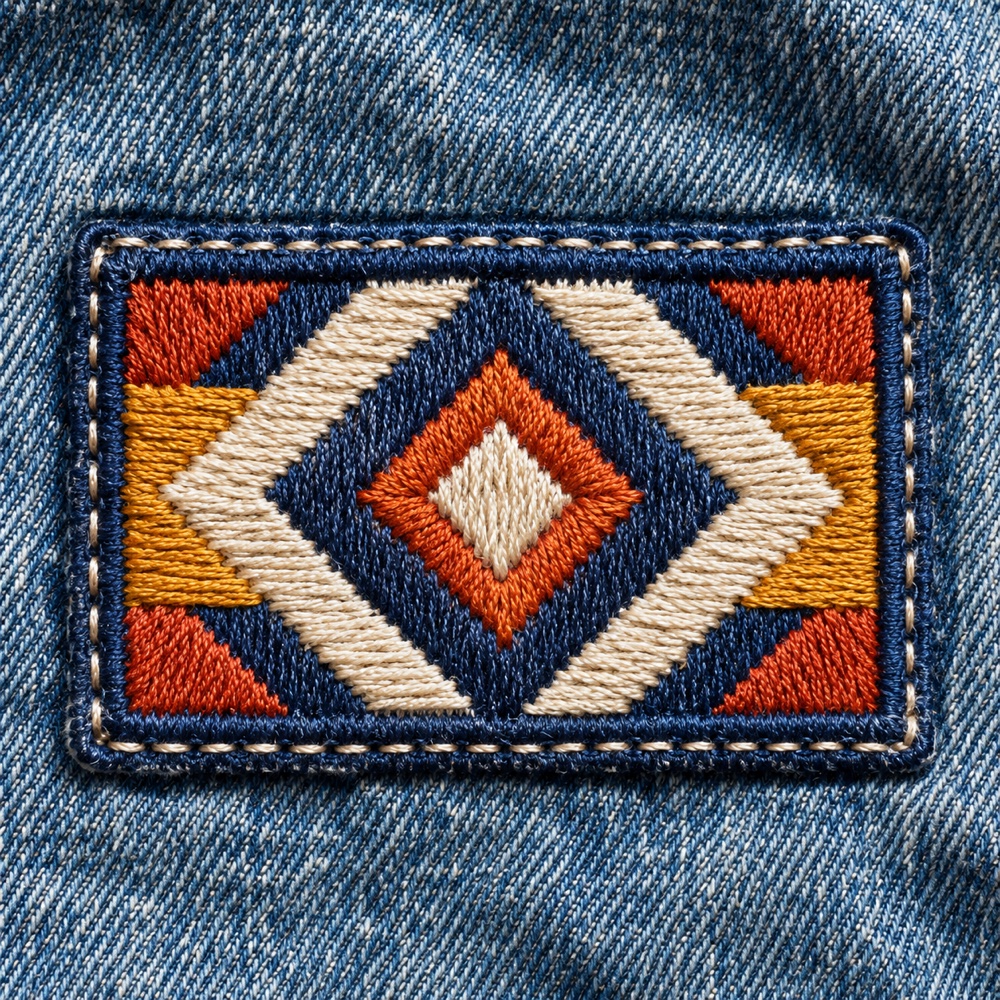
A separate patch introduces its own edge and construction. Specify placement and attachment, then review thickness, flexibility and the reverse side on a finished garment.
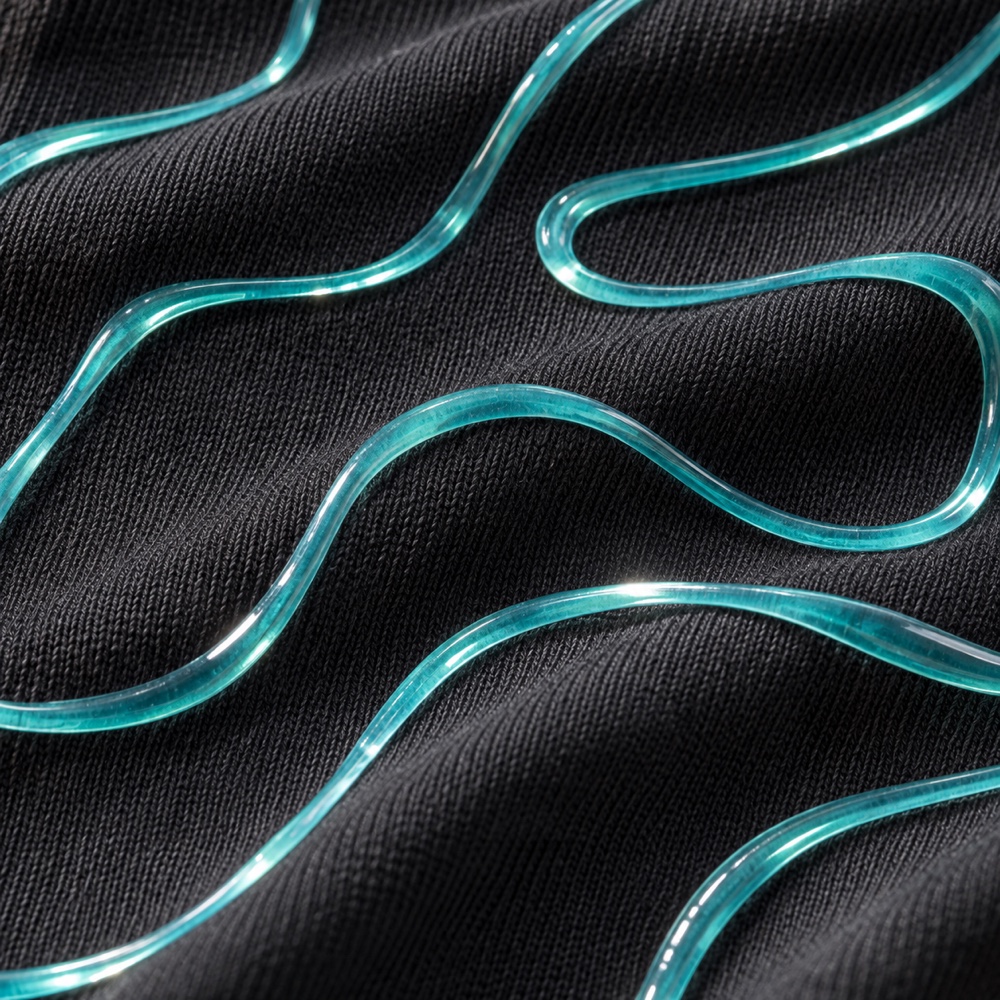
Raised glossy lines create a distinct surface contrast. Evaluate line continuity, edge quality and hand feel on a sample. Confirm whether the intended wash sequence suits the proposed material.
Tonal etched marks add quiet contrast and a worn-in graphic character. Pyrography effects depend on the material and chosen method; the illustration shows a design direction.
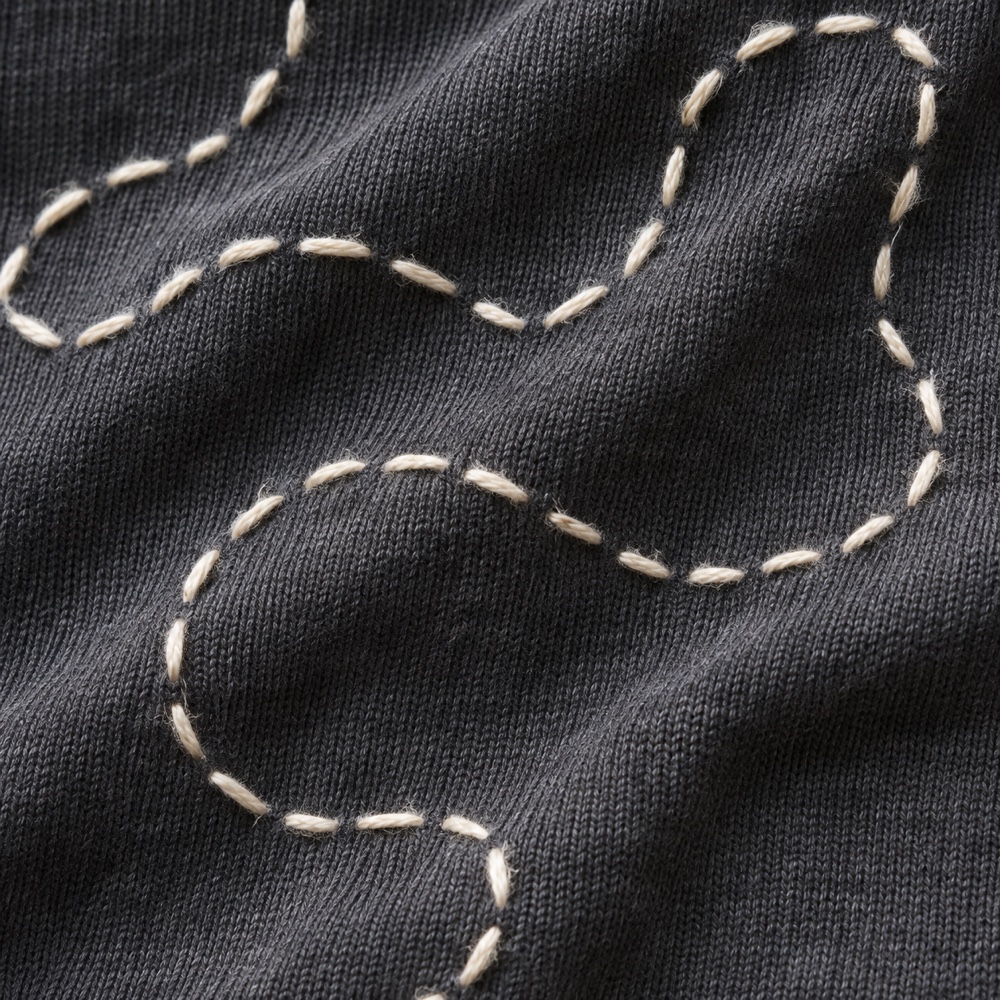
Sparse stitching leaves the base cloth visible, creating a lighter, more open texture. Low Embroidery describes the visual direction here; the final stitch construction is developed on a sample.
Cut fabric shapes introduce layers and contrasting edges. Review the overlay material, stitch border and bulk, particularly where the design passes close to a seam or fold.
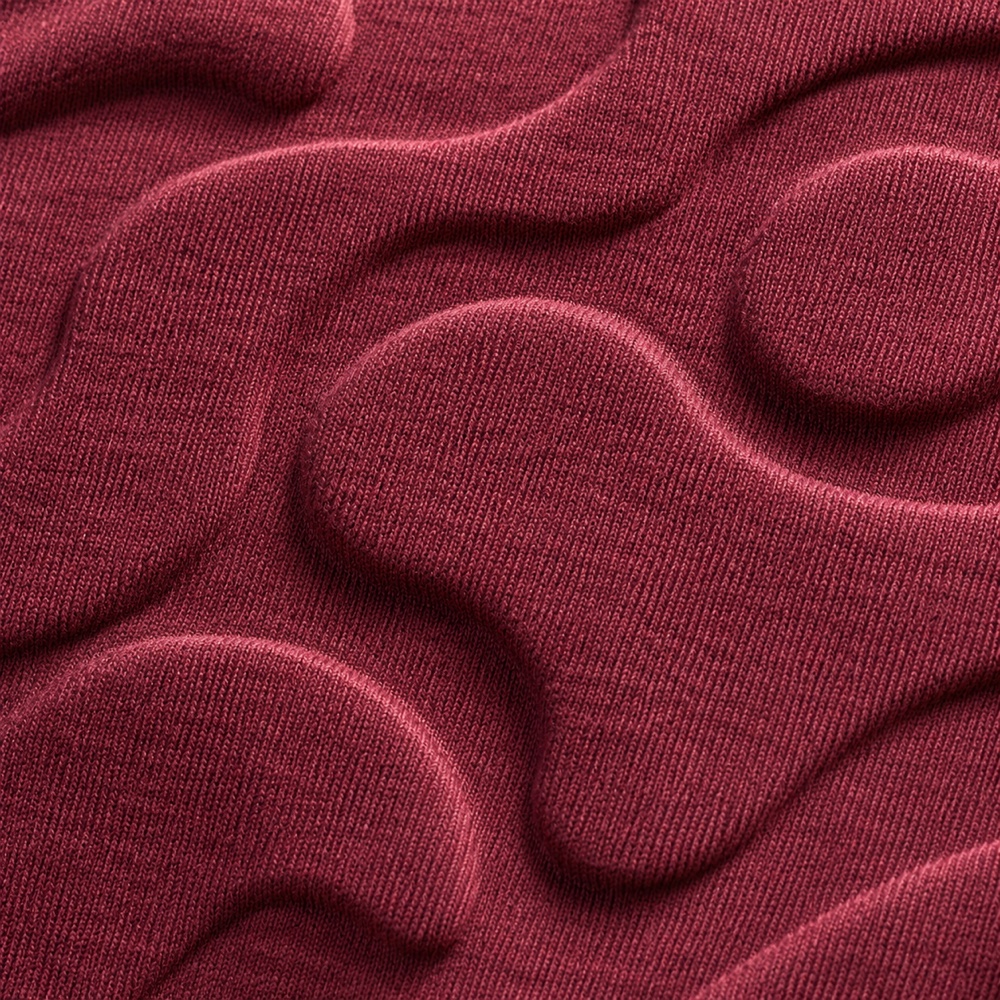
Raised and recessed shapes make a tonal graphic read through light and shadow. Compare depth, definition and the surrounding cloth on the proposed finished sample.
Color boundaries can vary across individual pieces. Agree a visual range with the sample and compare how the pattern sits across the body, sleeves and seams.
Bright flocked color combines a plush surface with a strong graphic contrast. Review shade and texture in the expected lighting and confirm any special performance requirement through an appropriate test.
Raised graphics, stitched relief and layered fabric give each garment its own visual rhythm. Photography-style concepts below show the garment and enlarged craft details.