Boxy Hoodie Manufacturers: How Can Brands Verify Fit, Fleece and Grading Across Sizes?
Buyer’s Guides ·
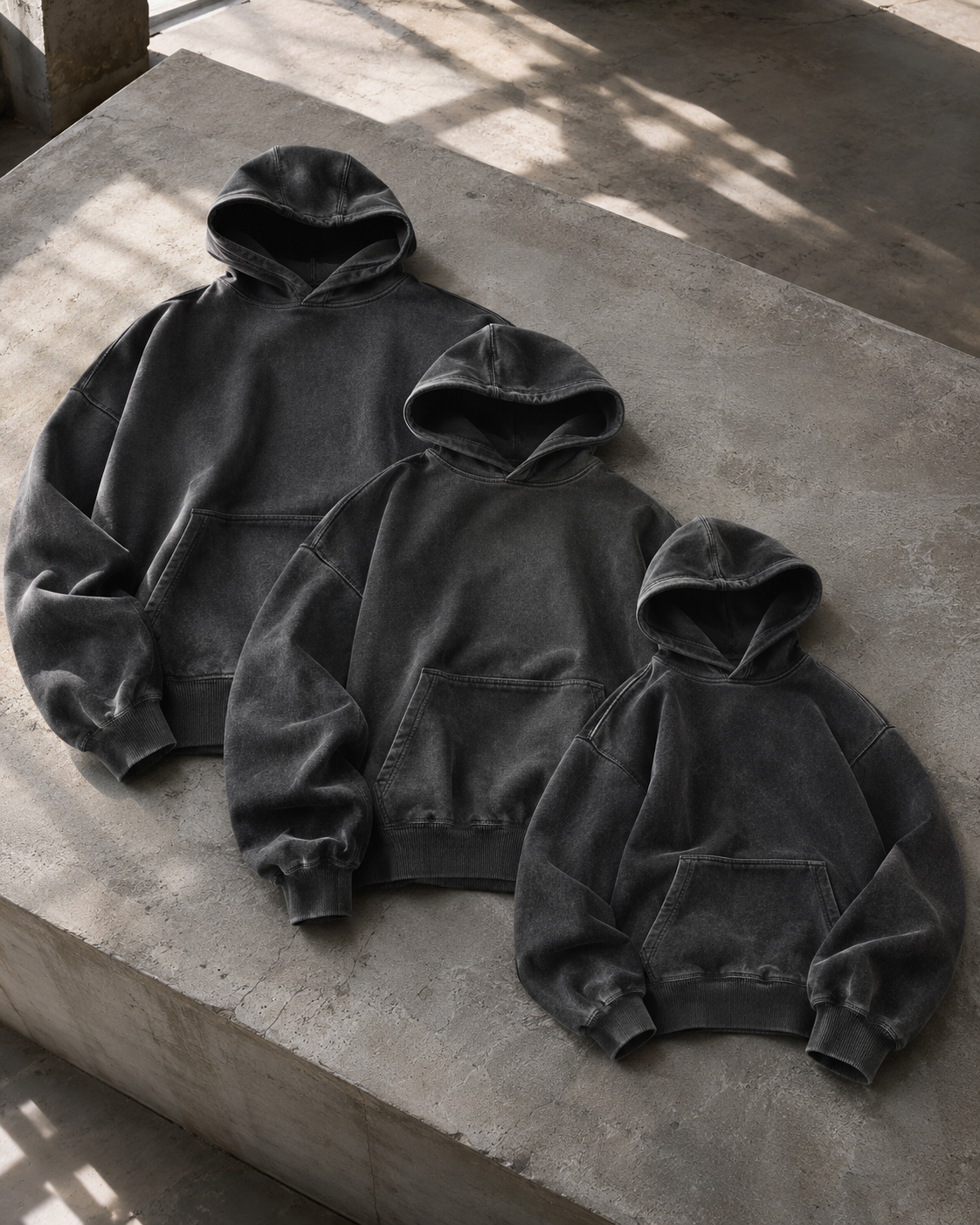
Approve a boxy hoodie through its complete proportions and graded size range. Lock the measurement methods, fabric, rib and finished condition, then review the sizes needed to demonstrate that the silhouette remains intentional. A well-fitting middle-size sample is a useful reference, but it cannot establish the fit of every size in a commercial order.
What makes a boxy hoodie a pattern decision rather than a larger size?
Define the intended relationship between width and length before selecting a sample size. A boxy silhouette usually depends on the balance of the torso, shoulder, sleeve and lower edge. Simply moving up a size changes several dimensions together and may add length the design does not need. The development brief should describe the shape the brand wants, not merely request an oversized fit.
Use front, side and back references and explain which features matter. Identify where the shoulder should sit, how the sleeve should fall and whether the lower edge should hang freely or draw inward. A cropped body is not automatically boxy, and a wide body can still look long or narrow when its other proportions are unresolved. Keep those distinctions visible during sampling.
Ask the pattern team to translate the references into a measurement diagram and proposed construction. Review its interpretation before treating the first sample as a final standard. A photograph can communicate visual intention, but it cannot specify every dimension, seam relationship or component behavior needed to reproduce the garment across a size range.
Which observations should be recorded during the first fitting?
Record the sample identity, size, material and finishing condition. Observe the shoulder position, body width and length, sleeve volume, armhole behavior and hem relationship. Use the same intended styling condition for comparison. If the sample is worn over a thick layer, note that rather than assuming the result describes how it will fit over a T-shirt.
Photograph the garment at rest and during normal movement. Ask the wearer to raise and lower the arms, sit and return to a relaxed stance. Record where the shape changes and whether that change is acceptable. A carefully posed front photograph can conceal a sleeve that pulls the body upward or a hem that fails to return to its intended position.
Which measurements should be defined before grading begins?
Identify the measurement points and methods for body width, length, shoulder, sleeve, armhole, cuff and lower edge. Include the hood and neckline where their proportions influence the design. Use a diagram so the factory and buyer measure the same points. A number without a method can create an apparent disagreement even when both people are handling the same sample correctly. Custom streetwear hoodies need a size chart linked to the approved pattern and the intended proportions, especially when a shorter body changes the placement of the pocket or graphic.
Separate finished measurements from pattern dimensions. Seam allowances, construction and finishing can affect the relationship between them. The purchasing team normally needs a finished product standard, while the pattern team needs the information that produces it. Keep those references connected rather than asking the cutter to infer the pattern directly from an ambiguous finished size chart.
Define the condition in which the garment is assessed. If the product is sold after a wash or other treatment, the final sample must represent that condition. A pre-wash measurement sheet can be useful for process control, but it should not replace the finished garment target. Identify both clearly when the production route needs both records.
How should the measurement diagram prevent inconsistent checks?
Show the garment position and the start and end points for each dimension. Clarify whether a width is measured flat, how a curved seam is followed and whether a component is relaxed. Ask the factory to demonstrate its method on a sample where there is uncertainty. Resolve the method before negotiating whether a reported difference is acceptable.
Keep the diagram revision linked to the size chart. If the method changes, identify which previous results remain comparable. Avoid combining measurements taken under different methods into one trend. A clear method allows development, production and inspection teams to discuss the same product instead of repeatedly remeasuring it in incompatible ways.
How should a boxy hoodie be graded across sizes without losing its character?
Ask the pattern maker to explain how the proportions develop across the intended range. Body width, length, shoulder and sleeve do not necessarily increase by the same amount. The desired relationship should remain recognizable while allowing the intended fit for each size. A grading plan needs to describe that relationship rather than merely list larger numbers. When comparing boxy hoodie manufacturers, ask how custom boxy hoodies are graded beyond the base sample.
Review the smaller and larger sizes where the design is sensitive to proportion. Check whether the garment becomes unexpectedly long, whether the shoulder drop changes too much or whether the sleeve opening feels out of balance. The base sample establishes one point in the range. It cannot show how all those relationships behave at the ends.
Keep the size strategy clear. If the brand offers several lengths or a different fit family, distinguish those decisions from ordinary grading. A shorter body option may require its own development logic. Do not assume that removing length uniformly preserves the pocket, hood, artwork and sleeve relationships that made the original garment work.
Which questions reveal whether a supplier has a workable grading plan?
Ask which dimensions control the boxy effect and how those dimensions change by size. Request the graded measurement information and the sample plan proposed to verify it. A useful answer connects the pattern to the finished garment. A statement that the factory can produce any size does not explain how it will preserve the intended silhouette.
Ask what would trigger a grading correction after the size-set review. Identify how updated patterns and measurements reach cutting and inspection. A supplier should be able to explain how it prevents an older pattern from remaining active in one size after the rest of the range has been revised. The control of the revision matters as much as producing the first graded file.
Which physical sizes should a brand review before bulk approval?
Choose physical sizes by identifying where the grade changes the design risk. For example, check the smallest size where pocket clearance is tight and a larger size where sleeve volume or body length may dominate. Compare those garments with the graded pattern and document which intermediate sizes remain untested. The buyer can then decide whether the evidence is sufficient for this range or another sample is needed. For custom boxy hoodies men intend to layer, document the expected underlayer before reviewing shoulder and sleeve ease.
Fit the samples on appropriate wearers where possible and retain relevant fit information. Use the approved measurement methods and compare the visual relationships as well as the numbers. A garment can meet individual dimensions yet still feel different because the balance between them is not what the brand intended. Record that observation clearly for the pattern team.
Keep approval status by size. If one size requires correction, identify whether the issue is isolated or reflects a grading rule affecting adjacent sizes. Do not release the full range simply because most samples are acceptable. Conversely, do not restart unrelated development without investigating which part of the grading needs revision.
What should an actionable size-set review record contain?
Identify the size, pattern revision, material, finish and wearer reference. Record measured results against the approved chart and attach consistent front, side and back views. Describe the observed fit issue before proposing a correction. Comments such as “sleeve feels wrong” should be replaced by a description of where it pulls, collapses or restricts movement.
Assign a decision and next step for each issue. Identify whether the correction belongs to the pattern, construction, material or measurement method, or whether further investigation is needed. Keep the next sample linked to that comment so the reviewer can verify that it was resolved. An archive of photographs without decisions is difficult to use for production release.
How do fleece construction and weight affect the boxy silhouette?
Review the actual material in the garment. Mass per area is one useful specification, but construction, thickness, surface and finishing also influence how the fabric bends and hangs. A heavier fleece does not automatically produce a better boxy shape. It may support one feature while making another area bulky or changing comfort during movement.
Compare candidate fabrics using identified samples and a controlled pattern where practical. Record what differs between the candidates. If both the pattern and material change, avoid attributing the entire improvement to fabric weight. The comparison should help the team decide which input supports the intended garment rather than reinforce an assumption that the largest GSM number is best.
Inspect the face and reverse and review the selling condition after the intended treatment. A brushed material can feel different from a loop-backed construction even at a similar weight. Keep the accepted material reference with the approved garment. A substitute with the same nominal weight still requires a review of the properties that matter to the silhouette.
Can a very heavyweight hoodie still look wrong?
Yes. The pattern may be too long, the shoulder balance may differ from the reference or the lower edge may draw inward more than intended. Weight does not correct those relationships by itself. Identify the observed problem and ask the technical team to investigate its cause before increasing material mass or changing the entire design.
Review comfort and movement alongside the static outline. A substantial fabric may hold volume while resisting bending in an area where the wearer needs freedom. Record that tradeoff rather than judging the garment only in a product photograph. The accepted material and pattern should work together in the intended use.
Why can bottom rib change the apparent width and length of the hoodie?
The lower rib interacts with the body rather than functioning as an independent decorative strip. Its dimensions, construction and behavior can influence how the body gathers and where the hem rests. Review the assembled relationship in the finished garment. A body panel that looks boxy before attachment may present a different outline once the rib is added.
Inspect the lower edge while the garment is relaxed and worn. Look at whether it draws in as intended, whether the body forms unwanted folds and whether the hem returns appropriately after movement. Ask the technical team to review the actual rib and joining method. Do not assume a correction must involve the body width alone.
Keep the rib material and dimensions identified in the specification. A visually similar rib can behave differently, particularly after finishing. If the supplier proposes a replacement, assess the assembled result rather than approving color alone. The lower-edge relationship is part of the silhouette and should be protected during bulk supply changes.
How should cuffs and neckline rib be reviewed with the body?
Check the cuffs in relation to sleeve volume and intended sleeve position. A cuff that holds the sleeve differently can change how excess length gathers. Review the neckline and hood attachment for comfort and the way they sit. These components contribute to the overall impression even when the body measurements match the chart.
Retain the relevant component references with the finished sample. If a rib correction is proposed, identify which locations use it and whether the same correction is appropriate at each location. A hem, cuff and neckline do not necessarily serve the same function. Their approvals should reflect their actual relationship to the garment.
How should the hood and pocket be scaled with a shorter, wider body?
Review the hood up and down and observe its relationship to the neckline and shoulders. A hood retained from another silhouette may appear disproportionate or pull differently on a shorter body. Identify the desired shape and coverage in the brief. Do not assume that sharing a body width with an older style makes the older hood automatically appropriate.
Check pocket dimensions, location and usability in the finished garment. On a shorter body, a pocket can occupy more of the visible front and leave less space for artwork or the lower rib. Review reach and opening position as well as appearance. A pocket that looks balanced on a flat drawing may feel awkward in use.
Include these components in the grading discussion. Decide how their size and placement change and verify the relevant sizes. A body can be graded correctly while its pocket remains visually unbalanced at the ends of the range. Keep component changes linked to the current pattern revision so the assembled sample demonstrates the complete design.
Why should artwork placement be reviewed again when the silhouette becomes boxy?
Place the intended artwork on the approved boxy pattern before deciding whether a previous graphic can be reused. Check the space between the artwork and the pocket, lower rib and hood in their worn positions. If the proportions are wrong, test a change in location separately from a change in graphic dimensions. Record which adjustment the brand accepts for each size group.
Specify dimensions and placement references separately. Identify the finished point from which the graphic is measured and check the intended view while worn. If the design uses a large back graphic, inspect its relationship to the hood when the hood is down. A placement that is technically centered can still be partly concealed in ordinary wear.
Decide how artwork behaves across the size range. Fixed dimensions can be intentional, but check clearance and balance on the smaller and larger garments. Where several scales or placements are required, identify the size assignments explicitly. Keep those approvals connected to the graded body so a pattern revision does not leave the decoration instructions behind.
Can embroidery change the shape of an otherwise approved panel?
Review the actual embroidery on the selected fabric and in the complete garment. Stitching and support can affect stiffness or the way a panel falls. Inspect the reverse and check comfort where it contacts the wearer. A clean motif on a loose swatch does not establish its effect on a large front or sleeve area.
Assess the decorated sample after the intended finish. If the embroidery or its support changes, identify which garment decisions need another check. Keep the approved construction with the artwork reference. The goal is to retain the boxy product while achieving the decoration, rather than accepting an unintended shape change as an unavoidable consequence.
How should wash trials be connected to fit and grading approval?
Use the intended material and construction through the proposed route. Identify the sample and record the before-and-after measurements using consistent methods. Review surface, shade and silhouette separately. A successful visual wash effect does not establish that the finished dimensions or component balance remain acceptable.
Include rib, hood, pocket and significant decoration in the final trial. Plain fabric testing can answer a material question, but the complete garment reveals interactions between components. Review how the lower edge sits and how the sleeve and hood behave after treatment. Retain the sample that represents the actual selling condition.
Do not assume one measured size settles the entire range. Consider which graded samples need review after finishing, especially where proportions or component relationships are sensitive. Keep the finished size targets distinct from any pre-process production measurements. The factory needs both the intended result and a controlled route to achieve it.
How should a before-and-after discrepancy be investigated?
Confirm sample identity, preparation and measurement method first. Check whether the comparison uses the same points and garment condition. Then identify whether the change affects the body broadly or a specific junction such as the rib or hood. Those observations help narrow the investigation without prematurely assigning a cause.
Ask the technical team to propose a correction and identify its effects across sizes. A change to compensate one sample may not apply uniformly to the range. Review the corrected route and update the relevant pattern and process records. Keep the rejected sample so later reviewers can understand the problem that the approved correction addressed.
What evidence should a supplier show before joining the shortlist?
Request comparable garments and ask which parts of their development the supplier handled. Inspect the inside construction and relevant size information, not only exterior photographs. A sample can demonstrate a result, while records help explain whether the supplier can reproduce it and manage changes. Avoid asking for another customer’s confidential material; request appropriate evidence of the relevant capability. A “hoodie manufacturer China” or “chinese suppliers clothes” listing is only a starting point: confirm the proposed production location and who develops and grades the pattern.
Give shortlisted suppliers the same fit brief and ask how they would develop and verify the range. Compare the questions they raise, the sample plan they propose and the way they explain material and rib decisions. A useful response identifies uncertainties and the evidence needed to resolve them. A broad claim of experience does not answer those product-specific questions.
Ask who owns pattern revisions, sample comments and production release. If several teams or partners are involved, identify how the current references are shared. The brand needs confidence that the approved size set can reach cutting and inspection consistently. The quality of the first sample is only one part of that capability.
How can procurement compare two attractive samples fairly?
Confirm that the samples represent the same intended size, material scope and finish. Measure them using the same method and review them under comparable wearing conditions. If they differ, describe those differences before ranking the suppliers. An impressive sample made to another silhouette is not automatically evidence of a better solution to the brief.
Compare the supporting records and proposed production controls as well. Ask each supplier how it would preserve the accepted proportions across the order. Keep technical suitability separate from commercial negotiation. A lower price cannot be interpreted fairly if the quotations assume different fleece, rib, grading or finishing arrangements.
Which quotation assumptions matter for a boxy hoodie program?
Identify fabric and rib references, size range, decoration, finishing and the sample scope included. Ask whether additional size-set work is covered or quoted separately. Confirm the quantity assortment on which the offer is based. A total order quantity does not describe how many distinct sizes and colorways the factory must develop and control.
Review material commitments and availability before treating a price as a complete production proposal. If the selected fleece or rib requires new supply, identify that dependency. Ask how an approved substitution would affect sampling and cost. Do not let a quotation silently switch the material merely to preserve an earlier unit price.
Keep delivery planning connected to approvals. Pattern development, size-set corrections and wash trials can remain open even when the supplier has production capacity. Ask which dates depend on those decisions and when the plan can be confirmed. This makes the schedule a product-specific proposal rather than a generic lead-time statement.
When is the complete size range ready for bulk cutting?
Connect the accepted samples to the current pattern files, size chart, measurement diagram and material references. Confirm the final finishing route and the status of artwork and component approvals. Identify any remaining conditions explicitly. The release should describe a defined product across a defined range, not simply acknowledge that a sample looked good.
Check that the people preparing cutting and inspection have the same revision. Keep obsolete pattern versions out of active work while retaining them in the archive. A correction to one size or component must be traceable. Otherwise production can combine individually valid pieces from different revisions into a garment the brand never approved.
Review an early production garment against the retained reference and the relevant measurement requirements. Include sensitive sizes or combinations where appropriate. This confirms the transition from development to the actual supply and process. If a difference appears, identify its scope before allowing the same issue to pass through a large quantity.
What should happen if only one size fails the final review?
Record the failed feature and compare it with adjacent sizes and the grading rule. Ask whether the issue is confined to that pattern or reflects a broader progression. Keep affected work on hold while the technical team evaluates the correction. Do not assume that renaming the size or adjusting a label solves the underlying fit problem.
If a split release is proposed, define exactly which sizes are approved and confirm the commercial consequences. Update cutting quantities and packing references accordingly. The corrected size should enter production only with the current approved pattern and evidence. A partial release must not be mistaken for approval of the entire range.
What should the brand preserve for a repeat boxy hoodie order?
Retain the approved garment, graded specification, measurement method, material and rib references, finishing route and useful sample comments. Keep the approval state of each size accessible. A physical middle-size sample alone is not a sufficient archive for a program whose main risk is preserving proportion across sizes.
Before repeating, identify changes in supply, pattern, color or treatment. Decide which checks need renewal based on those changes. A nominally identical fabric can still need comparison with the retained reference, and a new size may require grading review. Reuse proven decisions deliberately while keeping unverified changes visible.
Preserve the reasons behind important corrections. If rib tension or sleeve balance required development, keep the accepted solution with the production notes. Distinguish approved exceptions from the standard. The next order should reproduce the intended silhouette rather than inherit a compromise that was accepted only for a particular batch.
Which evidence supports each part of the release?
| Decision | Review | Retain |
|---|---|---|
| Base silhouette | Proportion, movement and component balance | Approved finished garment |
| Size range | Grading and identified size-set samples | Current graded patterns and chart |
| Finishing | Dimensions and appearance after treatment | Trial identity and accepted route |
Which questions should be settled before the range is approved?
Is a cropped hoodie necessarily boxy?
No. Length is one dimension. Width, shoulder, sleeve and component relationships determine the complete silhouette.
Can higher GSM correct a weak pattern?
It may change how the garment hangs, but it does not automatically correct proportion or balance. Investigate the actual fit issue before changing material.
Should the hem rib be approved separately?
Identify the rib itself, then approve its relationship with the assembled body after the intended finish. Color alone is insufficient.
Can one size sample approve all grading?
No. Use an agreed size-set review appropriate to the range and fit risk, with clear measurement and visual evidence.
Does a new wash require another fit review?
Assess whether the new route can affect dimensions, hand or component balance. Verify the affected garment requirements before release.
Which technical reference supports dimensional checks?
AATCC garment dimensional changes
AATCC TM150 addresses garment dimensional changes after home laundering. Confirm applicability and acceptance requirements with the laboratory. It is not a universal grading rule or evidence that this illustrated garment has passed testing.